IN Brief:
- The model targets neighbourhood-scale fresh-veg retail with on-site CEA and local delivery options.
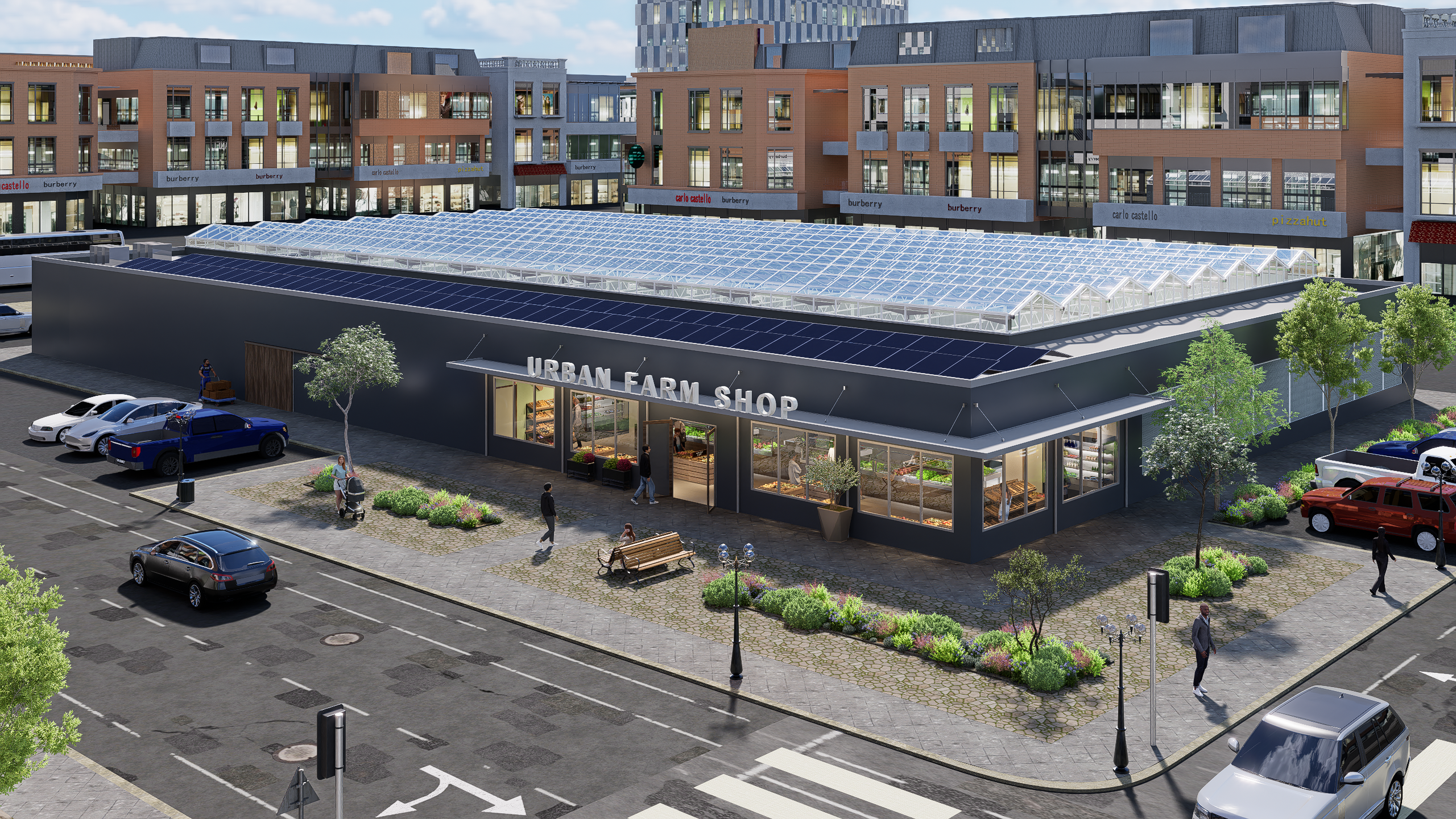
- A standard, around-half-acre layout integrates greenhouse, shop, and back-of-house hydroponic production.
- Centralised, AI-driven climate control is designed to make multi-site roll-outs operationally repeatable.
LocalDutch, an agri-tech and food retail company headquartered in The Hague, has unveiled a standardised “LocalDutch Shop” format that combines controlled-environment vegetable production with a retail footprint in a single, compact site. The company is positioning the model as a replicable template for communities looking to shorten fresh-produce supply chains and stabilise availability, particularly in markets where distribution is vulnerable to distance, weather disruption, and skills constraints.
The format is built around a fixed site blueprint that integrates greenhouse production, a customer-facing shop, and back-of-house space, with a build approach intended to be deliverable by local contractors using prefabricated elements. LocalDutch’s published design outlines a greenhouse-plus-retail footprint sized to keep construction costs predictable while still supporting year-round output, with crop variety geared toward high-turn, short-cycle vegetables typically moved long distances to reach urban customers.
Automation is central to the proposition. The company’s climate “autopilot” is designed to manage the production environment remotely, using AI and cloud services, with the stated aim of reducing reliance on on-site greenhouse climate specialists — a role that is increasingly difficult to recruit across established greenhouse markets, and effectively absent in newer ones. LocalDutch says it also aggregates performance data across sites for benchmarking, enabling operators to compare outcomes and tune settings without treating each location as a one-off greenhouse project.
Arne Spliet, co-founder of LocalDutch, said: “What we are bringing to the United States is truly Dutch technology, applied in a way that is both effective and easy to scale. In a sector where skilled greenhouse climate specialists are scarce, our system automates much of that work.”
Commercially, the company is framing the “Shop” as a multi-channel local distribution point, with revenue expected to come from in-store sales alongside Community Supported Agriculture memberships, and last-mile delivery partnerships. That matters operationally because it pushes the site design toward predictable harvesting and replenishment patterns, rather than the batch-driven logistics typical of regional consolidation hubs.
LocalDutch already maintains a US presence through LocalDutch USA LLC in Pennsylvania, and the company has linked its US activity to public support: it received a $40,000 award under Pennsylvania’s Agricultural Innovation Grant Program for an indoor farming project in the Harrisburg area. The near-term test for the model will be whether standardisation and remote climate management translate into consistent economics across differing power costs, labour markets, and retail price points as deployments move from pilot sites into repeat builds.