IN Brief:
- The BioSupPack programme brought 18 partners together across feedstock, polymer, converting, and recycling stages.
- Demonstration work covered brewery spent grain conversion, PHA coatings, compostable fibre packs, rigid PHB packaging, sorting, and enzymatic recycling.
- The results land as EU packaging rules push pack design towards recyclability, lower virgin material use, and clearer end-of-life pathways.
AIMPLAS and the BioSupPack consortium have concluded a five-year development programme aimed at turning brewery by-products into packaging materials for food and other consumer applications, while also building recovery routes for those materials at end of life.
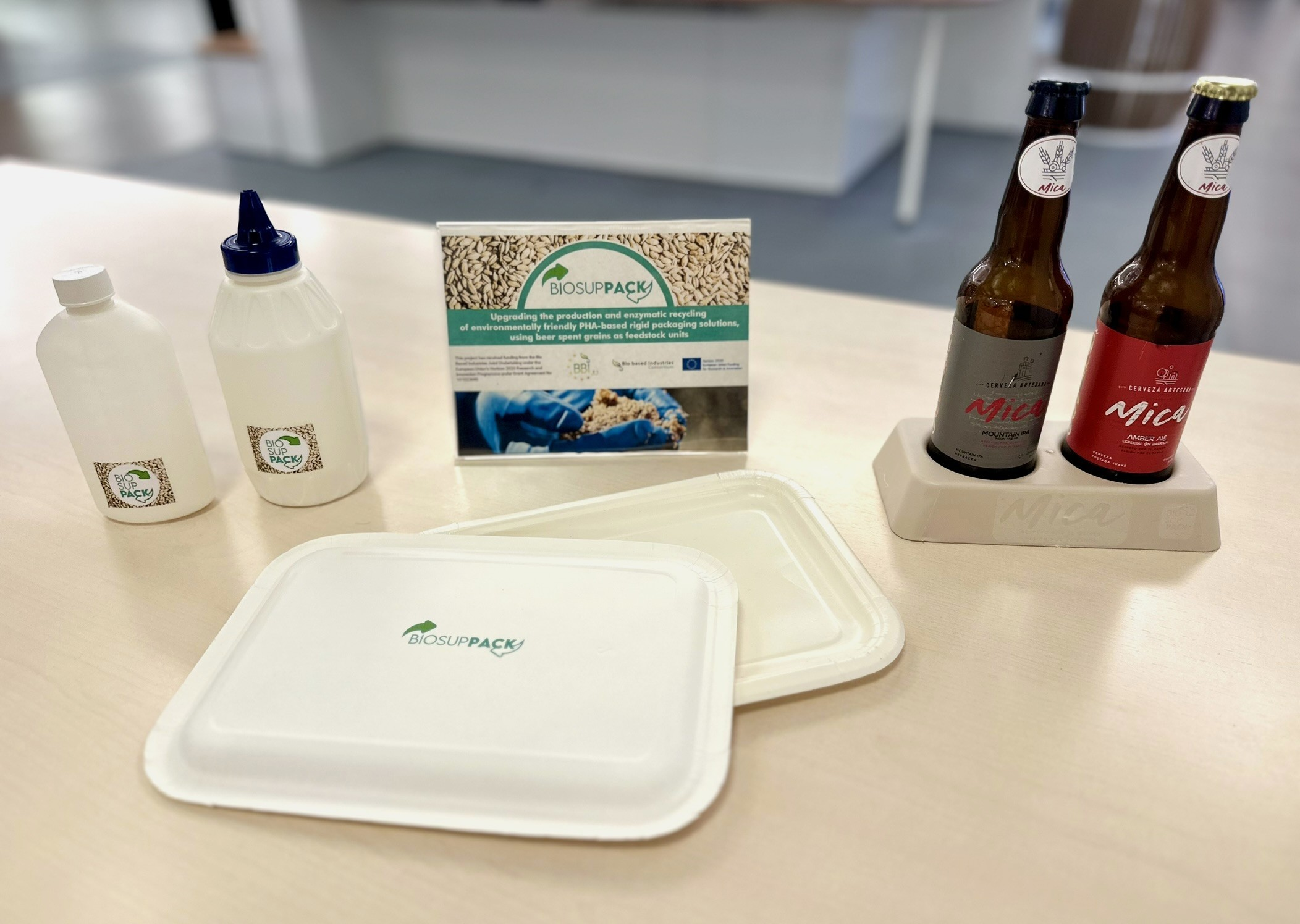
The project centred on brewery spent grains as a feedstock for polyhydroxyalkanoate materials, including PHB, with the consortium developing processing routes intended to move beyond lab work and into demonstrative operating conditions. For food packaging, that translated into rigid and fibre-based formats designed to sit much closer to existing commercial pack types than many earlier biopolymer projects have managed.
According to the consortium, one of the key outputs is a scalable biorefinery process that converts brewery spent grains into high-purity PHB using plasma pretreatment and microbial fermentation. The project said this work reached technology readiness level 6, indicating validation in an industrially relevant environment. That matters because feedstock consistency and production scale remain two of the harder barriers in moving biobased polymers out of pilot programmes and into routine packaging supply.
BioSupPack also reported progress on PHA-based coating formulations for paperboard and textiles. In packaging terms, the more relevant food application is the use of biobased coatings as an alternative to polyethylene-coated board, alongside compostable fibre-based formats with barrier performance aimed at packs such as ice cream cups and trays. The consortium said this strand reached TRL 7.
Rigid packaging was another major focus. PHB-based formulations were developed for bottles and retail display applications using industrial processes including extrusion blow moulding and injection moulding. The project said bottles were produced for dressings, while other rigid formats were developed for retail use. That keeps the work anchored in converting routes already familiar to packaging manufacturers rather than in specialist processes with limited industrial relevance.
Rosa González Leyba, project coordinator at AIMPLAS, said: “BioSupPack has demonstrated that we can create a true circular economy by turning brewery waste into valuable packaging materials and by recycling the packaging waste through innovative recycling technologies like enzymatic recycling.”
The project also addressed what happens after use. Alongside material and pack development, the consortium created a sorting prototype intended to identify the new biobased packaging streams for subsequent recovery, and reported progress on selective enzymes for recycling. That end-of-life work is likely to be watched as closely as the material development itself, because circular packaging claims now stand or fall on how convincingly a waste stream can be identified, separated, and reprocessed.
For the food sector, the timing is difficult to ignore. Packaging design decisions are being reshaped by the EU’s Packaging and Packaging Waste Regulation, with stronger emphasis on recyclability, lower virgin material use, and waste reduction. BioSupPack’s output does not remove the commercial and regulatory work still needed before broader uptake, but it does give converters, material developers, and brand owners a clearer set of demonstrated options than the sector had at the start of the programme.
The consortium said the results are now available for uptake by biopolymer producers, biorefineries, packaging manufacturers, and brand owners. Further technical and project information is available on the BioSupPack website.