IN Brief:
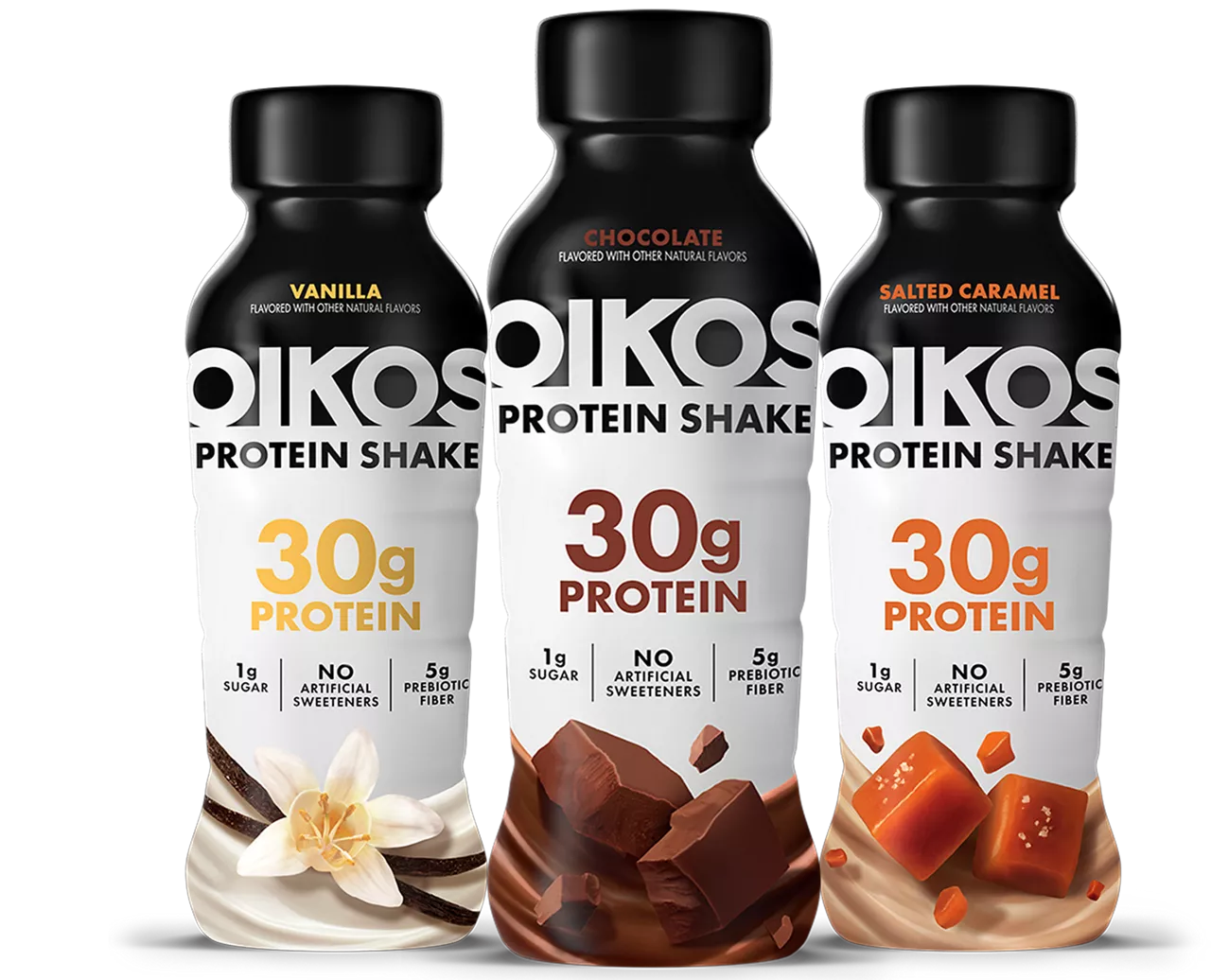
- Oikos Protein Shakes contain 30g complete protein, 5g prebiotic fibre, 1g sugar, and no artificial sweeteners.
- The shelf-stable format moves Oikos beyond chilled yogurt into centre-store and ready-to-drink protein.
- Danone is using brand extension, formulation, and channel expansion to compete in the fast-growing protein beverage category.
Danone is extending the Oikos brand beyond chilled yogurt with a shelf-stable protein shake designed for ambient distribution and ready-to-drink consumption.
Oikos Protein Shakes are sold in 12 fl oz bottles and positioned around 30g of complete protein, 5g of prebiotic fibre, 1g of sugar, no added sugar, and no artificial sweeteners. The range includes chocolate, vanilla, and salted caramel flavours and does not require refrigeration, although the brand also promotes chilled consumption.
The launch takes Oikos into the protein shake aisle, expanding a brand traditionally associated with high-protein Greek yogurt into a different manufacturing, packaging, and distribution model. In the US, Oikos has become a major high-protein dairy platform for Danone, giving the company a recognised brand to carry into ready-to-drink protein.
Ambient protein shakes create different technical demands from chilled dairy. Formulation has to manage protein stability, mouthfeel, flavour release, fibre inclusion, low sugar targets, and shelf-life performance without relying on refrigeration. Processing and packaging must support food safety, product integrity, and distribution through centre-store channels rather than only refrigerated retail.
The format also changes where and how the product can be sold. Chilled yogurt is constrained by cold-chain space, merchandising patterns, and shorter consumption windows. Shelf-stable shakes can move through centre-store aisles, e-commerce channels, club formats, convenience retail, and workplace or gym-adjacent consumption occasions.
Danone is extending protein across adjacent platforms, including plant-based formats and functional nutrition. The direction reflects a broader pattern among large food manufacturers, with established brands being used to move into faster-growing formats while retaining trust and recognition. Brand stretch increasingly depends on process capability, not only marketing reach.
Rafael Acevedo, president and general manager for dairy yogurt, protein shakes, and kids nutrition at Danone US, said the shake has helped Oikos reach consumers beyond traditional yogurt buyers. “RTD shakes allows the brand to show up in on the go occasions throughout the day, in moments where refrigerated yogurt doesn’t naturally play,” he said.
The high-protein market is being reshaped by demand for products that combine satiety, convenience, digestive health positioning, and controlled sugar content. Sports nutrition has moved into mainstream grocery, while protein delivery is appearing in everyday formats such as shakes, bars, yogurts, desserts, and coffee drinks. The growth of GLP-1 medication use has added further commercial interest in protein-rich and portion-controlled products, although the wider category was already moving in that direction.
The formulation brief is demanding. High protein can produce chalkiness, astringency, sedimentation, heat instability, and flavour masking challenges. Adding fibre can improve nutritional positioning but also affects viscosity, mouthfeel, and processing behaviour. Low sugar and no artificial sweetener claims reduce some formulation options, making taste and stability harder to balance.
Shelf-stable protein drinks also place pressure on packaging material selection, thermal processing, aseptic capability, and distribution durability. A successful ambient format has to survive logistics and storage without separating, degrading, or losing sensory appeal before the end of shelf life.
The Oikos expansion shows how dairy companies are treating brands as platforms rather than single-category labels. Yogurt expertise remains important, but growth is moving into drinks, powders, bars, plant-based alternatives, and hybrid formats where protein is the common thread.
Category boundaries are becoming less distinct as dairy processors, beverage specialists, nutrition brands, and private-label manufacturers compete around similar occasions. Industrial consistency, packaging execution, and processing flexibility will decide how far high-protein brands can move beyond their original formats without losing quality or credibility.