IN Brief:
- The M50 R-Series covers packaged, unpackaged, wet, dry, chilled, frozen, thawing, and bulk food applications.
- New models include the M55R for dry products, M55RB for bulk products, and M56R for more challenging conductive or metallised applications.
- Connectivity, RFID access, automated testing, and ProdX integration target stronger audit readiness and traceability.
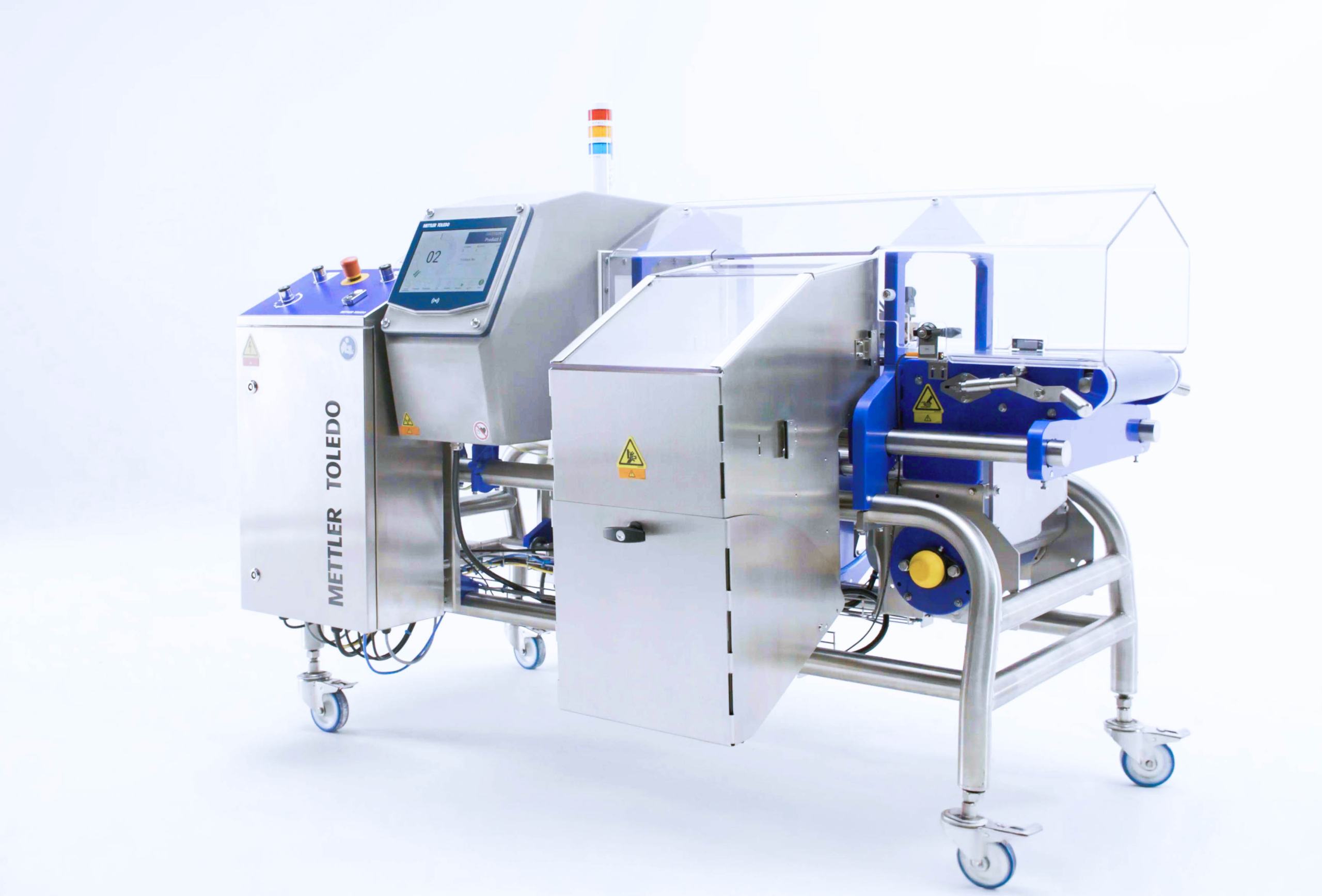
Mettler-Toledo Product Inspection has launched the M50 R-Series AdvancedLine metal detectors, a new generation of inspection systems designed for food production lines facing higher demands around detection sensitivity, traceability, compliance, and throughput.
The range covers unpackaged and packaged products across wet, dry, chilled, frozen, thawing, and bulk applications. It includes three models: the M55R, the M55RB, and the M56R, each designed for different product and production conditions.
The M55R is optimised for dry products such as pasta, savoury snacks, and deep-frozen produce where thawing does not occur. The M55RB is aimed at bulk products including large sacks, bags of powder, and cartons, using radio frequency interference shields to filter external interference in large-aperture applications. The M56R is designed for more challenging products, including chilled, wet, dry, deep-frozen or thawing products, as well as products wrapped in metallised film.
The platform combines detection hardware with digital features intended to support routine operation and audit documentation. Technologies including eDrive PLUS, 900 kHz frequency, 3S PLUS algorithms, and AI-based machine learning are used to improve sensitivity and reduce false rejects, including for small wire and non-spherical metal contaminants.
A 10.1-inch capacitive touchscreen has been added to simplify operation, including use with gloves or in wet production conditions. The range also includes the INFINITY Electronic Test System, which automates routine performance monitoring and can run tests without operator intervention. Mettler-Toledo says the automated process can be up to three times faster than manual testing.
Jaison Anand, market manager – metal detection at Mettler-Toledo Product Inspection, said: “The M50 R-Series has been developed to help address these challenges, delivering advanced detection performance alongside intuitive operation and future-ready connectivity, supporting manufacturers not only today but as their requirements continue to evolve.”
The systems include embedded Wi-Fi, QR code access to system information, improved condition monitoring, simplified data transfer, and RFID access control for individual user logins. Records can be stored locally or transferred through protocols including OPC-UA and EtherNet/IP.
Manufacturers can also integrate the equipment with Mettler-Toledo’s ProdX data management software, which connects product inspection devices, monitors inspection activity in real time, and stores data for audit, compliance, and production analysis. The platform is designed to support alignment with food safety standards including BRCGS and International Featured Standards.
Metal detection is becoming a connected control point rather than a stand-alone safeguard. Detection capability remains central, but production sites now require systems that can document events, demonstrate validation, control access, and share data with wider production and quality management systems.
Audit pressure, faster line speeds, and greater product complexity are all reshaping inspection requirements. A modern factory may run multiple SKUs, pack formats, recipes, and temperature states through shared assets, with limited tolerance for downtime or excessive rejects. Inspection systems have to support uptime as well as compliance.
The productivity argument is also growing. Manual testing routines can interrupt production, create operator variation, and consume quality team time. Automated performance monitoring reduces the burden of routine checks while creating more consistent records. Secure user access also gives production sites tighter control over who can change settings and how those changes are recorded.
False rejects remain a persistent cost issue. When a product signal is difficult to manage, good product can be rejected, creating waste, investigation work, and potential line stoppages. AI-based learning and advanced algorithms are increasingly being used to distinguish product effect from genuine contamination, particularly on wet, conductive, thawing, or metallised products.
The M50 R-Series will make its first global exhibition appearance at interpack 2026 in Düsseldorf, where Mettler-Toledo will exhibit in Hall 11, Stand A60. The system is also scheduled to be shown at PackExpo.
Food production sites are modernising inspection around contaminant control, reliable throughput, secure data, and audit-ready evidence. The M50 R-Series places those requirements into a single metal detection platform aimed at production environments where quality assurance and line efficiency can no longer be treated separately.