IN Brief:
- Sidel has used Interpack 2026 to present complete-line systems for food, beverage, home, and personal care production.
- The showcase included Cermex RoboSELEX robotic collating and RoboAccess_Pal S palletising technology.
- The development reflects rising pressure on manufacturers to manage SKU growth, pack variation, and end-of-line flexibility.
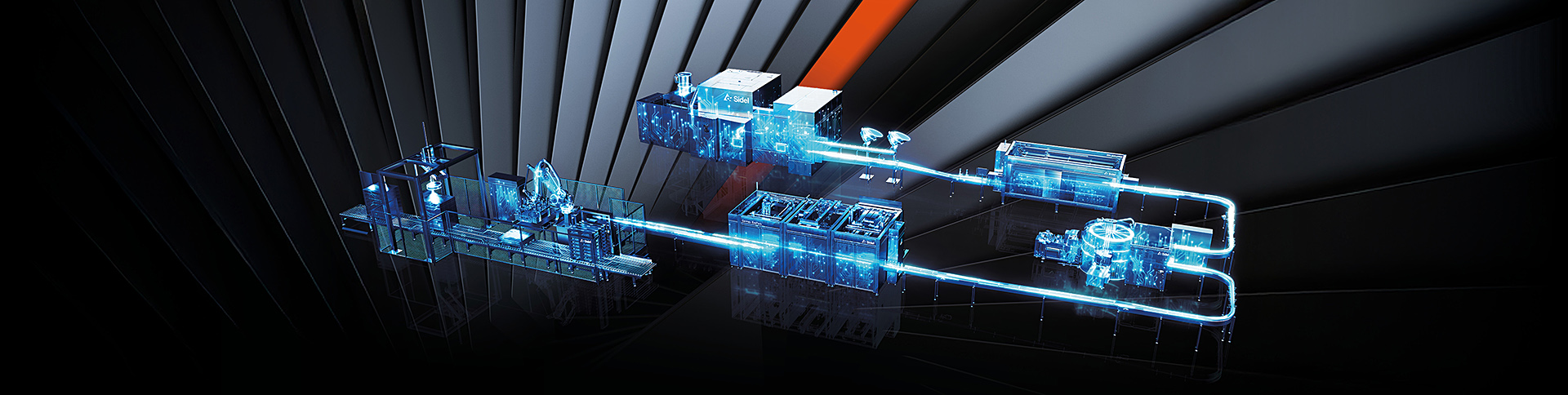
Sidel has put packaging and production complexity at the centre of its Interpack 2026 showcase, presenting complete-line systems and end-of-line technologies for manufacturers working with increasingly varied pack formats.
The company demonstrated its complete-line capability for beverage, food, home, and personal care producers, with a focus on edible oils, sauces, dressings, and related packaged liquid categories. The systems on show covered line design, installation, equipment integration, and lifecycle support, with productivity, flexibility, and reduced downtime running through the launch.
Cermex RoboSELEX and RoboAccess_Pal S formed the most directly relevant elements for food producers. Cermex RoboSELEX is a robotic collating system designed for case packers, capable of handling lightweight bottles in multiple shapes and batch configurations while maintaining continuous product flow without accumulation.
The system can reach speeds of up to 320 products per minute and is designed for repeatable changeovers. Collation changes can be completed in around one minute, while bottle-format changes can take around two minutes, depending on the application. In plants handling multiple SKUs, seasonal lines, promotional packs, and shorter production campaigns, those minutes can have a direct effect on available capacity.
RoboAccess_Pal S adds a compact palletising option for end-of-line handling. The machine shown at Interpack included an elevating column, allowing it to reach pallet heights of up to 2,200mm. The cell is designed to automate repetitive case handling while supporting pallet stability, packing consistency, and safer movement at the end of the line.
Packaging lines are being asked to absorb more variation than many were originally designed to carry. Lighter bottles, recycled-content materials, redesigned closures, multipacks, promotional sleeves, partial labels, shorter runs, and more frequent changeovers all affect conveying, accumulation, coding, packing, palletising, inspection, and operator workload.
As a result, end-of-line automation is moving closer to the centre of line strategy. Filling and primary packaging equipment can only deliver planned output if downstream equipment keeps pace with the format mix. Case packing and palletising bottlenecks can quickly erase upstream gains, particularly in high-speed beverage, sauce, oil, and chilled drink production.
The wider Interpack environment has already shown the same pressure points. The Interpack 2026 food visitor preview highlighted robotics, inspection, coding, sustainable packaging, and line flexibility as practical priorities for manufacturers heading to Düsseldorf. Sidel’s complete-line approach sits squarely in that territory, especially where single-machine upgrades risk moving constraints rather than removing them.
The company’s earlier PET packaging savings tool also points to a deeper connection between packaging design and line performance. A lighter bottle or redesigned container may reduce material use, but it still has to move through blowing, filling, labelling, conveying, packing, palletising, transport, and retail handling without creating instability or waste.
Labour and safety pressures are also shaping investment. Food plants need equipment that can manage repetitive movement, heavy cases, high throughput, and variable patterns with less manual handling. Operators remain central to performance, but their work is shifting toward supervision, changeover, maintenance, data interpretation, and exception handling.
The practical test for Sidel’s systems will be their performance across mixed production environments rather than peak speed alone. Food producers need clean changeovers, reliable handling of lightweight containers, accessible maintenance, hygienic operation where relevant, and controls that support operators rather than adding another layer of line complexity.
Packaging variation will continue to expand as regulation, retailers, and brand teams demand more from the same assets. Systems that link packaging development, line engineering, and end-of-line automation will be better placed as manufacturers try to make flexibility a controlled production capability rather than a daily disruption.