IN Brief:
- Testo Saveris has introduced the testo 195 wireless temperature sensor for Cook-to-X processes.
- The system records cooking and chilling data in the cloud and supports HACCP documentation.
- Automated temperature monitoring is moving food safety records away from manual checks and paper logs.
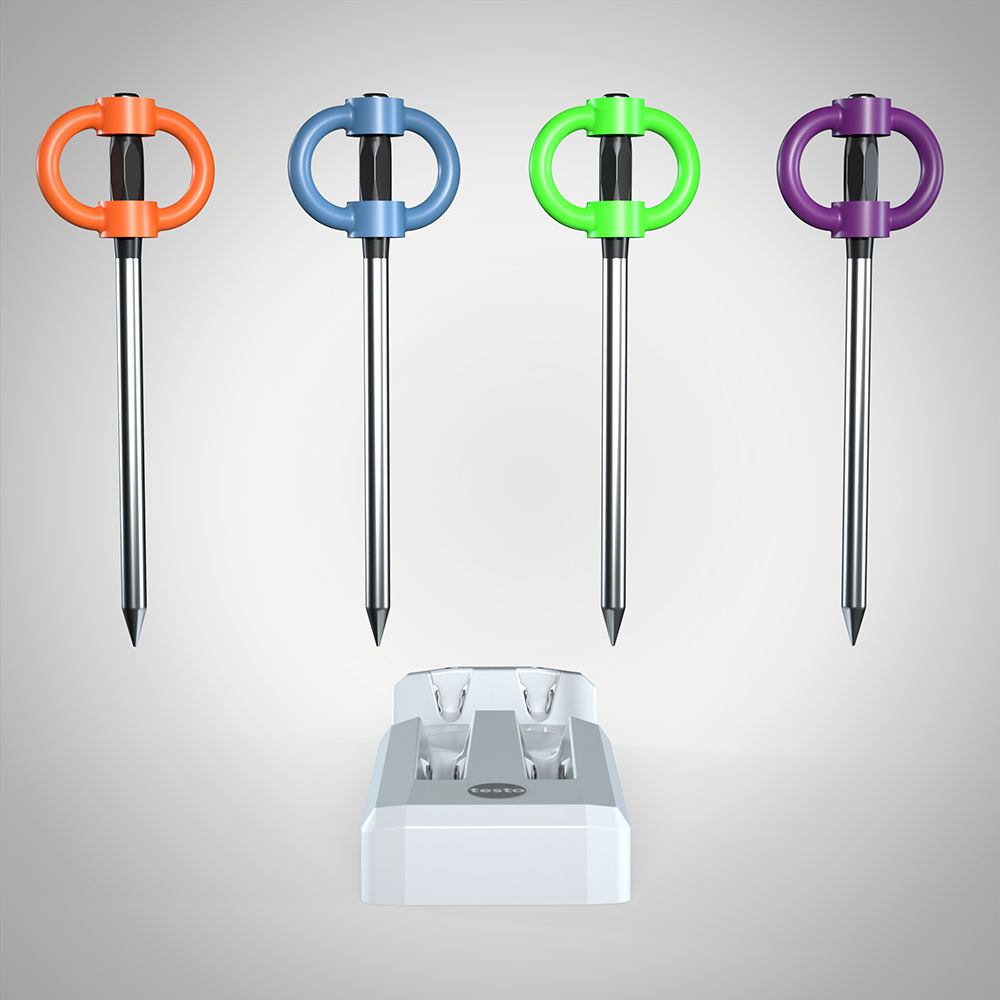
Testo Saveris has introduced the testo 195 wireless temperature sensor, designed to automate temperature monitoring and documentation across Cook-to-X processes in professional kitchens.
The sensor is designed for cooking and chilling workflows where food must follow defined time and temperature profiles for safety, quality, and compliance. It records data continuously, transfers measurements to the cloud, and integrates with testo Saveris Food software for real time analysis against defined temperature-time limits.
Commercial kitchens and central production environments still often rely on manual probes, handwritten readings, timers, and staff discipline at fixed checkpoints. That approach can work when procedures are followed perfectly, but it creates documentation burden and leaves room for missed readings, transcription errors, delayed interventions, and incomplete audit trails.
The testo 195 replaces those manual steps with continuous measurement. The user inserts the wireless sensor directly into the product once, after which the system measures and transfers data throughout the process. If the software detects a deviation from the defined limits, it triggers a warning so corrective action can be taken while the process is still under way.
The product has been developed for Cook-to-Chill, Cook-to-Freeze, Cook-to-Hold, and Cook-to-Serve operations. All depend on controlled treatment after cooking, with specified temperature and time values used to protect food safety and product quality. The “X” in Cook-to-X covers the subsequent process route, whether rapid cooling, freezing, holding, or immediate serving.
Central kitchens, catering companies, communal catering operations, retail food service chains, and ready to eat producers all depend on reliable temperature evidence. HACCP systems require proof that hazards are controlled, and temperature management remains one of the most important control areas in cooked foods. Manual records can become a weak point when teams are busy, menus are varied, or production volume is high.
Testo Saveris has designed the sensor for demanding kitchen environments. The system uses sub-1-GHz wireless technology, which is intended to support stable connections even in metallic environments where Bluetooth-based systems can struggle. The sensor is IP69-rated, dishwasher-safe, and NSF- and HACCP-certified.
The measuring range covers core temperatures from -30°C to 110°C and ambient temperatures from -40°C to 240°C. After use, the sensor returns to a docking station for automatic charging. Coloured silicone clips allow kitchens to assign sensors to product groups, helping reduce cross-contamination risk and simplifying use during busy production.
David Schmitt, Product Lead Food at Testo Saveris GmbH, said: “There is no solution on the market that directly integrates wireless temperature monitoring with comprehensive food safety software. With the testo 195, we are creating a comprehensive data base that enhances food safety, reduces effort, and enables faster response times during ongoing operations.”
The launch comes as foodservice and prepared food operators face rising expectations around traceability and digital records. Paper logs remain common, but they are increasingly out of step with the level of evidence demanded by auditors, customers, and internal quality teams. Digital records can improve retrieval, standardisation, and oversight across multiple sites.
The operational gain is also significant. Automated monitoring can reduce the amount of time staff spend taking and recording readings, allowing teams to focus on production, service, and corrective action. It can also reduce waste by identifying temperature deviations early enough to adjust the process before a batch is lost.
Temperature evidence is becoming more rigorous across the wider chilled and prepared food system. Danish proposals targeting Listeria-stabilised ready to eat foods have already shown how shelf-life evidence, stabilisation controls, and process data are attracting closer scrutiny. The testo 195 addresses another point in the system, strengthening evidence during cooking and chilling rather than after product validation.
The success of the technology will depend on integration into daily routines. Sensors must be easy to assign, clean, charge, insert, and track. Alerts must be clear enough to drive action without overwhelming staff. Software must fit existing HACCP workflows rather than becoming another isolated system.
Wireless product level monitoring gives operators a route to safer and more efficient cook and chill operations. Labour is tight, documentation demands are growing, and waste remains expensive. Automating one of the most repetitive food safety tasks gives kitchens a stronger audit trail and a faster route to intervention when a process starts to drift.