IN Brief:
- Current 20 August reporting says the CMA has approved Danone’s acquisition of Huel following its UK merger review.
- Huel generated £254 million in its latest financial year, with UK sales rising 26.5% to £139.3 million.
- The deal adds nutritionally complete powders, ready-to-drink products, meals, and snacks to Danone’s expanding functional-nutrition portfolio.
Danone has reportedly secured UK competition clearance for its acquisition of Huel, moving the transaction closer to completion and adding an established complete-nutrition business to the French group’s expanding functional-nutrition portfolio. Huel generated £254 million of revenue in its latest financial year across powders, ready-to-drink products, meals, snacks, and related nutrition formats.
The Competition and Markets Authority began examining the transaction after Danone entered into a definitive agreement to buy Huel earlier in 2026. Current reporting published on 20 August says the acquisition has now been approved following that review.
Huel gives Danone a business with a markedly different operating model from much of its traditional dairy and specialised-nutrition portfolio. The company was built around powdered nutritionally complete meals sold predominantly through direct channels before expanding into ready-to-drink beverages, hot meals, bars, supplements, and physical retail.
The UK remains its largest and fastest-growing market. Latest figures put domestic sales at £139.3 million, up 26.5%, while Huel products are now available in more than 17,000 UK stores and through a much larger international stocking footprint.
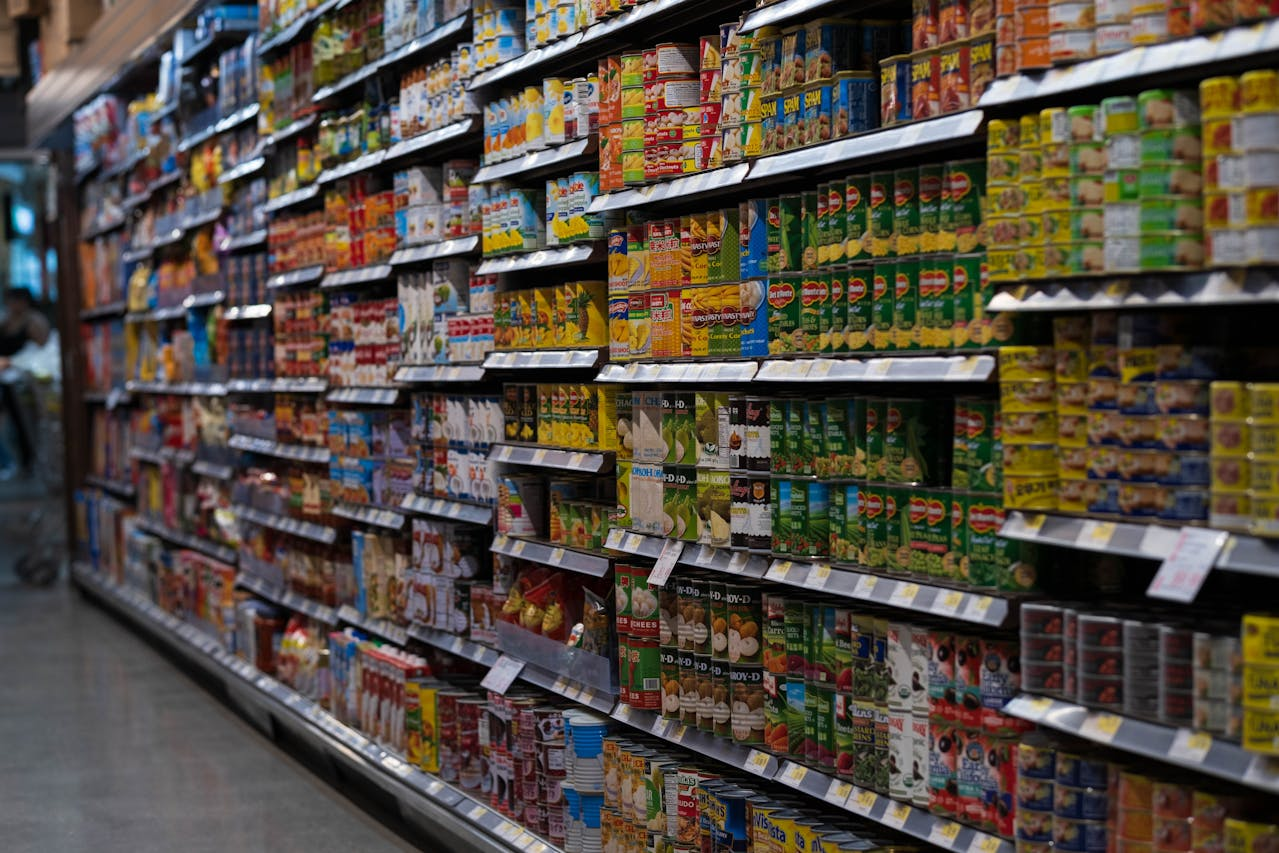
That retail expansion alters the manufacturing task. Direct-to-consumer products can be distributed through central fulfilment operations and subscription demand, while supermarket and convenience channels introduce retailer-specific case formats, shelf-ready packaging, promotional volumes, order windows, and service-level requirements.
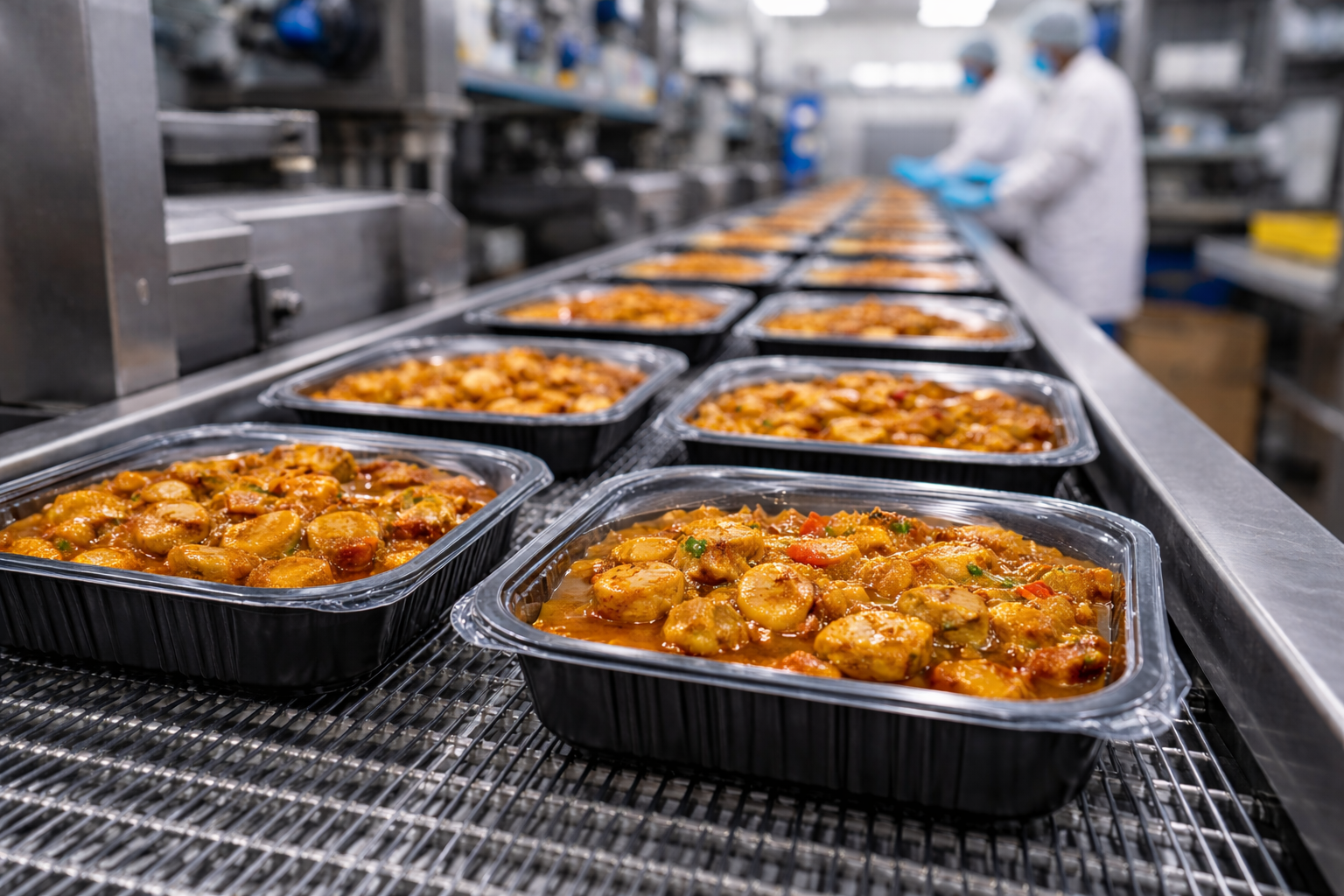
The product portfolio itself also requires several different manufacturing technologies. Powdered Huel depends on controlled dry blending and micronutrient distribution, while ready-to-drink products need liquid processing and hygienic filling. Hot meals, bars, and snack formats introduce further mixing, forming, cooking, extrusion, or packing requirements depending on the individual product.
Danone brings global manufacturing, procurement, quality, research, and distribution capability to that mix. The industrial question is how heavily those systems will be integrated with Huel rather than whether the parent company possesses them.
Rapidly growing nutrition brands can lose some of their operating agility when absorbed into a much larger multinational structure, but scale can also relieve production constraints. A bigger group has greater purchasing leverage for proteins, vitamins, minerals, flavour systems, packaging, and contract-manufacturing capacity and can support qualification work when products are introduced into new countries.
Huel’s formulations create particularly demanding quality-control requirements. Products marketed as nutritionally complete depend on defined quantities of macro- and micronutrients, meaning manufacturing consistency matters beyond taste and texture. Ingredient dosing, blend uniformity, analytical verification, shelf life, and packaging protection all affect whether the finished product meets its specification.
That becomes more complicated as the range expands. Powders have different water-activity and packaging requirements from liquid drinks, while bars and ready meals have their own process and shelf-life constraints. International growth can introduce further differences in permitted ingredients, nutrition declarations, pack sizes, and local labelling.
Danone has been expanding its exposure to health-focused and functional nutrition more broadly. Its 2026 results have highlighted demand across high-protein and medical-nutrition products, while acquisitions and portfolio investment continue to shift capital towards categories positioned around health, convenience, and defined nutritional benefits.
Huel fits that direction but adds a brand built outside the traditional clinical or dairy nutrition channels associated with Danone. Its customer base and product language are closer to everyday meal replacement and convenience, potentially giving the group another route into consumers who would not normally buy a conventional specialised-nutrition product.
Manufacturing capacity will therefore become one of the more useful indicators after completion. Neither regulatory approval nor change of ownership establishes whether Huel products will continue to be produced through their existing arrangements, move gradually into Danone-supported facilities, or use a mixture of internal and external manufacturing as international demand develops.
Any transfer of production would require careful qualification. Nutrition formulations can respond differently to changes in raw-material source, processing equipment, mixing sequence, thermal conditions, packaging, or filling line, meaning relocation cannot be treated simply as a procurement decision.
Danone will also have to decide how tightly to integrate Huel’s sourcing. Economies of scale can lower costs, but changing approved ingredient suppliers may alter flavour, texture, process behaviour, or nutrient composition. The larger the range becomes, the more consequential master-data, specification, and supplier-control systems become.
The acquisition therefore creates a significant manufacturing opportunity without predetermining the operating model. Huel brings growth and an established position in complete nutrition; Danone brings infrastructure and international reach.
The next useful developments will come after the transaction closes: changes to capacity, manufacturing footprint, sourcing, new product development, and distribution will show how much of Danone’s industrial scale is actually applied to Huel. Clearance removes a regulatory obstacle; the integration decisions that follow will determine the effect on the production network.