IN Brief:
- Premier is progressing a Section 189 consultation over the proposed closure of Fruit Products Western Cape in Tulbagh.
- The facility employs 246 permanent staff and is estimated to represent close to half of South Africa’s fruit-canning capacity.
- Growers face a difficult November harvest if alternative processors cannot absorb fruit previously destined for Tulbagh.
Premier is continuing consultation over the proposed closure of its Fruit Products Western Cape operation in Tulbagh, a decision that could remove close to half of South Africa’s fruit-canning capacity. The site employs 246 permanent workers, with considerably more seasonal and contract employment linked to the operation, while growers face the loss of one of the country’s two principal deciduous-fruit canning outlets.
The proposed shutdown follows Premier’s acquisition of Rhodes Food Group earlier this year. Premier says the Tulbagh business is no longer economically sustainable, pointing to declining international demand, pricing pressure, rising input costs, global oversupply, exchange-rate exposure, and uncertainty around export markets.
The plant is heavily dependent on overseas sales. Around 90% of its canned-fruit production is exported, leaving its economics exposed to conditions well beyond the Western Cape orchards that supply it. Changes in tariffs, freight, consumer demand, currency, and international canning capacity can all feed back into the viability of the production lines at Tulbagh.
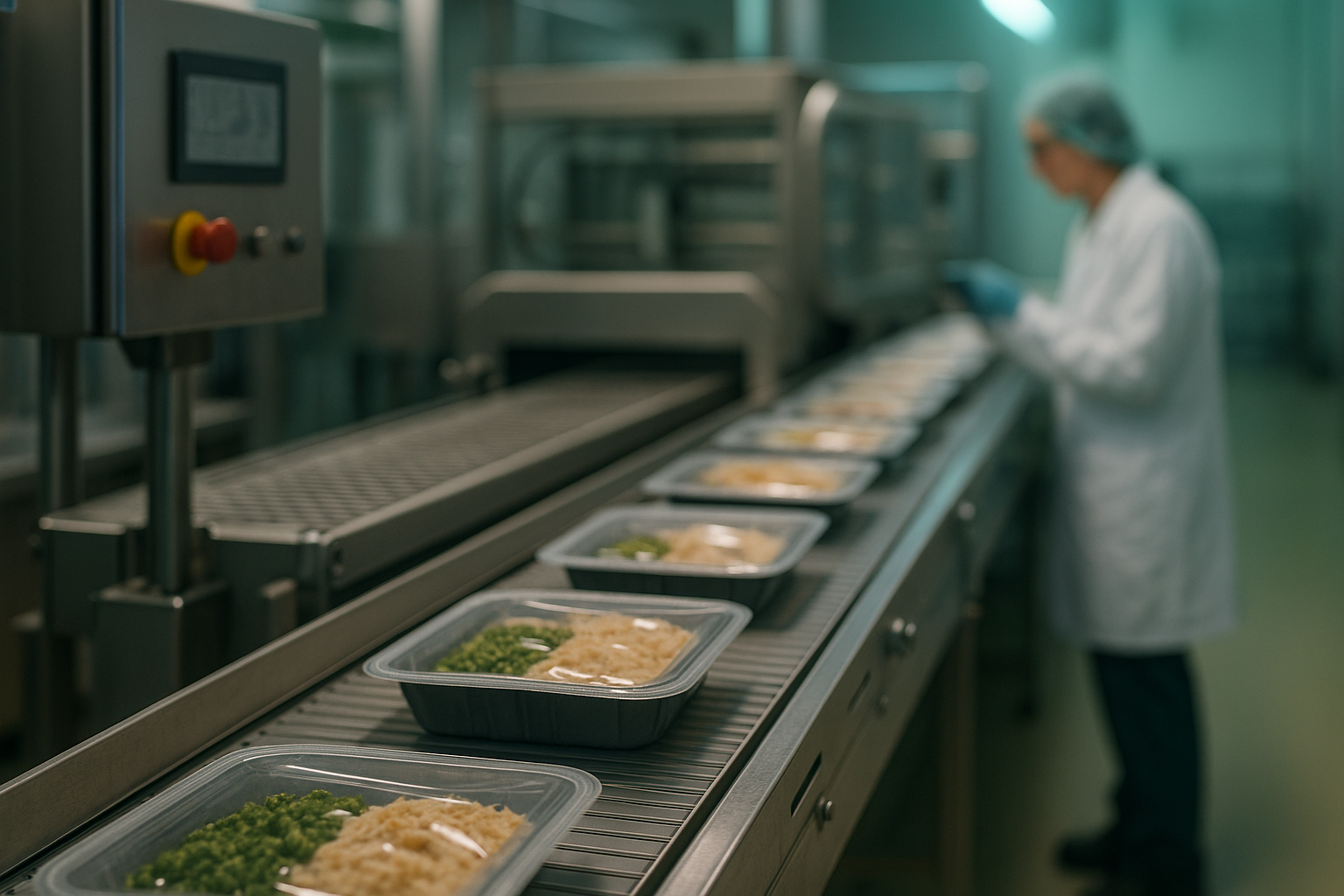
Fruit Products Western Cape processes deciduous crops including peaches, apricots, and pears, alongside other canned fruit and processed formats. The factory has historically operated at high utilisation and has benefited from substantial investment in canning equipment and associated production infrastructure.
That makes closure more complicated than transferring a few customer orders to another food plant. Deciduous-fruit canning operates around a concentrated harvest. Large quantities of fruit have to be received, graded, prepared, filled, thermally processed, cooled, packed, and warehoused within a limited period determined by crop maturity rather than factory convenience.
Industry estimates suggest that the Tulbagh plant normally processes around 55,000–60,000 tonnes of fruit annually. Losing that intake capability only months before the next stone-fruit harvest creates an immediate capacity problem, even if another processor is willing to take some of the volume.
Langeberg Foods at Ashton operates the other major canning facility and Premier has indicated that it intends to work with that business around future harvests. Growers have warned, however, that moving Tulbagh’s full production requirement into alternative capacity cannot be achieved simply by changing a delivery address.
Factories have practical limits around receiving areas, preparation equipment, processing lines, boilers, water treatment, cooling, packaging, warehousing, labour, and logistics. Spare capacity also has to exist during the same weeks in which the displaced fruit arrives, rather than elsewhere in the annual production calendar.
The agricultural consequences begin before the factory gate. Many growers cultivate varieties specifically suited to canning, where size, texture, ripening behaviour, yield, and economics differ from fresh-market production. Fruit planted for an industrial processor cannot necessarily be redirected profitably into retail fresh produce at short notice.
Industry representatives have put the number of supplying producers at around 200, with more than 150 farms potentially exposed directly or indirectly. The plant also supports up to 2,200 contract and seasonal workers in addition to its permanent workforce, illustrating how employment expands sharply when crops move through the cannery.
The next harvest is therefore the pressing deadline. Growers make pruning, irrigation, crop-management, labour, and harvest decisions months in advance, while processors have to plan cans, ingredients, packaging, utilities, shifts, cold storage, and export logistics against expected volumes.
Premier’s commercial concern is equally tangible. Maintaining a large export-oriented cannery whose market is contracting can lock capital into plant and inventory without an adequate return. Higher energy, packaging, labour, and freight costs are difficult to recover where overseas buyers have alternative suppliers and canned fruit competes with fresh, frozen, and other preserved formats.
More than R200 million is reported to have been invested in the Tulbagh operation during the past three years, adding to the debate around whether an alternative ownership or operating model could preserve the asset. Labour organisations and growers have called for options to be explored before equipment and agricultural supply relationships are lost.
The Competition Commission is also scrutinising the proposed closure in the context of public-interest and employment conditions associated with Premier’s acquisition of Rhodes Food Group. That introduces another layer to a process already governed by formal retrenchment consultation.
The timetable remains tight. A further Section 189 consultation is scheduled for 26 August, while fruit producers need clarity well before the November harvest. Delaying a final answer may preserve options for negotiation, but it also leaves farms without certainty over whether their crop will have a processor.
If Tulbagh closes, the immediate impact will be measured in jobs and lost processing capacity. The longer-term effect could be a contraction in the orchards supplying the canning industry if growers conclude that sufficient industrial demand no longer exists to justify maintaining canning varieties.
That is what makes the decision industrially significant. A factory can be shut within months; rebuilding its combination of specialised lines, trained workers, growers, certifications, export relationships, and seasonal operating knowledge would take considerably longer.
Premier still has consultation to complete, and the eventual outcome remains subject to that process. For the South African fruit sector, however, the practical question is already approaching: where will tens of thousands of tonnes of fruit go when the next harvest reaches maturity if Tulbagh is no longer operating?