IN Brief:
- MM says expansion of its Romanian packaging operation remains on schedule for commercial production in October 2026.
- The Blejoi plant supplies sectors including confectionery and beverages and combines offset printing with extensive converting capability.
- MM expects the investment to contribute increasingly to earnings from 2027 despite weak current European folding-carton demand.
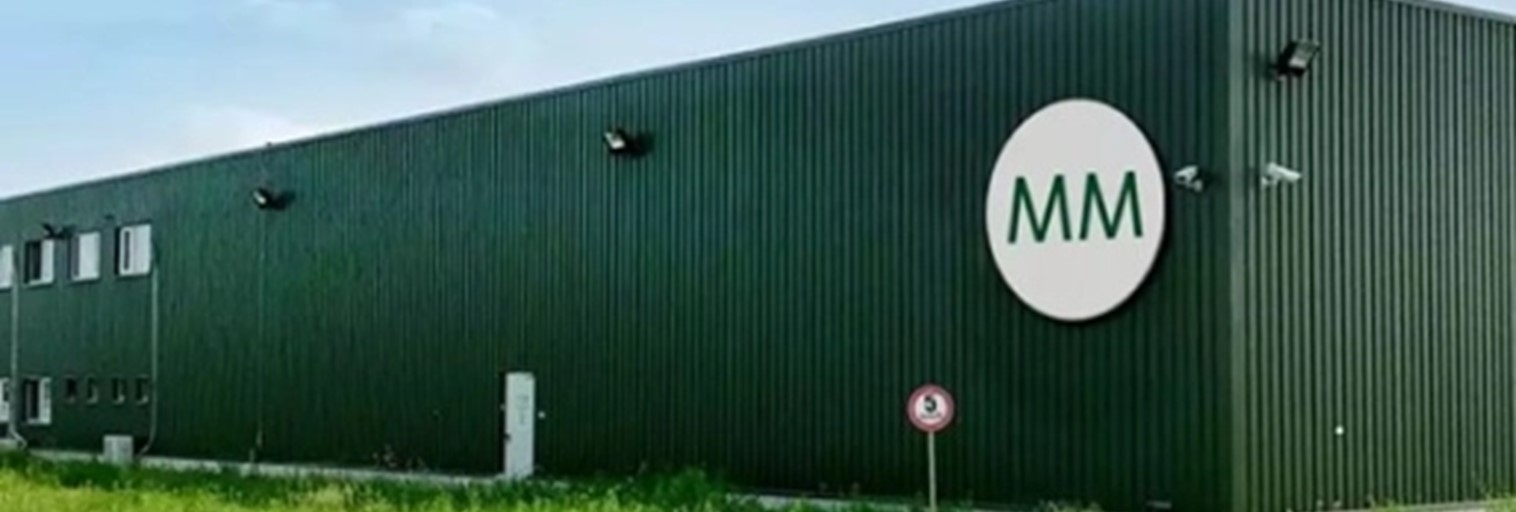
MM Group expects commercial production from its expanded Romanian packaging operation to begin in October 2026, adding capacity at a time when European folding-carton producers are still contending with weak demand and intense price competition.
The project at MM Packaging Romania is progressing on schedule and within budget, according to the group’s latest reporting. MM expects investments in Romania and the US to contribute increasingly to earnings from 2027, although it has not published the value of the Romanian project or a figure for the additional annual capacity.
The plant is located at Blejoi in Prahova and supplies packaging into several markets, including confectionery and beverages. Its existing production base includes offset printing and converting processes such as microflute manufacture, embossing, window patching, die-cutting, creasing, folding, gluing, and litho-lamination.
An on-site quality laboratory supports those operations, while the factory holds certifications covering quality, environmental management, occupational health and safety, and fibre chain of custody. The expansion builds on an existing converting site rather than creating a new greenfield operation.
MM has described the programme as a technological expansion intended to increase flexibility and allow the plant to take on additional business. Printing and die-cutting investment forms part of the broader upgrade, increasing the site’s ability to handle varied carton specifications and customer requirements.
The additional capability is entering service during a difficult trading period. Comparable first-half sales at MM Food & Premium Packaging, excluding the divested TANN business, fell 5.6% to €684 million, while produced volume declined 7.1% to 1.019 billion square metres.
Adjusted EBITDA for the division nevertheless increased 0.9% to €97.9 million and the margin rose from 13.4% to 14.3%. MM attributed the improvement partly to process measures, fixed-cost reductions, and lower cartonboard costs, demonstrating the extent to which profitability currently depends on operating discipline rather than volume growth alone.
New presses and converting machinery can increase theoretical output, but their contribution also depends on make-ready times, material waste, labour requirements, print consistency, energy consumption, and the speed at which different jobs can move through the factory. Those variables become more exposed when plants are competing for subdued order volumes.
The Blejoi product mix gives the investment a direct food and beverage manufacturing link. Confectionery and drinks packaging can involve high volumes, but converters also have to accommodate promotional changes, retailer specifications, print requirements, food-safety controls, and shorter production campaigns for individual formats.
Frequent job changes can therefore consume a disproportionate amount of capacity if presses and finishing equipment are slow to set up. Improvements in make-ready performance and converting flexibility can release useful production time even when headline machine speed changes relatively little.
The expansion also arrives alongside a more demanding European regulatory framework. The EU Packaging and Packaging Waste Regulation began to apply generally in August 2026, bringing packaging producers and users into a regime built around waste prevention, recyclability, material efficiency, and later recycled-content requirements for specified plastic applications.
Fibre-based cartons are not insulated from that shift. Food companies still have to examine pack weight, recyclability, barrier performance, product protection, logistics, printing, and material use, which can increase the number of variables that converters need to manage within a single packaging specification.
MM has positioned fibre substitution as part of its product development, particularly where carton structures can replace some conventional plastic packaging. The commercial case still depends on whether those structures perform reliably on filling and packing lines and protect the food adequately through distribution and storage.
Packaging changes that appear straightforward on a design screen can introduce production complications in practice. Different boards, coatings, windows, closures, and printing requirements affect converting behaviour, while food customers expect the resulting cartons to arrive within increasingly tight tolerances.
MM has been reshaping its manufacturing network at the same time as it invests in selected sites, disposing of or closing operations where the company sees less attractive prospects. Romania therefore forms part of a more selective allocation of capital rather than a general expansion of folding-carton capacity across Europe.
October’s planned production start will establish whether the project remains on schedule through commissioning. The more telling figures will follow in 2027, when MM expects the upgraded plant to begin contributing more visibly to earnings despite a European carton market that has so far offered little help from demand growth.