IN Brief:
- Food 2040 will guide EU research and innovation across food systems alongside the related AgRI 2040 framework.
- The strategy places greater emphasis on real-world demonstration, deployment, market uptake, resource efficiency, and food safety.
- Both frameworks are intended for Horizon Europe 2028–2034 and relevant parts of the European Competitiveness Fund.
The European Commission has adopted Food 2040 as part of a new strategic approach intended to improve the route from publicly supported agri-food research into practical deployment and commercial use.
The framework sits alongside AgRI 2040, which covers agriculture, forestry, and rural areas. Food 2040 focuses on food systems, including fisheries and aquaculture, while both are designed to guide future EU research, innovation, demonstration, deployment, and market uptake.
Food 2040 contains six areas of action: place-based food systems; healthy and sustainable diets; resource efficiency and zero pollution; food environments and consumer empowerment; scaling innovations, business models, and fair food-system solutions; and aquatic food.
The two frameworks also share priorities around competitiveness, startups and scaleups, food security, resilience, natural resources, circularity, food and feed safety, health, fairness, and international cooperation. The Commission says they will be deployed through Horizon Europe for 2028–2034 and relevant parts of the European Competitiveness Fund.
That gives the strategy a clearer industrial route than a research agenda concerned only with early-stage science. The Commission is explicitly placing more emphasis on co-creation, real-world testing, demonstration, entrepreneurship, and market deployment so that technologies are assessed closer to the conditions in which farmers, processors, food companies, and other users would actually adopt them.
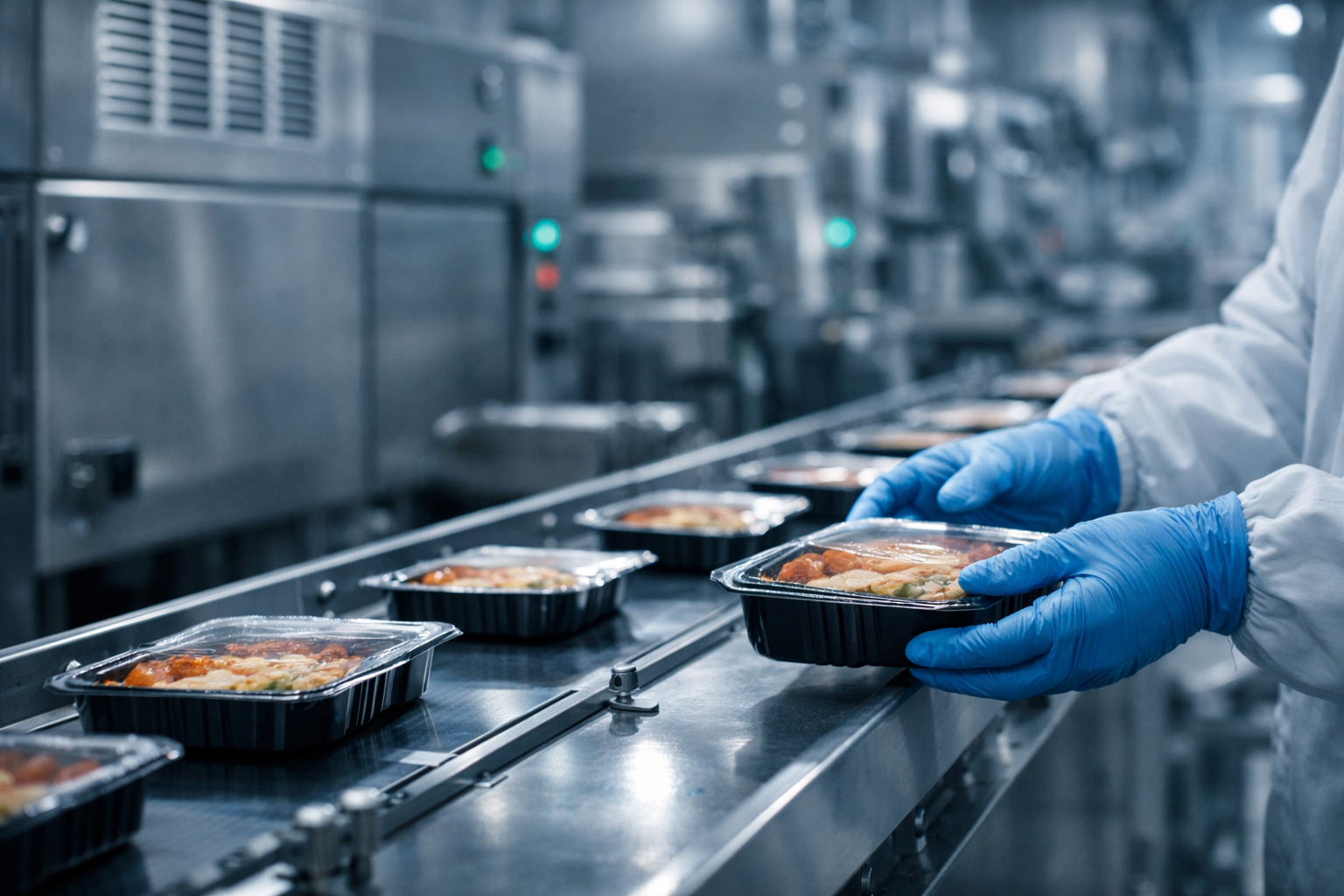
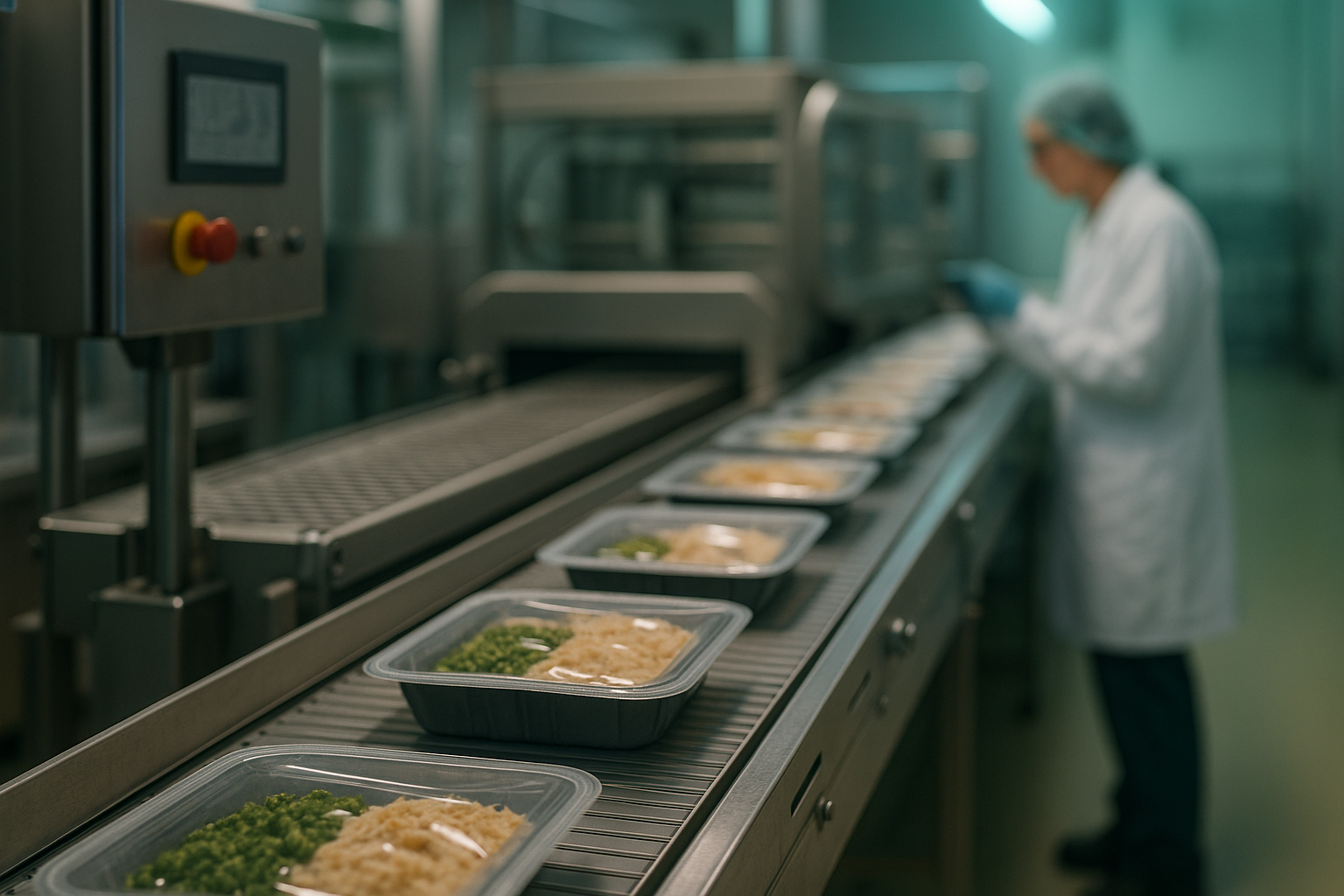
Food manufacturing has no shortage of technologies that work at laboratory scale but struggle to survive the transition into a factory. Novel ingredients, process-control systems, robotics, sensing, waste-valorisation technologies, packaging materials, and food-safety tools all face additional constraints once they encounter line speeds, sanitation requirements, maintenance schedules, operator skills, established specifications, and capital budgets.
A demonstration programme is therefore useful only if it reproduces enough of those conditions to expose weaknesses before commercial procurement. A sensor that performs reliably in a laboratory can still fail around washdown, temperature cycling, vibration, or cleaning chemicals, while a new packaging material may meet sustainability targets but create sealing, barrier, or handling problems on existing machinery.
The Commission’s focus on deployment gives food companies an opportunity to become involved earlier in that development process. Trials designed with processors, equipment suppliers, ingredient developers, researchers, and other end users can generate the performance data needed to decide whether a technology deserves further investment.
The same principle applies to smaller technology companies. Startups often reach a point where the technical concept is reasonably mature but they lack the installed base, service capability, regulatory evidence, production capacity, or customer references needed to persuade a manufacturer to rely on the technology in routine production.
Food 2040 is intended to strengthen that bridge, although the strategy does not itself remove the commercial disciplines involved. A manufacturer will still judge a proposed system on total cost, reliability, cleaning, food safety, quality, line integration, staff requirements, maintenance, and payback before committing factory time and capital.
Resource efficiency is likely to create some of the strongest links between research and plant investment. Water, energy, waste, heat recovery, ingredient losses, cleaning, packaging, and by-product utilisation increasingly sit within the same investment case, because a technology that lowers environmental impact but damages throughput or product quality rarely survives beyond a trial.
Food safety carries an equally hard boundary. New processing methods and formulations have to maintain validated controls around microbiological, chemical, and physical hazards, while changes in ingredients or equipment can affect allergen management, cleaning validation, traceability, and shelf life.
The strategic approach is therefore broad, but its industrial value will depend on the detail of future calls. Funding structures that reward credible factory demonstrations, repeatability, scale-up evidence, and measurable adoption would look quite different from programmes that end once a prototype has been shown successfully under controlled conditions.
The next scheduled milestone is the EU AgRI 2040 Conference in Brussels on 24 and 25 September, where stakeholders will contribute to the development of future research and innovation priorities. The more consequential decisions will follow as the 2028–2034 funding programmes translate the strategy into individual calls, budgets, and selection criteria.
Europe already spends heavily on agri-food research. Food 2040 will be judged on whether a larger share of that work reaches the considerably less forgiving stage where factories have to install it, validate it, and keep it running.