IN Brief:
- Klöckner Pentaplast will continue evaluating Avantium’s releaf PEF for thermoformed fresh and prepared-food trays.
- The agreement reserves access to future volumes from prospective industrial-scale plants operated by Avantium technology licensees.
- Commercial use remains dependent on processing performance, food-contact compliance, supply availability, and economics.
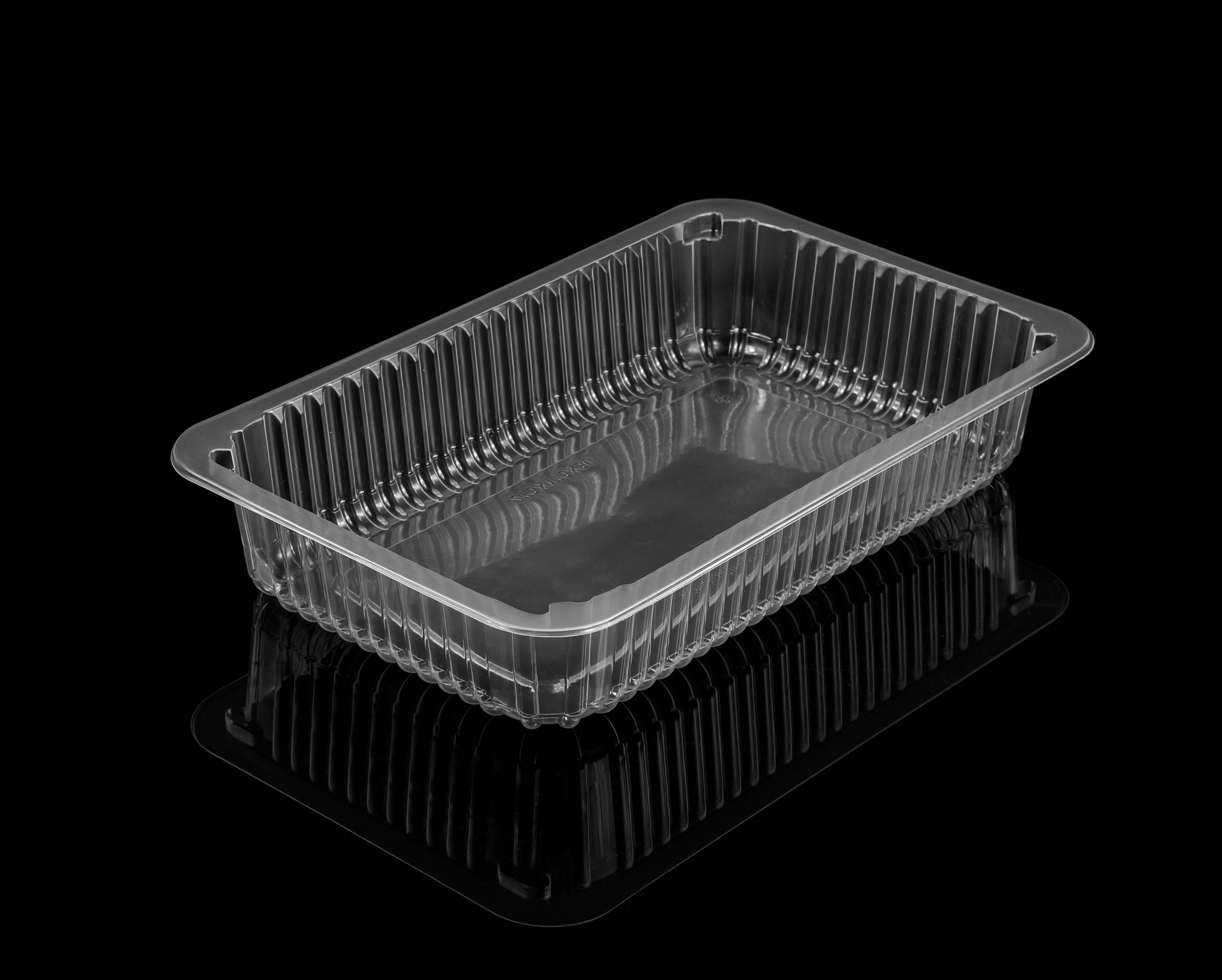
Avantium and Klöckner Pentaplast have signed a capacity reservation agreement covering future supplies of polyethylene furanoate, or PEF, for evaluation in thermoformed food packaging. The agreement is aimed at applications including trays for fresh and prepared foods and links material testing with access to prospective industrial-scale supply.
Avantium markets its PEF under the releaf brand. The polymer is made from furandicarboxylic acid, or FDCA, produced using the company’s YXY technology from plant-based sugars. Klöckner Pentaplast, commonly known as kp, will continue evaluating the material’s processability, performance and suitability for thermoformed packs before any broader commercial adoption.
The reservation gives kp a route to future volumes from prospective industrial-scale plants operated by licensees using Avantium technology. It therefore goes beyond a laboratory collaboration or small trial allocation by connecting packaging development with the production network Avantium wants to establish through licensing. Supply remains dependent on future plants being built and on technical, regulatory and commercial requirements being met.
Thermoformed food trays place several demands on a material at once. Sheet has to extrude consistently, heat evenly, form into stable geometry and retain sufficient stiffness after forming. The finished pack must then work with lidding systems, withstand filling and distribution, protect the food and fit existing recycling and waste-management routes. A polymer with attractive barrier data still has to meet that wider manufacturing specification.
Avantium says PEF provides strong oxygen and carbon dioxide barrier performance compared with conventional packaging polymers. Those characteristics are relevant to products where gas transfer affects shelf life, but final pack performance depends on wall thickness, processing conditions, sealing, storage and the complete packaging structure. Kp’s work will therefore test whether the claimed material properties translate into repeatable tray production.
The agreement arrives as Avantium moves its first commercial FDCA plant in Delfzijl towards integrated operation. All major process units have been commissioned, while first FDCA production, qualification and commercial deliveries remain outstanding. The facility has a design capacity of 5,000 tonnes a year and is intended both to supply initial customers and to demonstrate the process at commercial scale.
That plant is still small relative to established commodity polymer production, which explains the importance of the licensing model. Avantium intends future licensees to build larger facilities using its technology. Capacity reservation agreements allow potential users to indicate future demand before those plants exist, giving developers a clearer view of prospective offtake while converters gain a position in the future supply queue.
Resin availability can become a constraint long before a new polymer reaches technical maturity. A converter may prove that a material can be extruded and formed, but a high-volume food packaging programme is difficult to launch without dependable volumes, specifications and lead times. Reserving future capacity does not remove that risk, although it creates a commercial framework around supply that a simple development agreement does not provide.
Kp operates a large international network producing rigid and flexible packaging for food, beverage, pharmaceutical and medical markets. Its participation gives the material a route into established thermoforming operations rather than an isolated demonstration line. The scale also raises the technical bar because material behaviour has to remain consistent across production equipment, sites and customer specifications if PEF is to move beyond limited trials.
Commercial adoption will also depend on food-contact approvals, economics and end-of-life performance in the markets where the trays are sold. Packaging customers are unlikely to replace established PET, polypropylene or other structures solely because a polymer is plant-derived. The new material must deliver a workable combination of performance, price, availability and compliance while fitting customers’ packaging and sustainability requirements.
The reservation agreement does not commit kp to immediate mass production in PEF, and Avantium has not announced a start date for supply from a future licensed industrial plant. The current step is narrower: kp is continuing technical evaluation while reserving access to volumes that could become available from the next generation of production capacity.
That distinction is important as new packaging polymers move from pilot projects towards commercial procurement. The useful milestones are no longer limited to laboratory barrier figures or prototype packs. Consistent resin from Delfzijl, successful thermoforming trials, food-contact qualification, viable pack economics and licensed capacity at larger scale will determine whether the material can support regular production.
The agreement gives Avantium a defined food tray application within that development path and gives kp a route to future PEF supply if the material meets its requirements. The next phase will show whether technical evaluation and plant commissioning can converge into a packaging programme with the volumes and consistency required for routine food production.