IN Brief:
- The Luxembourg judge withdrew a restriction on Ardagh Holdings on 14 October; the company announced the decision on 15 October.
- Ardagh Metal Packaging reports 23 beverage-can manufacturing facilities across nine countries.
- Ardagh Holdings may resume preparatory work, but has not agreed a buyer, price, transaction structure or ownership transfer.
Ardagh Holdings is permitted to resume preparations for a possible sale of its interest in Ardagh Metal Packaging after a Luxembourg summary judge withdrew a restriction on 14 October 2026. Announcing that withdrawal on 15 October, the company said it could re-engage its advisers. The ruling removes a legal obstacle to preparing a potential transaction; it does not establish that a sale process has resumed, that a buyer has emerged or that a transaction has been agreed.
The preparatory work originated in August, when Ardagh Holdings instructed advisers to consider a disposal involving all or part of its direct or indirect interest in the beverage-can supplier. A September court order then prevented the company from proceeding with the preparations. The October withdrawal permits that work to be taken up again if Ardagh chooses; it neither compels the board to sell nor establishes whether a feasible bid will emerge.
The original restriction followed an application made without notice to Ardagh Holdings, known as an ex parte application, by certain minority holders of senior secured toggle notes due in 2027. The notes were issued by ARD Finance, formerly a parent of Ardagh Group before a recapitalisation completed in November 2025. Ardagh said in September that it had not been able to present its position before the restriction was made. Its October statement does not disclose detailed judicial reasoning or a comprehensive settlement of the wider creditor position.
The dispute concerns interests in an established industrial business, not the status of an individual packaging factory. Ardagh Metal Packaging supplies aluminium beverage cans to brand owners in Europe and the Americas. According to the company, it operates 23 production facilities in nine countries, employs approximately 6,500 people and recorded sales of $5.5 billion in 2025. Those facilities depend on high-volume manufacturing, dedicated forming and coating equipment, and close coordination with beverage filling plants.
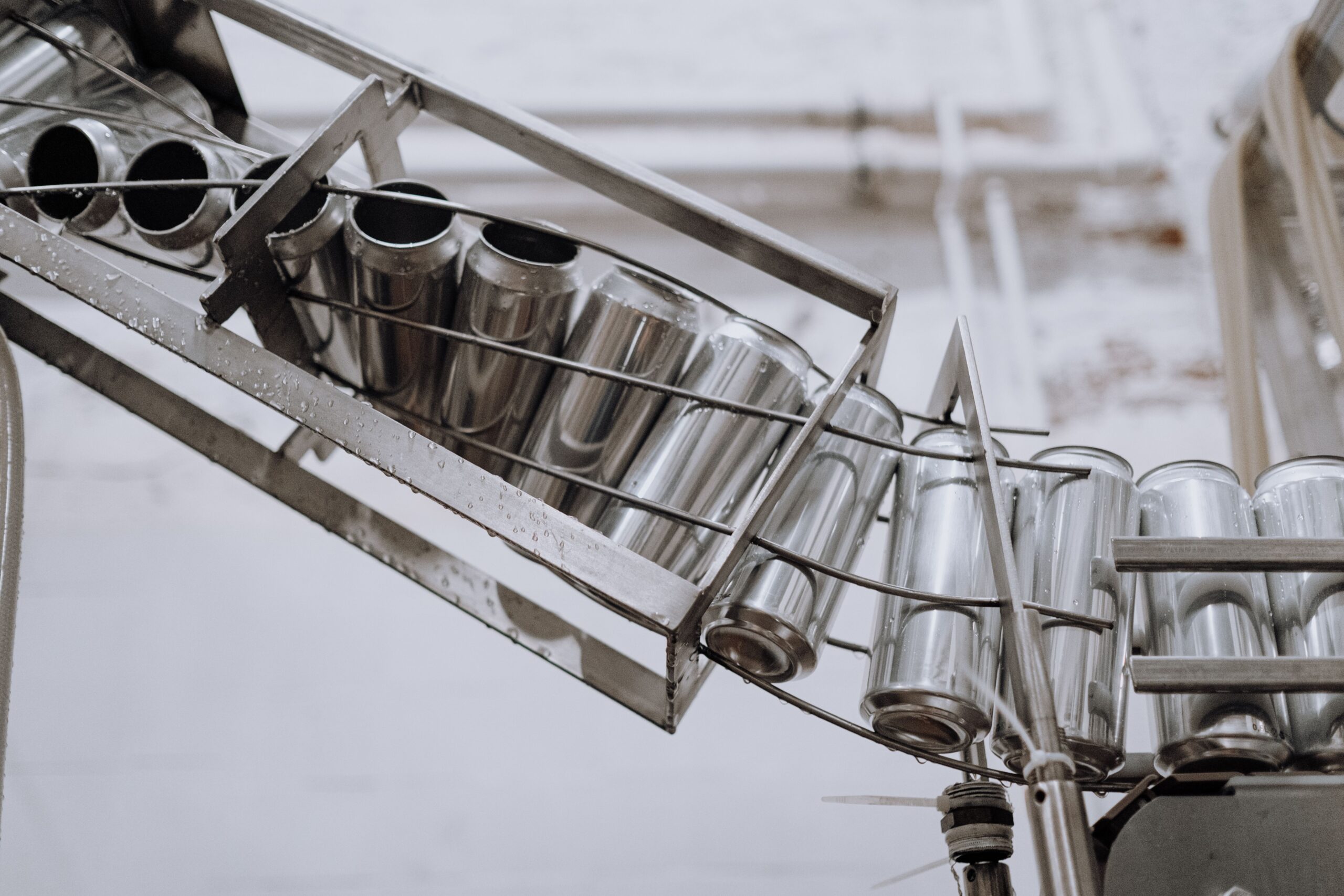
Beverage cans are produced in carefully controlled sequences rather than as simple stamped components. Aluminium sheet is formed into a container body, after which the metal is shaped, washed, coated and cured to meet dimensional and product-contact requirements. Ends and closures follow associated manufacturing routes. Successful filling depends on consistent seam integrity, the interaction of can coatings with the drink, and tightly controlled dimensions on fast packaging lines. Ownership discussions do not change those specifications or release suppliers from the relevant food contact obligations.
Contracts between can manufacturers and beverage fillers are often designed around production scheduling, transport and packaging compatibility. A can size selected for a line needs to work with its seamer, conveyors, inspection equipment and secondary packaging. Changes to a factory network can therefore require technical validation and commercial negotiation before production transfers are practical. Ardagh’s October announcement contains no commitment to transfer production, close plants, alter product specifications or revise supply agreements.
A possible disposal would concern ownership interests in Ardagh Metal Packaging rather than the automatic transfer of individual factories or their production licences. Ardagh Holdings previously contemplated disposing of some or all of its holding and separately described a possible acquisition of outstanding ordinary shares to facilitate a wider deal. None of those possible structures is an agreed step. Any change of control would require further decisions, documentation and appropriate disclosures.
Evercore International Partners was appointed as financial adviser and Kirkland & Ellis International as lead legal adviser when the possible disposal was first outlined. Those appointments support transaction preparation; they do not demonstrate that bids have been accepted. The 15 October update identifies the withdrawal of the court restriction, without naming counterparties, setting a price or reporting any signed agreement.
Ardagh Group’s broader operations comprise metal and glass packaging. The company states that it has 58 manufacturing facilities across 16 countries, with roughly 19,000 employees and sales of approximately $9.6 billion. Ardagh Metal Packaging is a distinct operating business within that footprint, and a potential sale of shares in that business should not be confused with disposal of the entire parent group or its separate glass production activities.
High-speed canmaking lines require substantial investment in forming presses, coating systems, ovens and inspection equipment, and their economics depend on sufficient utilisation. Changes in beverage mix or pack format also affect production planning. Those characteristics may feature in a prospective buyer’s assessment, but Ardagh has not released buyer forecasts, a manufacturing investment programme or transaction synergies arising from a possible sale.
No changes to factory ownership, production capacity or customer supply arrangements were announced with the court decision. Ardagh Holdings may re-engage its advisers to consider a potential disposal, but it has not disclosed counterparties, consideration, binding terms or a timetable. The network of 23 beverage-can facilities remains an operating business under its existing arrangements unless and until a separate transaction is agreed and completed.