IN Brief:
- Canada announced a C$50 million Strategic Response Fund investment for the Canadian Food Innovation Network on 15 October.
- The programme is expected to support more than 200 food and beverage SMEs and expand CFIN’s network to 20,000 members.
- Up to C$200 million in follow-on investment, approximately 300 new jobs and more than 450 supported FTE positions are forecasts.
The Canadian government has committed C$50 million to the Canadian Food Innovation Network (CFIN) to help food and beverage processors adopt automation, artificial intelligence and other manufacturing technologies. Announced by industry minister Mélanie Joly in Peterborough, Ontario, on 15 October 2026, the investment will be delivered through Canada’s Strategic Response Fund and forms part of the National Food Security Strategy. The award is intended to expand an existing industry network rather than fund a named new factory or confirm that equipment has been installed.
CFIN is an industry-led, not-for-profit organisation linking processors with technical partners, innovators and sources of investment. Government forecasts put participation at more than 200 small and medium-sized food and beverage enterprises, with support intended for adoption and implementation of automation, artificial intelligence and digital manufacturing. The government also expects the network to grow to 20,000 members, from a reported base exceeding 9,500. Neither number is an audit of factories already upgraded using this particular award.
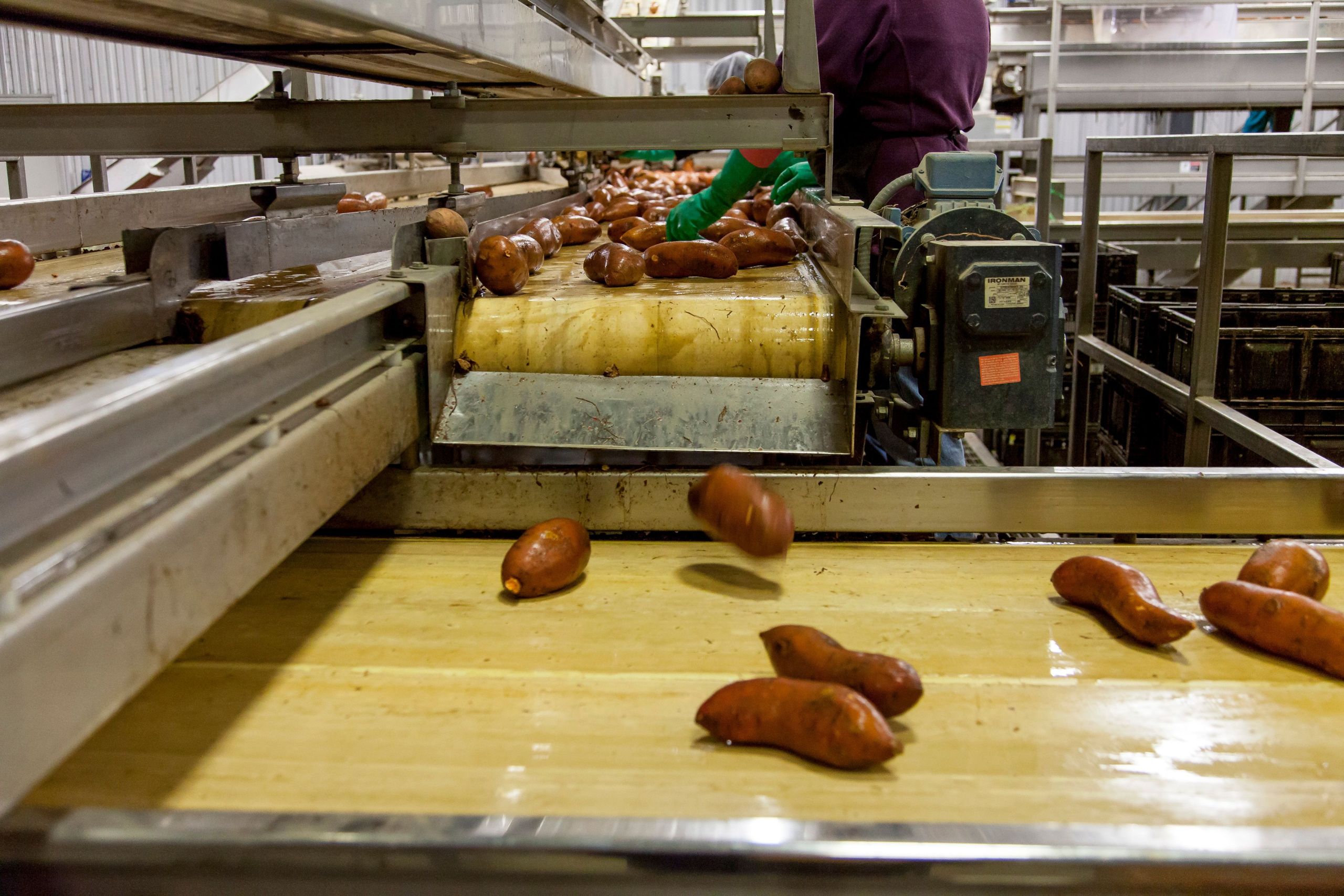
Automation in food manufacture covers considerably more than placing a robot beside a conveyor. Material delivery, recipe preparation, machine controls, filling, inspection and packing have to operate as one repeatable sequence, frequently with stringent cleaning and traceability requirements. Introducing new technology can mean connecting existing machines to production data systems, replacing manual transfers or redesigning an inspection station. The value of a project depends on measurable line performance and its ability to handle actual product variation.
Smaller processors can face particular obstacles in adopting these systems. A food factory may need capital for machinery while also paying for software integration, training, installation downtime and process validation. Equipment developed for one food product may not immediately suit another with different particle size, temperature, viscosity or hygiene requirements. The purpose of a shared innovation network is to bring together specialist knowledge and companies that can test whether a proposed solution is technically and commercially viable before broader deployment.
The announcement identifies artificial intelligence and digital manufacturing alongside physical automation. Such tools can include software that analyses inspection images, production trends or maintenance signals, but a credible application requires relevant operational data. Sensor reliability, data quality and differences between product recipes influence the accuracy of any model. An algorithm predicting line interruptions will provide limited benefit unless operators can identify the cause and alter maintenance or process settings safely.
CFIN chief executive Dana McCauley describes the organisation’s Food 4.0 approach as support for processors adopting Canadian-developed automation, AI and digital tools, alongside the businesses supplying them. The October announcement sets out that intention but does not identify an approved list of recipient factories or the precise distribution of grants among equipment purchases, trials and advisory services. Those details will determine whether support reaches the production bottlenecks that individual companies consider most urgent.
The government forecasts up to C$200 million in subsequent investment through the network, approximately 300 new jobs and support for more than 450 full-time-equivalent positions overall. All three figures are projected programme outcomes, not achievements delivered by the 15 October announcement. The employment measures are different categories and cannot be combined into a single total. Follow-on investment would depend on further commitments from participating businesses and other funders.
CFIN’s existing project record is distinct from the newly announced allocation. Since its establishment in 2021, the organisation reports support for more than 104 projects with a combined value of approximately C$43.4 million. It also reports over C$140 million in follow-on investment, more than 1,000 jobs supported and contributions to upwards of 200 intellectual property applications. Those achievements precede the new C$50 million allocation and cannot be counted as results of it.
The funding sits within Canada’s National Food Security Strategy, announced in June 2026 with a programme of C$3.2 billion over ten years. That wider package includes the C$1 billion Food-Link Fund and addresses several parts of the food system. The present CFIN award has the narrower purpose of increasing innovation and technology adoption in domestic processing. It should not be portrayed as a direct consumer price subsidy or evidence that grocery prices will fall as a consequence.
An effective manufacturing trial will need its own measures of success. These could include units produced per hour, production losses, labour required for repetitive handling, changeover time or energy used per tonne of finished product, depending on what the project is trying to improve. Where a technology touches food or controls a critical quality step, hygiene, inspection performance and regulatory compliance cannot be compromised to achieve a productivity target. Independent measurement before and after implementation is essential for separating an engineering improvement from an optimistic project forecast.
CFIN has not yet announced the complete list of businesses that will receive support through this allocation, the specific equipment they will purchase or the commissioning dates of individual projects. The C$50 million commitment increases the funding available for CFIN’s processor support and technology network, but recipient selection, installed equipment and commissioning dates remain unreported. Future programme decisions and factory operating results will establish how much of the planned technology adoption is realised.