IN Brief:
- The CEA Autumn Conference will take place in Coventry on 18 November, covering industrial steam efficiency and lower-carbon heating technologies.
- High-temperature heat pumps, waste-heat recovery, electrification, biomethane and hydrogen are among the subjects on the programme.
- Boiler-water treatment, system efficiency and operator competence will also be examined, with applications across food manufacturing.
Steam systems remain central to food manufacturing, supplying heat for processes ranging from dairy pasteurisation and product cooking to equipment cleaning and sterilisation. Reducing their energy consumption while maintaining reliable production is increasingly influencing decisions about boilers, heat recovery and alternative heating technologies.
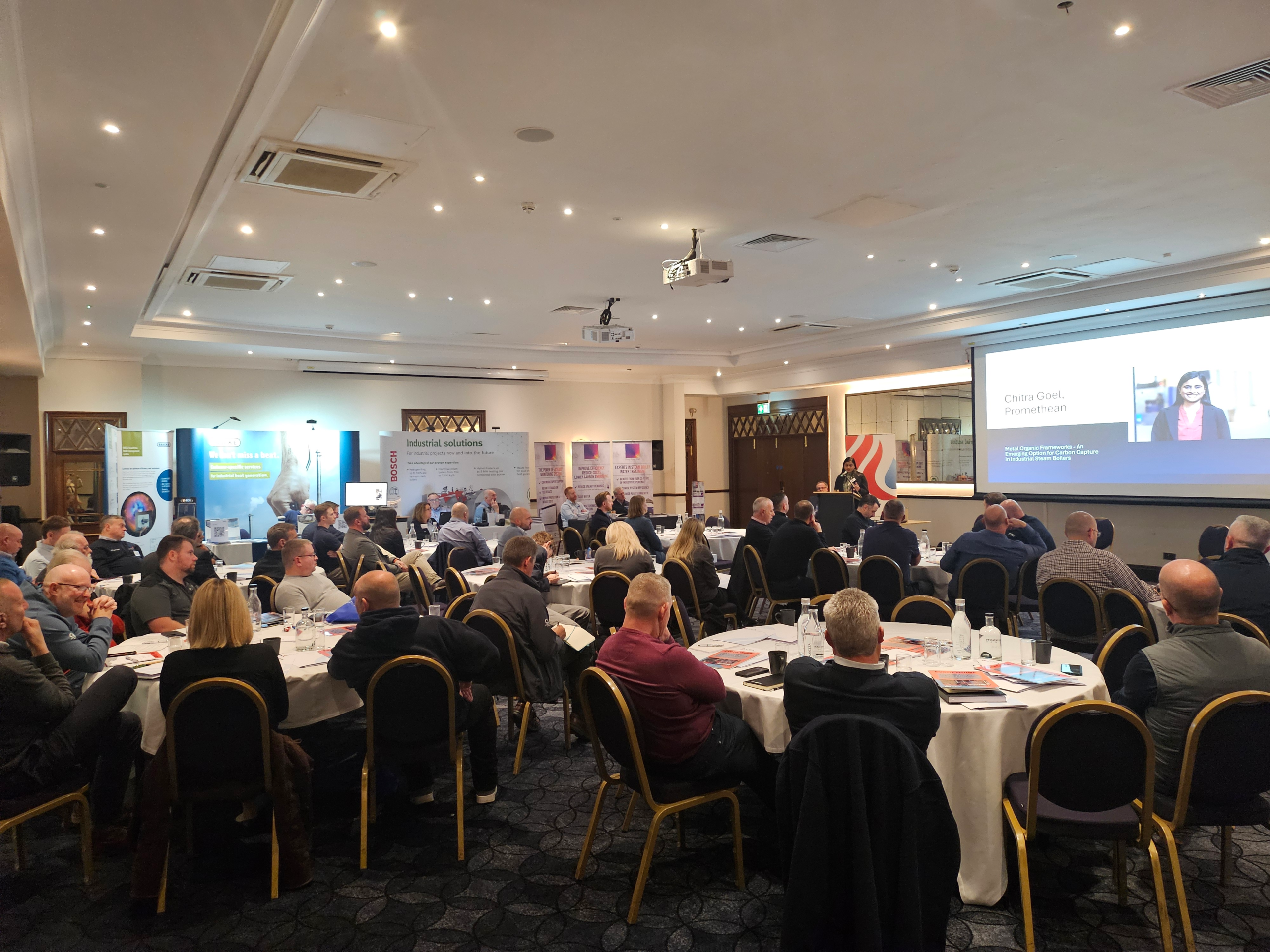
The Combustion Engineering Association (CEA) will examine these technologies at its Autumn Conference in Coventry on 18 November 2026, bringing together industrial heating specialists, equipment manufacturers and engineers responsible for steam generation and boiler-house operation.
Under the theme Full Steam Ahead – Tomorrow’s Technology, Today’s Efficiency, the programme will address longer-term changes to industrial heating alongside measures to improve the safety, reliability and operating efficiency of existing steam plants.
The event covers industrial steam across several manufacturing sectors rather than focusing exclusively on food production. Its subjects nevertheless align with important process heating requirements in dairies, breweries, beverage plants and other factories handling thermally processed food products.
Michael Kaye, general manager of the CEA, said: “Industrial steam users face the challenge of improving efficiency and controlling operating costs while preparing for the transition to lower-carbon technologies.”
That challenge is particularly complex where an established factory uses a central steam network to supply several production processes. A boiler plant may provide heat to pasteurisers, cooking equipment, cleaning systems and other machinery with different temperature, pressure and operating requirements.
Steam is an effective industrial heat-transfer medium because it releases substantial energy as it condenses. Through suitable heat exchangers or jacketed equipment, that energy can be transferred to a product or process without necessarily bringing the steam into direct contact with the food.
The distinction between direct and indirect steam applications is important. Where steam contacts food or food-contact surfaces, additional quality and contamination-control requirements may apply, depending on its use and the production process.
Food manufacturing equipment is also designed around validated operating conditions. Thermal treatments such as pasteurisation and sterilisation must achieve the required temperature and exposure time, making dependable heat delivery essential when considering alternative steam generation systems.
Replacing a gas-fired boiler with another technology therefore requires more than comparing nominal energy efficiency. The replacement must provide adequate heat at the required conditions while responding to changes in demand during start-up, production, cleaning and shutdown.
Many factory steam systems experience substantial load variation across a working day. A process may require a large quantity of heat during initial heating and considerably less once the target temperature has been reached, while cleaning operations can create separate periods of demand.
The way a boiler responds to these changes affects fuel use and equipment operation. Frequent cycling, inefficient operation at low load and losses within the distribution network can increase energy consumption even when the boiler performs satisfactorily under its rated conditions.
Industrial heat pumps are among the technologies scheduled for discussion at the conference. Darren Bryant, founder and chief executive of Heatcatcher, will examine the challenge of raising steam using high-temperature heat pump systems and recovered heat.
Heat pumps use external energy, usually electricity, to transfer heat from a lower-temperature source to a higher-temperature destination. Their potential efficiency advantage comes from moving existing thermal energy rather than generating the entire heat output directly from electrical input.
The available heat source and the required delivery temperature strongly influence system performance. Recovering relatively warm process heat can be more favourable than extracting heat from a much colder source when the intended application requires high-temperature output.
Food factories may have recoverable heat associated with refrigeration, process cooling, warm wastewater and other operations. The technical potential depends on the temperature, quantity and timing of the available heat, together with the requirements of the process that could reuse it.
A factory can generate waste heat and require steam without those conditions necessarily occurring at the same time. Matching the two may require thermal storage, additional controls or supplementary heating, particularly where production schedules create irregular demand.
Some thermal requirements may also be better served without generating steam in the first place. Direct heat recovery or another heating arrangement can be considered where the required temperature and process design allow, avoiding some of the losses associated with steam generation and distribution.
The International Energy Agency has identified food and beverage manufacturing among the industrial sectors with substantial opportunities to electrify lower-temperature heating. Commercially available technologies include heat pumps, electric boilers and resistance heating, although suitability varies with the temperature and duty of the individual process.
The CEA conference will also examine direct electrification. Aramis Cook, head of engineering at Pure Renewables, is scheduled to discuss the use of electric technologies for industrial steam generation.
Electric boilers can supply steam without fuel combustion at the point of use and can potentially be incorporated into existing steam networks. Their operation still depends on adequate electrical infrastructure, the cost and availability of power, and the characteristics of the factory’s demand.
High electricity prices or insufficient connection capacity can affect the commercial case for electrification. The carbon performance of the system also depends on the electricity supplied, making energy procurement and the operating schedule relevant to investment decisions.
Alternative gaseous fuels will form another part of the programme. Sian Rowlands, innovation and funding manager at Wales & West Utilities, will explore biomethane through an industry case study, while Dr Clare Jackson, chief executive of Hydrogen UK, will address hydrogen policy and market developments.
Biomethane may offer a means of reducing reliance on fossil natural gas, subject to fuel availability, production methods and the arrangements used to supply it. Compatibility with existing combustion equipment and the complete emissions profile must be established for a particular installation.
Hydrogen presents a different set of engineering considerations, including fuel supply, burner compatibility, combustion characteristics and safety requirements. Its use as an industrial fuel cannot be assessed solely by comparing emissions at the point of combustion, because production and delivery also influence its overall environmental performance.
The morning sessions will open with an energy transition outlook from Dr Sarah Kimpton, vice president and energy transition director at DNV. Together, the presentations will cover several possible approaches to future steam generation rather than a single technology suitable for every factory.
The afternoon programme will turn towards existing equipment. Dave Tilleard of Byworth will discuss steam safety and energy efficiency from a whole-system perspective, while a presentation from M&M Training will examine practical ways of reducing boiler-house operating costs.
Steam-system efficiency depends on more than the boiler’s combustion performance. Distribution pipework, insulation, condensate return, steam traps and the operation of connected equipment all affect the quantity of energy required to deliver heat to the process.
Returning hot condensate to the boiler system can reduce the energy needed to heat replacement water. Maintaining effective insulation and identifying unwanted steam losses can also improve performance, although the available savings depend on the design and condition of the installation.
Water treatment will be addressed by Pete Hutchinson of MBS. Control of water chemistry is essential because scale formation, corrosion and other problems can reduce heat-transfer performance, damage equipment and introduce operational risks.
Water treatment requirements also vary according to boiler design and operating pressure. Appropriate monitoring, blowdown control and maintenance procedures are needed to manage the accumulation of dissolved material while avoiding unnecessary losses of treated water and energy.
Operator competence completes the programme’s practical focus, with Dave Chapman of IBHTEC scheduled to address training fundamentals. Changes to steam generation technology do not remove the need for competent supervision, routine inspection and procedures appropriate to the equipment being operated.
The conference will take place at the Holiday Inn in Coventry on Wednesday 18 November, following a reception and gala dinner on 17 November. An accompanying exhibition will bring together suppliers and manufacturers involved in industrial steam and boiler-house technology.
Lower-carbon heating investments involve different requirements from measures intended to improve an existing system. Replacing a boiler or introducing heat pumps may require substantial engineering changes, while improvements to controls, maintenance and heat recovery can sometimes be assessed within the current plant configuration.
Food manufacturers must also account for the consequences of interrupting established production processes. Integrating a replacement heat source may require planned shutdowns, changes to controls and verification that the new arrangement continues to deliver the required thermal treatment.
Factory heat demand, the available energy infrastructure and process-specific operating requirements will determine which of the approaches discussed at the conference can be adopted. The November programme will examine those options while addressing the efficiency and safety of steam systems already operating across industry.