IN Brief:
- Trial data at Kepak McIntosh Donald showed weekly power use on one packaging machine falling by more than 64%.
- ECOTORQUE variable speed drives matched R5 rotary vane pump output to actual chamber demand, including Eco-mode during idle periods.
- Kepak has extended the approach to other suitable pumps on site and plans wider deployment across additional group locations.
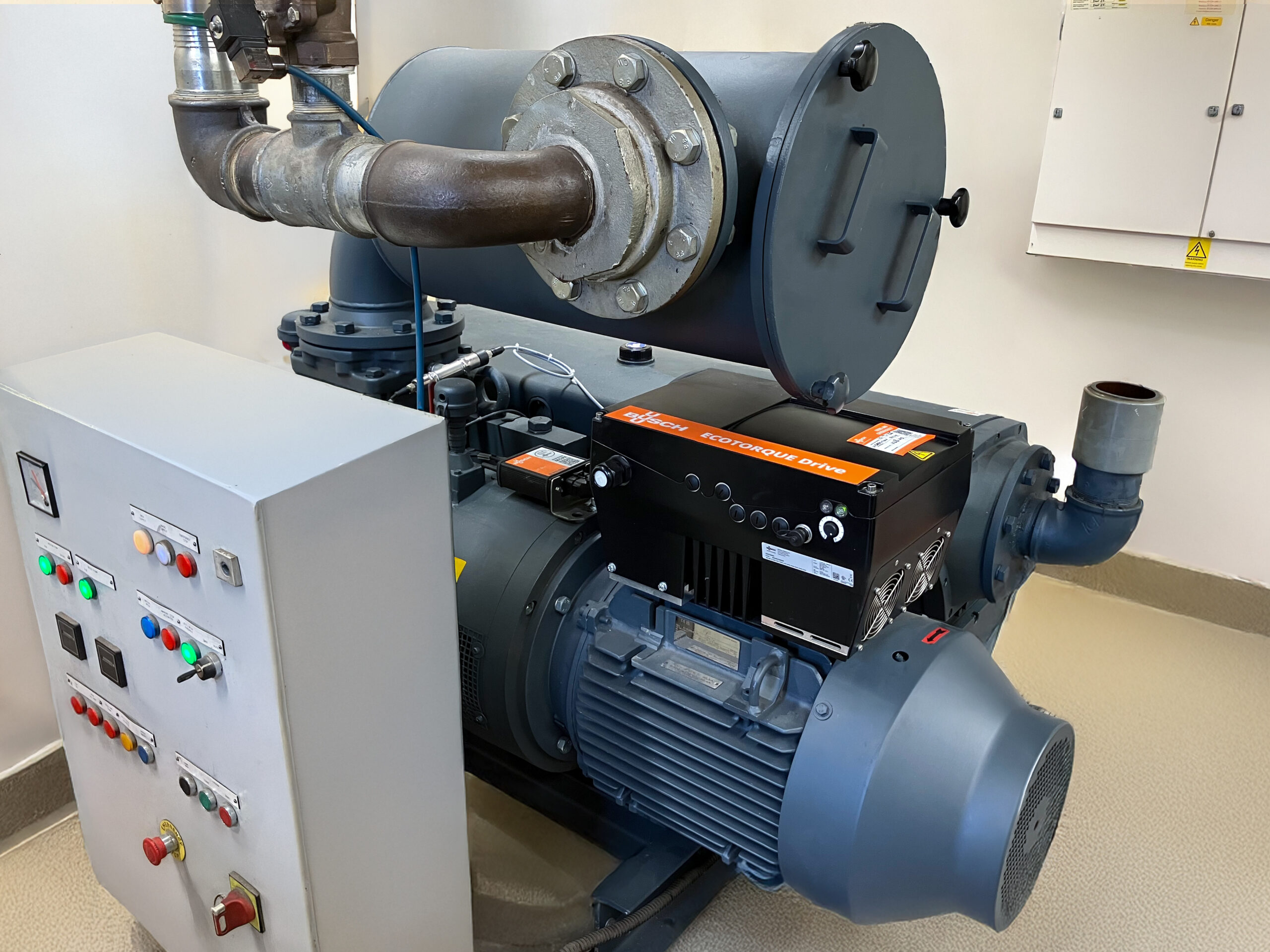
Busch Group has retrofitted oil-lubricated rotary vane vacuum pumps at Kepak McIntosh Donald’s meat processing operation near Aberdeen, using its ECOTORQUE variable speed drive technology to cut power demand on vacuum packaging lines and reduce mechanical wear on the installed assets.
The project focused on the site’s existing Busch R5 pumps, which support chamber-type vacuum packaging systems across four main lines. On each cycle, meat portions are loaded into barrier bags, the chamber is sealed, and the pump, working with a vacuum booster, evacuates air before the bags are hermetically sealed. In that set-up, stable vacuum performance is directly tied to shelf life, oxidation control, throughput, and line reliability.
Before the retrofit, the pumps were running continuously at a fixed 50 Hz, regardless of whether the chambers were actively drawing vacuum. That meant the same energy draw during production as during pauses, breaks, and idle periods. Malcolm Baillie, Engineering Manager at Kepak McIntosh Donald, said: “Our packaging machines typically run from six in the morning until at least four in the afternoon. Uptime and reliability of the vacuum supply are absolutely essential to keep product moving.”
Busch identified the retrofit opportunity during a plant visit and proposed a measured trial rather than a straight equipment swap. A power logger was installed to capture baseline energy use for a week on one chamber packaging machine. ECOTORQUE was then fitted to the rotary vane vacuum pump, allowing pump speed to adjust dynamically to real-time process demand, followed by a second week of measurement.
The resulting data showed weekly energy consumption on the trial machine dropping by more than 64%. During active production, energy savings were around 26%. During breaks, the reduction reached 94%, as Eco-mode cut consumption when vacuum was not required. Average power demand during production fell from 16 kW to 11.8 kW.
Across the trial week, Busch said that translated into savings of about 903 kWh, worth roughly £207, based on an electricity cost of 23p per kWh. Annualised across 50 production weeks, that equates to around £10,350 for one machine. Baillie said: “The projections Busch provided were already attractive. But the actual trial results were even better.”
The retrofit also changes the maintenance picture. Lower-speed running during low-demand periods reduces wear on vanes, bearings, and associated components, while lower oil temperatures slow oil degradation and can extend service intervals. The same configuration can also raise pump speed to 60 Hz when required, giving headroom for up to 20% more capacity without replacing the pump itself.
Kepak has since rolled out ECOTORQUE to other suitable pumps at the site and is planning to extend the approach to further group locations. For packaging operations facing high energy prices and long daily run times, retrofitting existing vacuum equipment is proving to be a more practical route than waiting for full line replacement.