IN Brief:
- UK dairy processors collect and process around 15 billion litres of milk each year.
- Dairy UK identifies energy volatility, ageing assets, skills, regulation, and investment as structural resilience issues.
- The infrastructure proposal follows a separate sector pathway identifying £2.4bn of investment requirements through 2030.
Dairy UK is calling for dairy processing to be recognised as essential national infrastructure, arguing that the continuous movement of raw milk through the UK food system makes processing capacity a core resilience asset rather than a replaceable step between farms and retailers.
Its new white paper, Securing the UK’s Dairy Future, says processors collect and handle around 15 billion litres of milk each year and employ more than 22,200 people. Raw milk cannot be stockpiled for long periods or readily replaced through imports in unprocessed form, so the system depends on factories remaining able to receive, treat and convert milk every day.
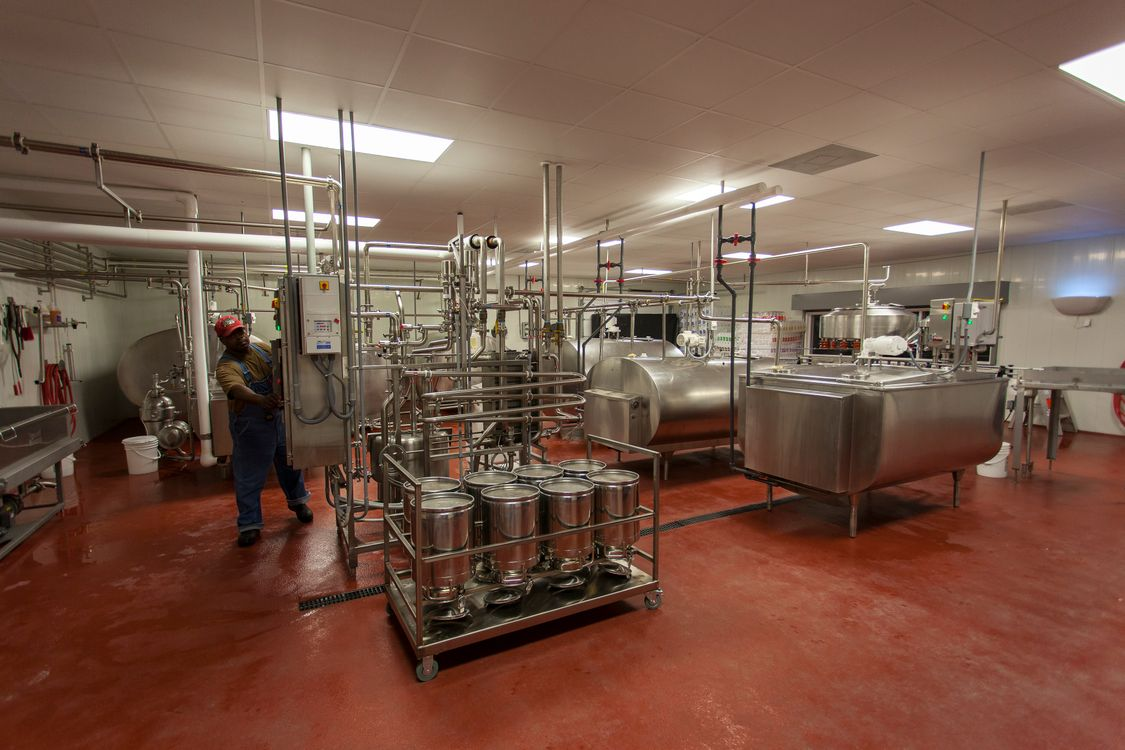
That operating model leaves little room for prolonged disruption. Farms continue producing milk regardless of whether a pasteuriser, separator, evaporator, dryer, filling line or refrigeration system is available downstream. Lost processing capacity can therefore create problems for collection, storage, transport and waste management before shortages appear at retail level.
Dairy UK identifies energy volatility, skills shortages, ageing assets, regulatory complexity and the capital required for modernisation and decarbonisation among the main pressures on processing resilience. The paper places energy particularly high on the list because dairy plants combine continuous electrical loads with substantial demand for process heat.
Pasteurisation, evaporation, drying, refrigeration, chilled storage, cleaning, pumping, compressed air and packaging all draw on site utilities. Changes to those systems have to be planned around hygiene and production requirements, while major equipment cannot always be replaced during a convenient extended shutdown.
The policy case arrives alongside a wider investment challenge already identified by the sector. A recent dairy pathway estimated that £2.4 billion of investment will be required across the industry to support its transition to 2030, covering farms, processing, energy, water and other infrastructure.
Processors have already recorded significant efficiency gains. Industry data cited alongside that work shows energy intensity has fallen by more than 30% since 2008 and water use by more than 50%, while the proportion of waste sent to landfill has dropped sharply. Those improvements leave fewer simple projects available and increase the likelihood that further progress will depend on larger capital programmes and more complex plant changes.
Energy projects illustrate the difficulty. Heat recovery, electrification, refrigeration upgrades, renewable generation and changes to steam or hot water systems can reduce operating costs and emissions, but installation has to be coordinated with production. A technically efficient project can still be difficult to justify if implementation threatens output at a plant already operating close to capacity.
Water presents a similar constraint. Dairy processing needs water for cleaning, rinsing, heating, cooling and hygiene, and reductions cannot compromise microbiological control. Further savings are likely to rely on better measurement, recovery of suitable streams, improved treatment and more precise cleaning cycles rather than simple cuts in sanitation.
Skills sit alongside capital because increasingly automated dairy plants need engineering, controls, maintenance, food safety and process expertise. Ageing equipment can raise maintenance demand at the same time as businesses install more digital and energy efficient systems, creating a requirement to support legacy assets while developing capability for new technology.
Dairy UK’s infrastructure proposal would not automatically fund those investments. Recognition would instead affect how dairy processing is considered in resilience planning, energy policy, emergency prioritisation and long term engagement between government and the food system. The paper argues that processing should be treated with the same strategic attention as other systems whose interruption can have immediate national consequences.
The nutritional role of dairy forms another part of the case. Dairy UK points to the sector’s contribution to calcium, iodine, riboflavin and vitamin B12 intake across different age groups. That argument sits beside the industrial one: the nutritional value only reaches consumers if milk can move through collection, processing, packaging, storage and distribution without a major break in capacity.
The dependence between those stages is unusually tight. A processing failure can affect farms, hauliers, packaging demand, cold storage and retailers within a short period, and spare capacity elsewhere may not match the required product mix or geography. Diverting raw milk to another plant also adds transport and scheduling pressure when sites are already balancing production plans.
Dairy UK’s proposal puts factories at the centre of a food security discussion that often begins with agricultural production. Around 15 billion litres of milk may originate on farms each year, but its usable shelf life and commercial value depend on a manufacturing network that has to keep running continuously.
The next question is whether government adopts that infrastructure framing in practical policy. Without changes to planning, energy resilience, investment conditions or emergency treatment, recognition would remain largely descriptive. The processing sector is seeking a status that leads to operational consequences as ageing assets and decarbonisation projects increase the amount of capital that must be deployed without interrupting daily production.