IN Brief:
- Duni Group has introduced Sealable Ronda for salads, sushi, poke bowls, and ready-to-eat meals.
- The bowl combines paper, hermetic sealing, and modified atmosphere packaging for shelf-life and logistics performance.
- The launch supports the shift towards lower-plastic packaging without sacrificing sealing, hygiene, or distribution functionality.
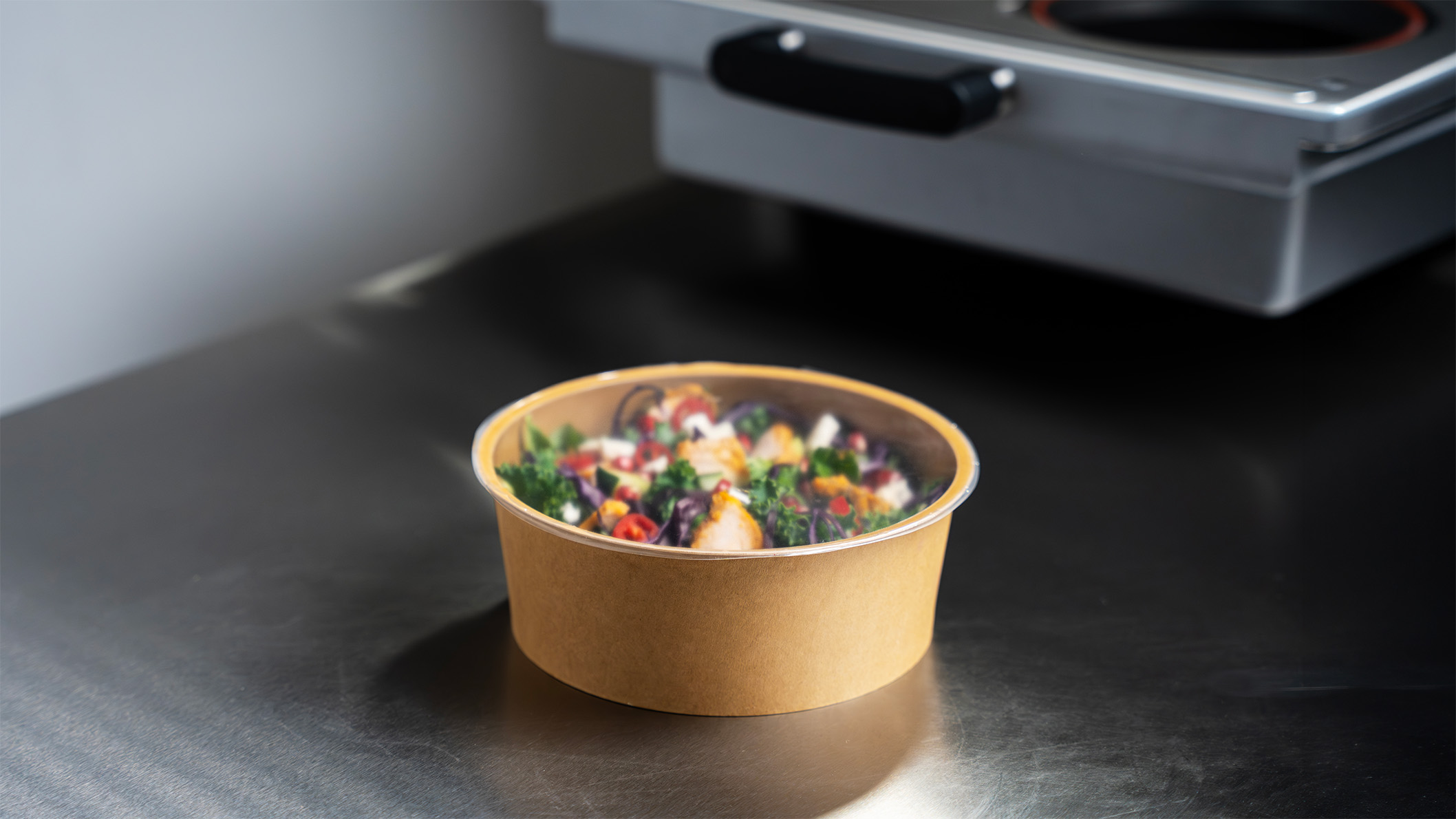
Duni Group has launched Sealable Ronda, a sealable paper bowl developed for salads, bowl meals, sushi, poke, and other ready-to-eat food formats.
The packaging has been developed within the Duniform brand and combines a paper-based bowl with hermetic sealing and modified atmosphere packaging. The system is designed to extend freshness, reduce food waste, and improve handling through distribution, retail, and foodservice operations.
Sealable Ronda provides a leak-resistant, tamper-evident, and hygienic pack while reducing the relative use of plastic compared with conventional plastic bowls of a similar size. Duni Group states that the solution contains more than 85% lower plastic content and delivers more than 50% lower CO2 emissions compared with comparable plastic-based Duni bowls.
The bowl is made from FSC-certified and other controlled material, can be printed, and is suitable for both hot and cold dishes. It is stackable and designed for retail display, making it suited to chilled grab-and-go formats, food-to-go ranges, prepared salads, and premium ready meals.
Duni Group is offering the bowl as part of a broader Duniform system, including compatible packs, films, sealing machines, technical service, and advice. A packaging change of this type requires validation across tray geometry, sealing film, machine settings, gas mix, throughput, pack integrity, shelf-life performance, and cold-chain handling.
“Reducing food waste is one of the most effective ways to lower the climate impact of food. With Sealable Ronda, we enable our customers to keep ready-to-eat meals fresh for longer, while offering a secure, sealed solution in paper. This strengthens both food safety and confidence throughout the value chain,” said Marie Davies, category manager trays and films at Duni Group.
Ready-meal packaging now has to satisfy more demanding requirements than simple containment. Producers want to move away from virgin plastic, but leakage, weak stackability, poor sealing, and shortened shelf life remain unacceptable in chilled food operations. A lower-plastic format has to perform as an industrial component, not as a cosmetic substitution.
Modified atmosphere packaging remains central to that performance. In perishable salads, bowls, and chilled prepared foods, shelf-life extension is tied directly to product loss, retail availability, and production scheduling. Small improvements in usable shelf life can increase distribution reach, reduce write-offs, and smooth factory planning where production is concentrated into defined windows.
The packaging sector is also adjusting to tighter material rules and retailer commitments. Prepared food creates a demanding use case because fresh product visibility, grease resistance, leak prevention, tamper evidence, convenience, and pack appeal all sit in the same primary package. Paper-based formats are gaining ground where coatings, seal structures, and machine compatibility can carry the mechanical and barrier performance historically supplied by plastics.
Sealable Ronda shows how lower-plastic packaging is becoming more system-led. The material change is only one part of adoption. The decisive factors are sealing reliability, MAP performance, throughput, pack integrity, and how the format behaves through chilled distribution and retail display.
If the system holds those requirements at production scale, it offers a credible route into lower-impact ready-meal packaging without forcing producers to trade sustainability against shelf life or operational reliability.