IN Brief:
- Edonia has secured €15 million from SWEN Blue Ocean 2, Asterion Ventures and EIT Food alongside other financing.
- The company plans dedicated French production capacity for its spirulina based Edo ingredient.
- Edonia says around 20 contracts represent approximately €30 million in pre-orders.
Edonia has secured €15 million to expand production of Edo, its spirulina based food ingredient, with the financing supporting dedicated manufacturing capacity in France and wider commercial sales.
SWEN Blue Ocean 2, Asterion Ventures and EIT Food are backing the latest funding round alongside non-dilutive finance, including support through France 2030. The investment follows a €2 million raise in 2024 that helped Edonia move its process from laboratory development into pilot production and establish an initial industrial supply chain.
Edonia says it has since completed early orders for customers including Aliive and foodservice group Newrest, while around 20 contracts represent approximately €30 million in pre-orders. Dedicated production capacity is intended to turn that order pipeline into regular output as the company moves beyond batches produced through its pilot operation.
Edo is produced from spirulina and sunflower oil using a process Edonia calls Edonization. Controlled cooking changes the algae’s physical structure and sensory characteristics, producing a soft granular ingredient rather than the powdered form in which spirulina is more commonly supplied.
The physical change determines how the ingredient can be handled in a food factory. A granular material can be mixed directly into fillings, prepared meals, bakery products and other formulations without first recreating structure from an isolated protein powder, binders and texturising ingredients. Edonia is therefore selling a food component as well as a source of protein.
Industrial production will depend on the consistency of that structure as volumes rise. Cooking conditions, residence time, oil addition and moisture have to remain controlled across larger batches, while natural variation in the spirulina feedstock cannot be allowed to move the finished material outside its required specification.
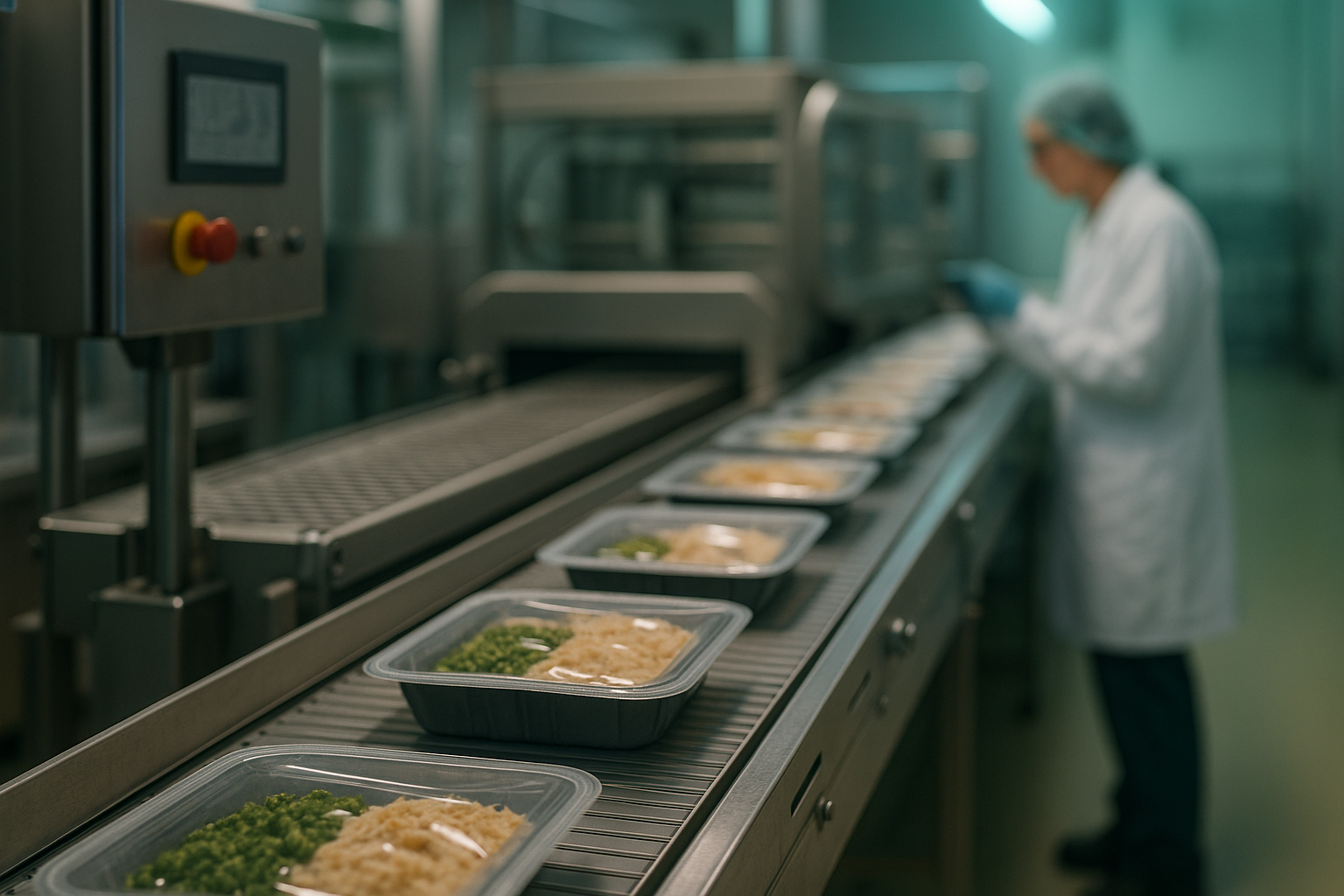
Edonia says Edo retains its structure during processes including sterilisation and is designed to avoid water release during subsequent manufacture. That performance becomes important in filled meals and other products where movement of water between ingredients can change texture, portioning and appearance during heating or storage.
The same requirement extends through mixing, pumping, freezing and reheating. A formulation that behaves correctly during bench development can become difficult to control when larger pumps, longer pipe runs and industrial mixers subject the material to different shear forces and residence times. Scaling the ingredient therefore depends on process tolerance as much as nutritional composition.
Edonia plans to establish the next production stage within an existing French industrial site, allowing part of the investment to be directed towards dedicated process equipment rather than a completely new factory. Larger scale production is planned from 2027.
Using an existing industrial location can shorten the infrastructure programme, although commissioning still has to prove that the equipment can reproduce the pilot process at greater throughput. Temperature control, feed consistency and cleaning procedures will all influence whether successive batches retain the texture and flavour established during development.
The pre-order book gives Edonia an initial volume base for that commissioning phase. Production economics improve when equipment runs for longer campaigns at higher utilisation, while irregular orders can leave relatively specialised machinery operating below its intended rate. Delivering existing contracts consistently is therefore closely tied to the cost position of the new capacity.
Edo also follows a different manufacturing route from proteins that are extensively fractionated and purified before formulation. Retaining more of the spirulina in a whole food format can remove some separation stages, but the process still has to control colour, flavour and texture sufficiently for the ingredient to work in products where consumers may be unfamiliar with algae based foods.
Applications developed by Edonia include chilli, dahl, lasagne, fillings, cookies and bars, spanning products with very different moisture levels and thermal treatments. That range places greater emphasis on applications support because the same ingredient has to be introduced at suitable points in each production process rather than treated as a universally interchangeable powder.
Industrial customers also require repeatable specifications across shipments. Protein content, moisture, particle structure, flavour and microbiological quality all influence how a material performs when a recipe is transferred from development work into routine production, particularly where automated dosing and filling systems allow little tolerance for batch variation.
Moving from pilot manufacture into dedicated capacity will put those controls under greater pressure. More material has to be processed without widening variation, cleaning and changeovers have to fit commercial production schedules, and output has to arrive at customers in volumes that justify incorporating a relatively unfamiliar ingredient into established products.
The €15 million investment gives Edonia the resources to build that production base. Its next test is whether Edonization can retain the properties demonstrated during pilot work while manufacturing enough consistent material to fulfil contracts already signed.