IN Brief:
- ETi Gıda is acquiring 100% of Trubar for $173m in cash.
- Trubar’s plant-based, “clean-label” positioning gives ETi an established US footprint in protein bars.
- Cross-border scale-up will test supply chain integration, capacity planning, and regulatory execution.
Turkish snack manufacturer ETi Gıda is acquiring US nutrition bar brand Trubar in a $173 million all-cash deal, extending a broader pattern in snacking: legacy scale players buying their way into higher-growth “better-for-you” formats rather than trying to build credibility from scratch.
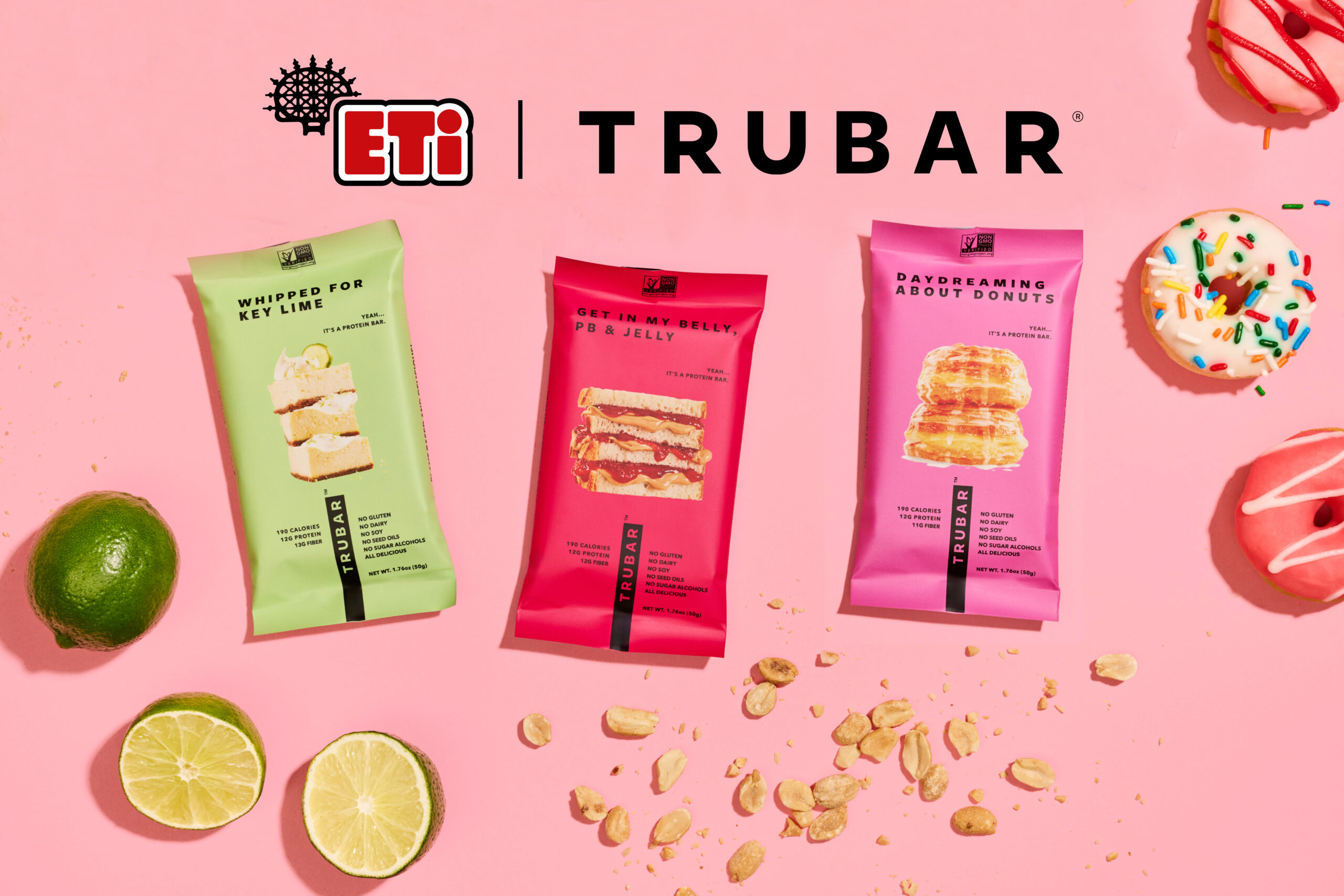
Under the terms announced by the parties, ETi is acquiring 100% of Trubar for $173 million in cash, with no earn-out, and Trubar’s founder, leadership team, and employees are expected to remain in place. For ETi, the strategic prize is immediate access to US retail channels and an operating brand that already sits in the functional snacking space, where consumer expectations are moving faster than traditional biscuit and confectionery cycles.
Trubar founder and CEO Erica Groussman framed the deal as an acceleration play, saying, “By joining the ETi family, we’re not changing who we are – we’re doubling down on it.” The line speaks to a familiar integration risk: functional snack brands trade on formulation choices, ingredient narratives, and fast product iteration, while large manufacturers trade on consistency, cost control, and capacity utilisation. Making those strengths additive, rather than contradictory, is the hard work after the cheque clears.
The deal comes with scale claims that suggest why ETi moved now. Trubar was founded in 2019 and, according to the company, has expanded its retail footprint to more than 21,000 locations, reaching nearly $100 million in gross revenue in 2025. It has also widened its range with Trubar Kids, pushing further into the “school-safe” and family snacking segment that sits adjacent to traditional confectionery, but with different ingredient and allergen expectations.
For ETi, the acquisition lands as the company looks to deepen its presence outside its home market. Firuzhan Kanatlı, Chairman of the Board of ETi Gıda, said, “Welcoming TRUBAR into the ETi family is a strategic step in expanding our presence in North America.” The company describes itself as family-owned, founded in 1961, with nearly 8,500 employees and nine production facilities, manufacturing across biscuits, cakes, chocolate, savoury snacks, wafers, and other categories.
Industrial execution will decide how quickly this becomes more than a footprint deal. Protein and nutrition bars are deceptively technical at scale, with texture, shelf-life, and ingredient variability creating process challenges that do not always map neatly onto conventional confectionery lines. If ETi intends to use its manufacturing network to drive margin and availability, it will need to manage formulation tolerances, supplier qualification, allergen controls, and regulatory compliance across borders, while maintaining the product identity that got Trubar onto shelves in the first place.
For the wider sector, the purchase price is another marker that functional snacking is no longer a niche add-on — it is a competitive battleground where scale manufacturers are prepared to pay for speed.