IN Brief:
- The Magnum Ice Cream Company has invested about €10m in its Veszprém factory.
- The upgrade includes a new production line for Magnum Bonbons.
- The site produces around 230 million ice cream units a year and employs more than 500 people.
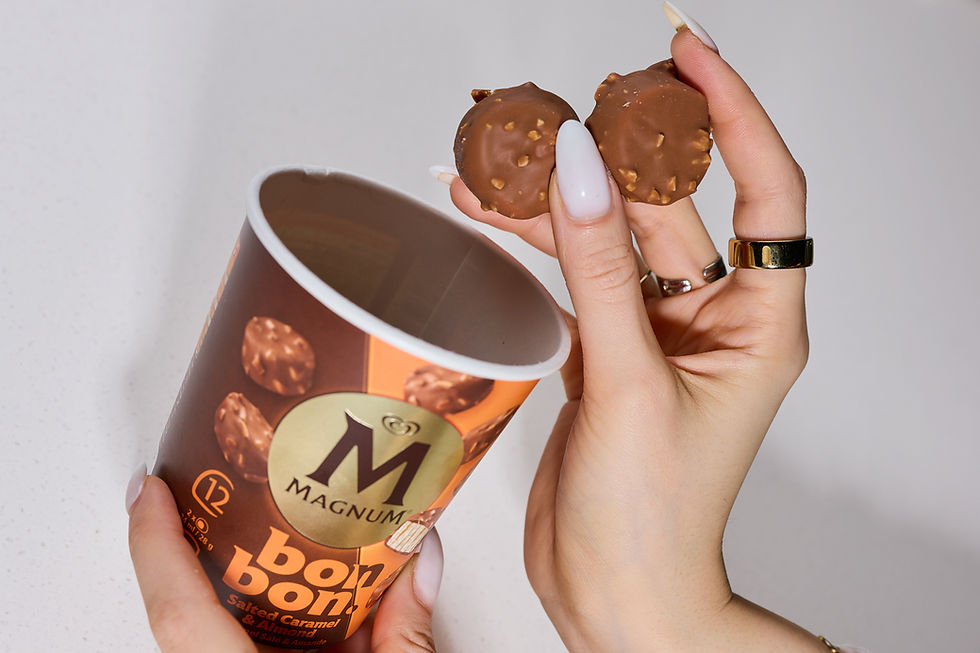
The Magnum Ice Cream Company has invested HUF 4bn, about €10m, to modernise its manufacturing facility in Veszprém, Hungary, adding a new production line for Magnum Bonbons and reinforcing the site’s role in European ice cream production.
The factory produces around 230 million ice cream units a year and employs more than 500 people. With the new line in place, Veszprém becomes a stronger platform for bite-sized, premium frozen formats that place different demands on freezing, coating, portioning, and packaging than traditional stick products, tubs, and multipacks.
Bite-sized ice cream formats create a compact but technically demanding manufacturing brief. Product geometry, chocolate coating behaviour, inclusion control, hardening, crack resistance, and pack presentation all have to be tightly controlled at speed. Smaller formats leave less tolerance for variation, and premium positioning raises the penalty for defects in shape, surface finish, texture, or coating integrity.
Hungary’s position in Magnum’s network is also commercially useful. Central European production hubs give FMCG manufacturers access to regional labour, logistics routes, cold-chain infrastructure, and export flexibility. Frozen desserts are especially dependent on regional planning because stock availability is shaped by weather, holiday periods, promotional cycles, retail freezer space, and transport capacity. Factory investment provides a buffer against demand volatility as well as a platform for new formats.
The Veszprém upgrade follows Magnum’s broader move toward operational independence, with separate technology, planning, and supply-chain systems being built around the ice cream business. That transition has already been visible in work on Magnum’s standalone technology stack, covering planning, forecasting, ERP, CRM, cybersecurity, and AI-supported demand management. A new production line and a new systems backbone are connected parts of the same industrial shift.
Ice cream manufacturing is unusually sensitive to demand signals. A hot period can change sales rapidly, while a cool season can leave expensive frozen stock moving more slowly than forecast. Unlike many ambient categories, the frozen chain has limited capacity at each stage, from production and cold storage through to distribution and store-level freezer space. Better forecasting and more adaptable production assets help reduce the risk of missed sales, overstock, and inefficient factory scheduling.
Production complexity is increasing as the category shifts toward premium snacking, portion-controlled indulgence, and novelty formats. Retailers want products that earn their place in constrained freezer cabinets, while manufacturers need formats that deliver value without creating excessive line changeover or waste. Bonbon formats fit that movement because they combine controlled portion size with premium coating and sharing potential, but they place more pressure on repeatability than many larger formats.
Energy remains a defining constraint in frozen food manufacturing. Ice cream plants combine refrigeration, hardening tunnels, cold storage, compressed air, pumping, heat treatment, cleaning, and packaging operations. Any new line has to be assessed against capacity, utility load, cleaning requirements, and refrigeration demand, especially as food manufacturers move toward renewable electricity, heat recovery, and lower-carbon site operations.
The investment also shows how category separation can change capital priorities. Under a broader consumer goods group, an ice cream line competes with many other business units for funding. As a standalone ice cream company, dedicated production assets, cold-chain planning, and category-specific systems become central to strategy. That can accelerate investment in formats that suit frozen snacking rather than general FMCG manufacturing.
Veszprém’s new line gives Magnum additional European manufacturing capability at a point when the brand is aligning factory assets, systems, and product formats more closely around ice cream demand. In a category governed by temperature, capacity, and short seasonal windows, the strength of the factory network remains as important as the appeal of the freezer cabinet.