IN Brief:
- AIM9 is designed for automated inspection at up to 600 vials per minute.
- Integrated CCIT options include headspace gas analysis and high-voltage leak detection.
- The platform targets rapid changeovers across 2 ml to 250 ml container sizes.
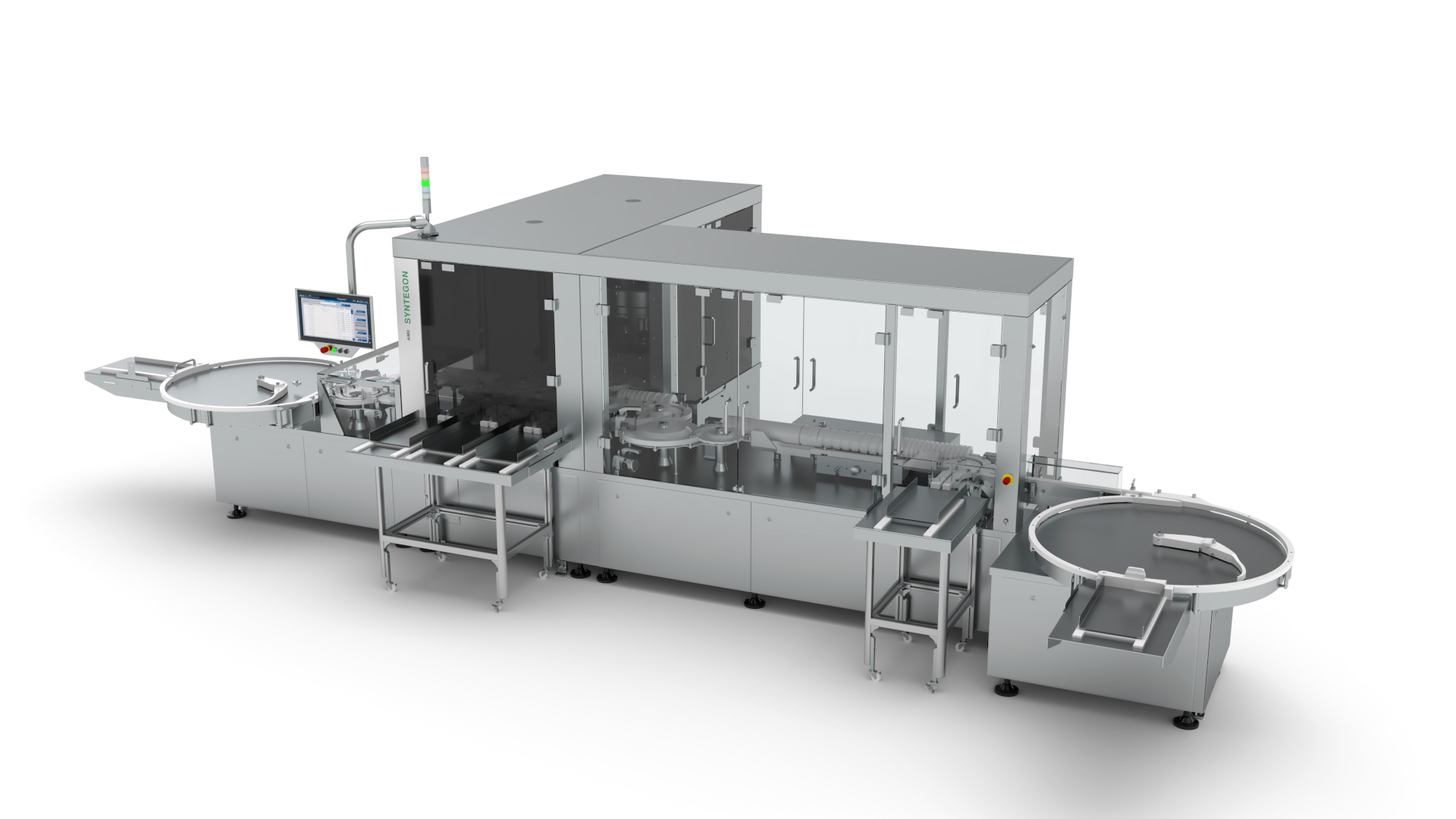
Syntegon has launched the AIM9 automated inspection platform, extending its vial inspection portfolio with a high-speed system combining visual inspection and leak detection. The company says the platform can process up to 600 containers per minute and is intended to support high-throughput liquid and freeze-dried product lines where inspection capacity and reject accuracy dictate overall line performance.
The AIM9 platform is designed to accommodate a wide container range, with Syntegon specifying vial sizes from 2 ml to 250 ml. The company has positioned the platform around fast changeovers and configuration flexibility, aiming to reduce downtime when switching between formats, products, or inspection recipes, while maintaining stable container handling through the inspection path.
A core change is the integration of container closure integrity testing (CCIT) within the inspection platform. Syntegon said AIM9 can be configured for headspace gas analysis, high-voltage leak detection, or both, without requiring a separate CCIT machine. That approach is intended to consolidate inspection and leak testing into a single equipment footprint, reducing transfer points and simplifying validation and maintenance planning.
On the visual side, Syntegon said the platform supports particle and cosmetic defect detection using a combination of technologies, including its patented SD technology and area and line-scan camera options. The company has also positioned software tools as part of the performance proposition, including optional deep learning integration and a bubble masking function intended to differentiate harmless bubbles from defects that trigger rejection.
Bernd Barkey, president of Syntegon Japan and global head of inspection at Syntegon, said, “The new AIM9 enables our customers to boost productivity.” Syntegon has also described the AIM9 transport system as based on proven technology, with a smooth handling concept designed to keep container movement stable across inspection steps.
While the AIM9 announcement sits within Syntegon’s pharmaceutical inspection line-up, the underlying themes that it speaks to — higher-speed camera-based inspection, integrated leak testing, and recipe-driven changeovers — are mirrored in high-value food and nutrition packaging where small-format containers, strict closure performance, and particulate control drive quality assurance requirements. Syntegon operates across pharmaceutical, biotech, and food industries, and has continued to invest in platforms that standardise automation modules and software layers across different regulated production environments.
AIM9 is available in multiple variants based on a standardised platform, with Syntegon positioning the system for tailoring to inspection requirements rather than a single fixed configuration. The launch adds to the competitive pressure on inspection suppliers as manufacturers push for higher line speeds and tighter reject accuracy, while keeping validation overheads under control.