IN Brief:
- UK beef and veal production reached 80,000 tonnes in October 2026, 3.5% below the corresponding month of 2025.
- Mutton and lamb production totalled 22,000 tonnes, down 8.3%, alongside a 10% fall in clean sheep slaughterings.
- Pigmeat production was approximately 90,000 tonnes, 0.1% below October 2025; the figures are provisional.
Defra has recorded year-on-year falls in both beef and sheepmeat production across United Kingdom slaughterhouses during October 2026, according to figures published on 12 November. Beef and veal output reached approximately 80,000 tonnes, 3.5% below October last year, while mutton and lamb output was around 22,000 tonnes, down 8.3%. Pigmeat production was broadly unchanged at 90,000 tonnes, a 0.1% decline. The official series measures animals slaughtered and meat produced in UK plants rather than supermarket sales or the volume of meat available after international trade.
The underlying slaughter data show prime cattle numbers down 4% to 173,000 head compared with October 2025. Clean sheep slaughterings fell 10% to approximately 940,000, while clean pig slaughterings declined 1% to 941,000. Cow and adult bull slaughterings were also lower, at around 60,000 compared with 65,000 a year earlier. Each category feeds into different processing streams and carcase yield calculations, so a change in slaughter numbers does not translate into exactly the same percentage movement in finished meat tonnage.
October’s output was higher than September’s in several categories even though annual comparisons remained negative. Beef production rose from 73,000 tonnes in September to 80,000 tonnes in October, while sheepmeat held near 22,000 tonnes and pigmeat rose from 84,000 to 90,000 tonnes. September had 30 calendar days and October had 31, making the raw monthly comparison an imperfect indicator of day-to-day plant activity. Defra therefore also publishes average weekly slaughter volumes, allowing readers to separate calendar effects from underlying throughput changes.
Defra’s weekly estimates put clean sheep slaughterings at about 212,000 in October, compared with 213,000 in September and 236,000 in October 2025. The comparison is less affected by the different numbers of days in September and October than the monthly totals. National figures do not establish whether any particular abattoir has changed its shifts or staffing. Throughput nonetheless influences how slaughter, carcase chilling, boning and packing resources are scheduled against the fixed costs of running a meat plant. A smaller number of animals can reduce utilisation even where the available equipment and nominal capacity remain unchanged.
Carcase weights help explain why livestock counts and output diverge. Defra reports an average dressed carcase weight of 367.2 kilograms for steers and 331.1 kilograms for heifers in October. Clean sheep averaged 20.5 kilograms, virtually unchanged from September, while clean pigs averaged 92.9 kilograms, up from 91.2 kilograms the previous month. A heavier average pig carcase can support total tonnage even if fewer animals are processed. Conversely, falling cattle or sheep numbers can weigh more heavily on production when average weights do not compensate for the reduction.
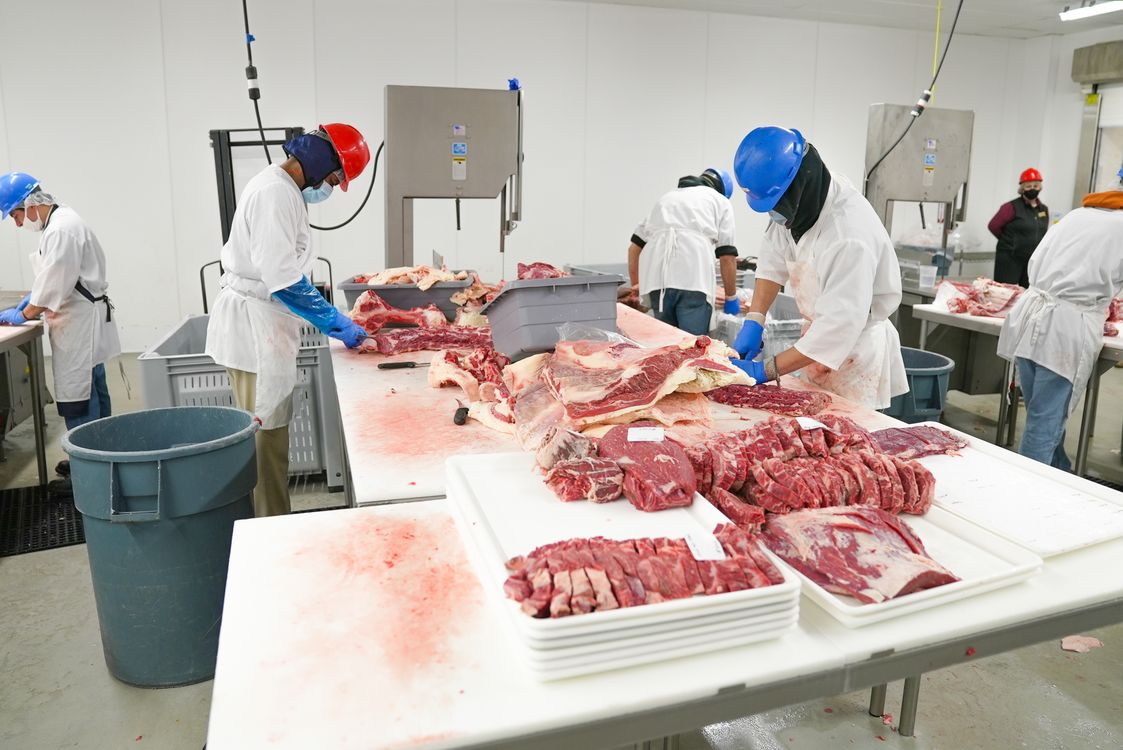
Abattoirs and cutting plants must accommodate the mix of livestock presented for slaughter rather than one aggregate meat tonnage. Carcase size affects rail loading and spacing in chills, the time needed for handling and fabrication, and the allocation of cuts to packing and further processing. A change in the balance between cattle, sheep and pigs can therefore alter the pattern of work across different parts of a facility, even when total meat output remains relatively stable. Defra’s national series measures aggregate volumes; it does not give individual processors’ labour efficiency, cold storage utilisation or equipment operating rates.
Defra’s publication relies on a combination of administrative records and slaughterhouse returns. Food Standards Agency information is used for complete slaughterhouse coverage in England and Wales, while surveys and other checks contribute categorisation and weight estimates. The department warns that values are provisional and may be revised when survey responses or administrative records are updated. Its methodology has changed since April 2023, so long-run comparisons spanning that change require care. The figures nonetheless provide a current, consistent indication of the volume passing through UK meat-processing infrastructure during the reporting period.
The October release follows September’s year-on-year declines, when beef and veal production was down 5.4% and mutton and lamb was down 3.7%. Together, the two monthly reports show reduced cattle and sheepmeat output in successive year-on-year comparisons, although the pace of decline has differed between categories. They do not establish whether prices, export demand, farm output, processing capacity or other factors were principally responsible. Those questions require separate market, livestock and trade evidence rather than a causal explanation inferred from slaughter totals.
Defra’s next scheduled release, on 10 December, will provide November slaughter and production figures against the corresponding period of 2025. October’s data already show a second consecutive month of year-on-year reductions in beef and sheepmeat output, while greater average dressed weights helped sustain pigmeat production despite slightly fewer clean pigs being slaughtered. The figures are an indication of the meat moving through UK processing infrastructure, not evidence that named factories have permanently reduced capacity. Any assessment of the reasons behind falling volumes will also need farm supply, prices, trade and demand evidence.