IN Brief:
- A Langmuir paper reports CNF–mycelium coatings reaching a 139° water contact angle after three days’ growth.
- UMaine describes a 20–25 micron coating using Trametes versicolor, targeting water resistance while retaining grease barrier performance.
- The team says it has cut growth time to three days and is developing roll-to-roll approaches for scale-up.
Researchers at the University of Maine have developed a biodegradable packaging material that combines wood-derived cellulose nanofibrils (CNFs) with a mushroom mycelium coating, targeting water and oil resistance without conventional plastics.
The team describes producing a water- and oil-resistant material by applying a mycelium coating to CNF substrates. The work draws on the barrier properties of CNFs and the water resistance that can be achieved through fungal growth, aiming to create coatings that can be applied to paper-like materials or formed into films.
The researchers selected Trametes versicolor, commonly known as turkey tail, and describe preparing the fungus ahead of time before blending it with nutrients and CNFs to promote uniform growth. Once dried, the mycelium coating is around 20–25 microns thick, and can be used either as a coating layer on another substrate or as part of a film with differing surface characteristics.
Caitlin Howell, associate professor of bioengineering at UMaine, said: “Plastics are very good at what they do, but then again so were forever chemicals and lead in paints and gasoline.” Howell added: “The nice thing about fungi is that we already eat them, so we know that they’re going to be safe for us long-term.”
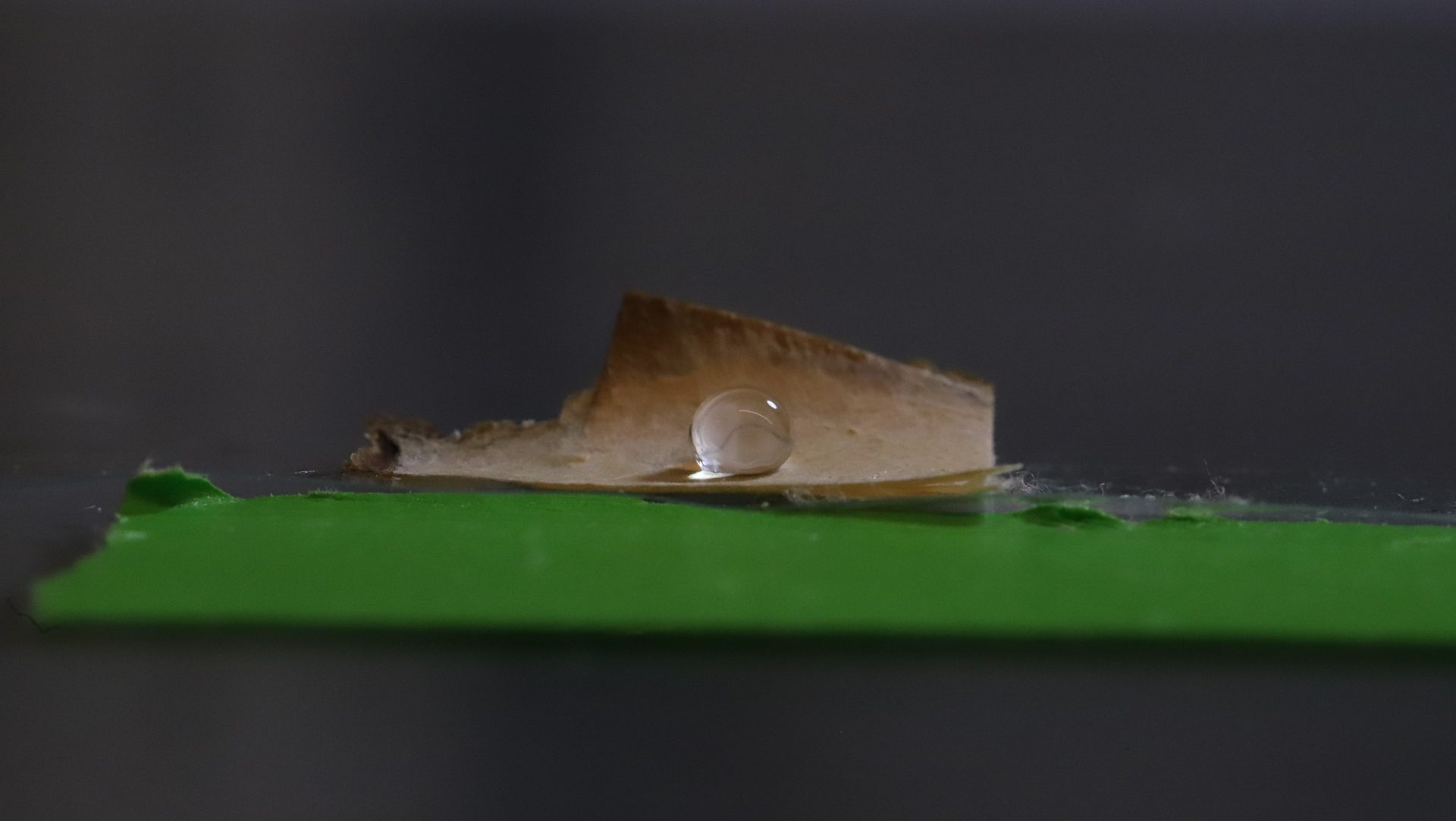
The underlying performance claims are supported by the peer-reviewed paper “Growing Sustainable Barrier Coatings from Edible Fungal Mycelia”, published in Langmuir (e-published 26 September 2025). According to the abstract, CNF-based mycelial coatings demonstrated a water contact angle of 139.1° ± 3.5° after three days of growth, compared with 27.2° ± 5.0° for a CNF coating alone, while retaining oil and grease barrier performance and oxygen transmission characteristics.
A key focus for the team is time-to-make and manufacturability. Sandro Zier, a chemical engineering PhD candidate who led the work, said: “Traditionally when you grow mycelium materials, you need weeks to get anything that you can use.” The team says it has reduced that timescale to three days and is working on methods aligned to industrial equipment, including a roll-to-roll approach intended to increase throughput from lab-scale areas to square metres per hour.