IN Brief:
- Yangsan’s new line raises chocolate production capacity from 1 to 2.5 t/h.
- The upgrade streamlines processing by 25% and expands in-house liquefied cacao mass output.
- Greater control of cacao processing is intended to protect flavour consistency amid volatile cocoa markets.
Lotte Wellfood has commissioned a new cacao processing and chocolate production line at its Yangsan plant in South Gyeongsang Province, replacing older equipment and increasing output capacity from 1 tonne per hour to 2.5 tonnes per hour. The company says the upgrade also reduces the number of processing steps by around 25%, tightening control over throughput and maintenance demands at what it describes as its largest manufacturing site in Korea.
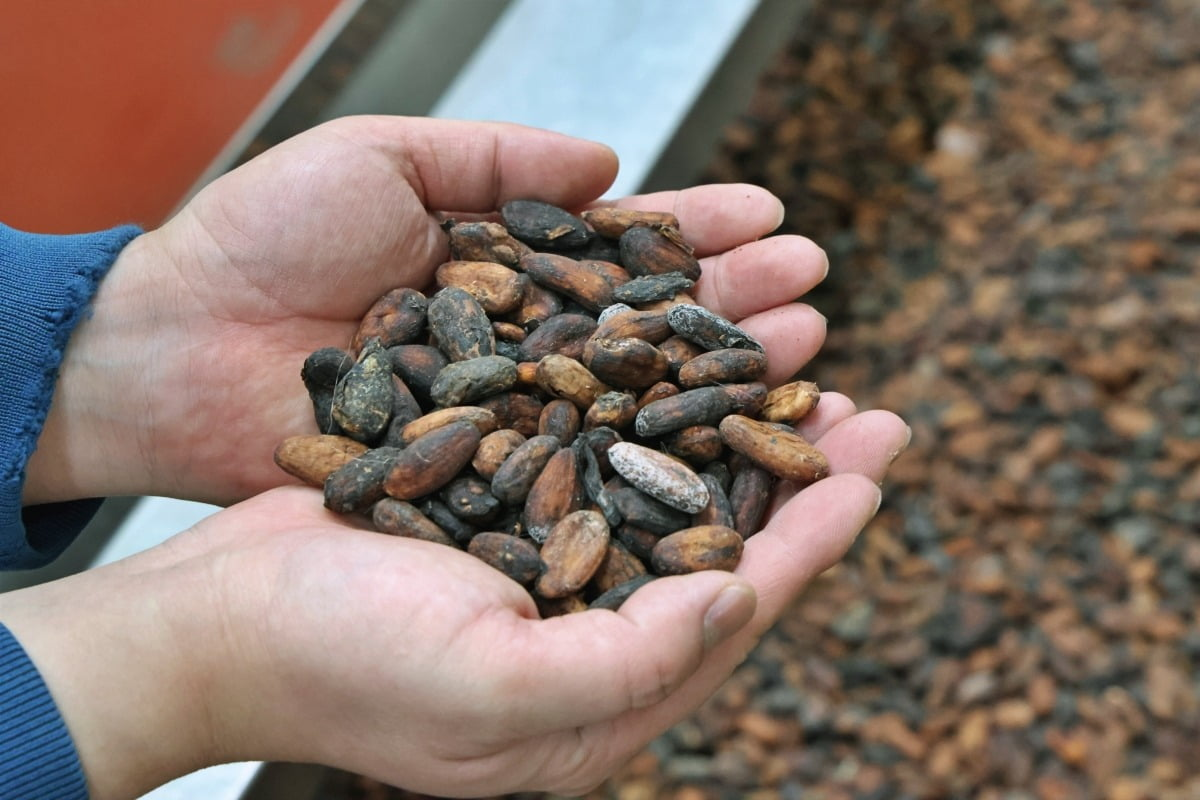
The new line supports a bean-to-chocolate workflow, processing imported cacao beans — primarily sourced from Ghana — into liquefied cacao mass for use in finished products. Liquefied cacao mass, often referred to as cocoa liquor, sits upstream of downstream chocolate-making steps and is a quality-critical input for flavour, aroma, and texture consistency. By expanding its in-house capability, Lotte is effectively pulling more of the value chain into a domestic, tightly managed production environment, rather than relying on imported semi-processed inputs.
Lotte has produced liquefied cacao mass at Yangsan since 1995 and is using the commissioning to underline differentiation in a market where many manufacturers import processed cacao mass and focus their investment further downstream. “We’re the only food company in Korea that processes cacao beans to secure liquefied cacao mass domestically,” a Lotte Wellfood official said.
The company links the processing approach to sensory performance, arguing that freshly processed mass can reduce aroma loss compared with imported solid cacao mass that is re-melted and reformulated after transport and storage. For plant managers, the practical implication is tighter control of incoming-bean variability and fewer hand-offs between suppliers, shipping conditions, and in-plant conversion, all of which show up as rework risk when cocoa quality shifts.
The capacity increase lands in a cocoa market still shaped by recent price volatility and supply uncertainty, driven largely by conditions in West Africa. Ghana’s national production outlook for 2025/26 has been projected to recover compared with the prior season, although the market continues to watch weather and disease pressure closely. Even where futures prices soften, manufacturers remain exposed to abrupt swings, and there is little appetite for avoidable yield loss once beans enter processing.
Lotte says it held more than 37% of Korea’s chocolate market as of last year, and it is also expanding its overseas manufacturing footprint, including production capacity in India for products such as Pepero and Choco Pie. In that context, Yangsan’s higher upstream processing capacity provides headroom for both domestic seasonal peaks and export-linked production planning, while reducing dependence on imported semi-finished cacao ingredients at a time when resilience is becoming a design constraint.