IN Brief:
- AAK has launched ILLEXAO EN 10, a cocoa butter equivalent developed for enrobed confectionery, bakery, and snack applications.
- The ingredient is designed to maintain stable flow, reduce buildup, support uniform coating weight, and limit cleaning stops at higher substitution levels.
- The launch responds to growing reformulation pressure as manufacturers manage cocoa price volatility, supply uncertainty, and production-cost pressure.
AAK has launched ILLEXAO EN 10, a cocoa butter equivalent developed for enrobed applications where manufacturers are increasing substitution levels to manage cocoa price volatility, supply uncertainty, and rising production costs.
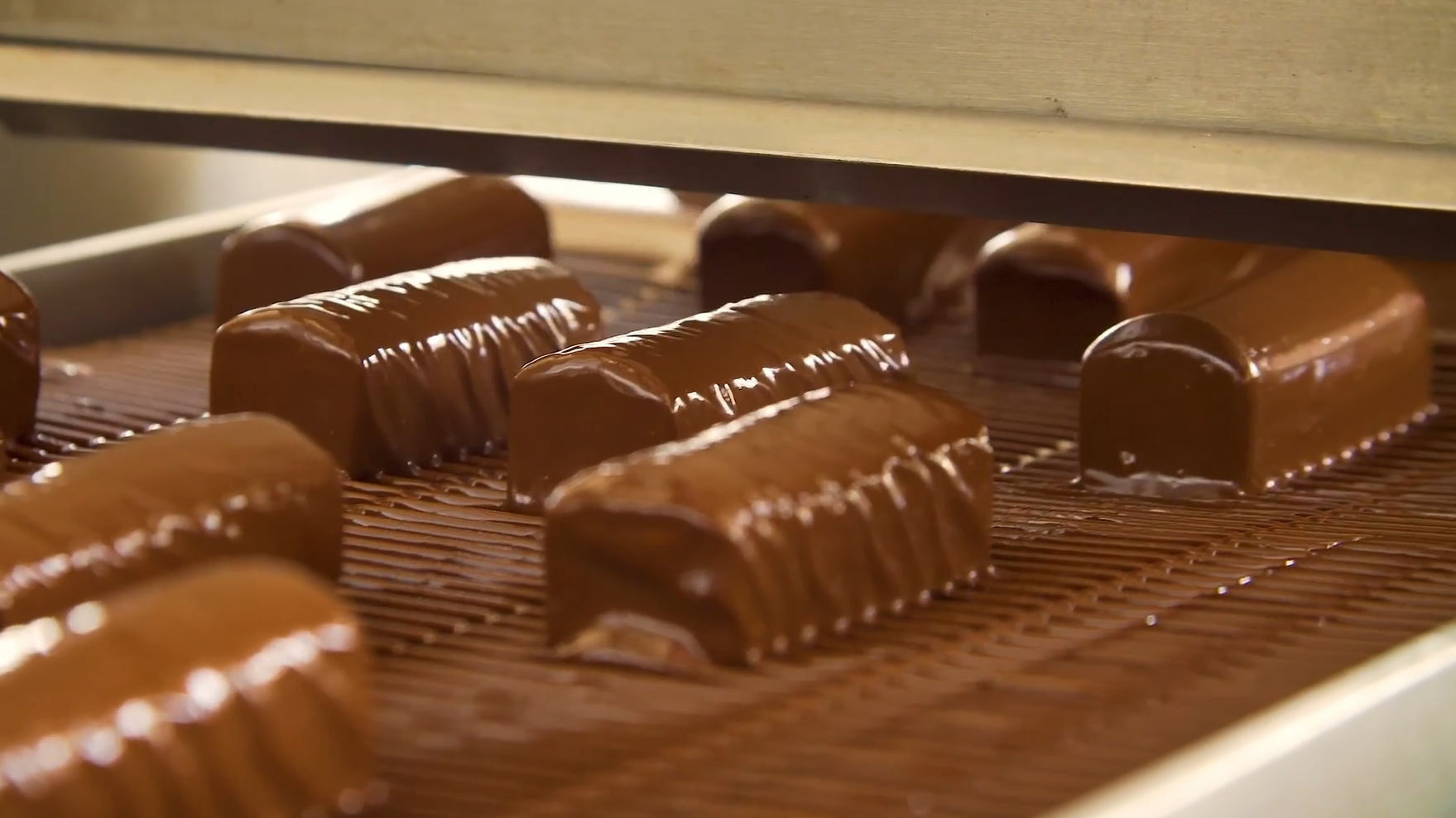
The ingredient has been designed to address the processing challenges that can appear when standard cocoa butter equivalents are used at higher levels. In enrobing, alternative fats can thicken chocolate mass, destabilise flow, increase buildup in equipment, and affect coating consistency. Those issues can reduce throughput, increase waste, trigger more line adjustments, and create unwanted variation in finished products.
ILLEXAO EN 10 behaves more closely to cocoa butter as cocoa butter equivalent levels rise, supporting stable flow, consistent coating performance, and a high-quality surface appearance and texture. It is suitable for chocolate bars, cookies, cakes, sandwich cookies, wafers, and other enrobed formats.
The fat composition is designed to reduce buildup in enrobing equipment and maintain cleaner curtains during production. AAK is positioning the ingredient around uniform coating weight, fewer line adjustments, fewer cleaning stops, and stronger stability during longer production runs. The operational benefits extend beyond ingredient substitution, with smoother flow helping reduce waste, rework, cleaning cycles, processing hours, and energy use linked to interruptions and remelting.
Sensory performance remains central to the formulation. ILLEXAO EN 10 is designed to deliver a clean, fast melt without waxiness, a crisp snap, smooth texture, chocolate flavour release, and a glossy, stable appearance. It also supports resistance to fat bloom and stable crystallisation, two areas that become more difficult when manufacturers adjust fat systems under cost pressure.
Morten Daugaard Andersen, principal research scientist for chocolate confectionery fats at AAK, said: “Manufacturers are facing unprecedented raw material price pressures, but consumer expectations remain unchanged. This means reformulation poses a risk and getting it wrong could prove costly. AAK’s ILLEXAO EN 10 solves the production challenges associated with the use of cocoa butter equivalent at high levels, ensuring a straightforward enrobing process and a superb end-product that consumers will love.”
Cocoa reformulation is moving from innovation work into day-to-day manufacturing strategy. Fermented sprouted-grain cocoa alternatives from Soufflet Malt and Ferments du Futur and cocoa-free confectionery work from Cargill and Voyage Foods show how wide the response to cocoa volatility has become, spanning alternative flavour systems, cocoa-free platforms, and technically targeted fat solutions.
AAK’s launch sits in the latter category. It keeps manufacturers within familiar chocolate-style processing rather than asking them to move immediately into cocoa-free systems, while targeting one of the most exposed production stages: high-volume enrobing.
That focus is important because many manufacturers can tolerate reformulation only if it works on existing industrial lines. Enrobing is particularly sensitive because rheology, temperature, crystallisation, coating weight, cooling, visual finish, and downstream packaging all converge at that point. A formulation that performs in a laboratory or pilot setting can still become costly if it causes buildup, inconsistent curtains, off-weight coatings, or more cleaning stops during full-scale production.
Higher substitution levels also sharpen the quality risk. Consumers may not see a recipe change, but they will notice a waxy melt, dull surface, bloom, poor snap, uneven coating, or a product that no longer behaves as expected. Ingredient suppliers are therefore being pushed to solve processing and sensory problems together rather than treating cost reduction as a standalone benefit.
The market context is unforgiving. Cocoa prices, crop disease, weather disruption, ageing tree stock, sustainability scrutiny, and concentrated origin exposure have made cocoa-linked ingredients a larger risk in confectionery and bakery manufacturing. Manufacturers cannot simply pass every cost increase downstream, particularly in price-sensitive snack, biscuit, wafer, and coated-bar categories. Reformulation has become one of the few levers available, but it brings technical exposure into the factory.
ILLEXAO EN 10 enters that environment as a formulation-flexibility tool for coated products where cocoa butter equivalent use can reduce exposure to cocoa butter while preserving process flow and finished-product quality. Chocolate-coated biscuits, wafers, cakes, bars, and sandwich formats are likely candidates because they are high-volume, margin-sensitive, and dependent on consistent coating performance.
The launch also reflects a broader change in specialty fats. Suppliers are increasingly expected to support line performance, shelf life, sensory quality, and cost-in-use rather than simply offering a commodity alternative. For manufacturers, adoption will come down to line behaviour, finished-product stability, regulatory and labelling fit, cost-in-use, and compatibility with existing recipes. If ILLEXAO EN 10 can support higher substitution without common enrobing penalties, it gives confectionery and bakery producers another route through cocoa volatility without shifting reformulation risk onto the factory floor.