IN Brief:
- Nestlé and Platinum Equity will establish Peranel as a 50:50 water and premium beverage joint venture.
- The business will contain more than 30 brands sold across 120 markets, with an enterprise value of €4.9 billion.
- Independent ownership will give the portfolio dedicated manufacturing, innovation, investment, and acquisition capacity.
Nestlé and Platinum Equity have agreed to form a 50:50 joint venture containing Nestlé’s water and premium beverage operations, creating a standalone company with an enterprise value of €4.9 billion.
Named Peranel, the business will encompass more than 30 brands sold in 120 countries, including S.Pellegrino, Perrier, Acqua Panna, Nestlé Pure Life, and a range of regional mineral water and functional hydration products. Nestlé expects to receive approximately €3 billion in cash when the transaction completes.
Peranel will be headquartered in Paris and led by Muriel Lienau, who currently heads Nestlé’s water and premium beverages operation. Completion is expected during the first half of 2027, subject to employee consultation, regulatory approval, and customary closing conditions.
Dedicated research and development, manufacturing, commercial, and distribution operations will transfer into the new company. Around 120 products have been launched across the portfolio since 2022, reflecting expansion into flavoured water, functional hydration, premium mineral water, and formats designed for different retail and out-of-home channels.
Platinum Equity, which manages approximately $48 billion in assets, specialises in corporate carve-outs and operational restructuring. Its involvement also gives Peranel scope to pursue acquisitions, potentially adding regional brands, production capacity, or technical capabilities outside Nestlé’s wider investment priorities.
Bottled water production carries a distinctive capital profile. Source management, treatment systems, blow moulding, high-speed filling, laboratory control, packaging conversion, warehousing, and distribution all require sustained expenditure, while the value of premium brands remains closely tied to the condition and regulatory status of their water sources.
Separating those operations from Nestlé’s coffee, pet care, nutrition, and prepared-food activities will give management a dedicated capital allocation process. Investment proposals will no longer compete directly with projects carrying markedly different margins, production cycles, and growth expectations elsewhere in the group.
Operational separation extends beyond brand ownership
Creating Peranel will require manufacturing specifications, supplier contracts, extraction rights, environmental permits, intellectual property, information systems, and quality records to be assigned or recreated. Transitional service agreements may remain in place while the new business builds independent finance, procurement, regulatory, and digital functions.
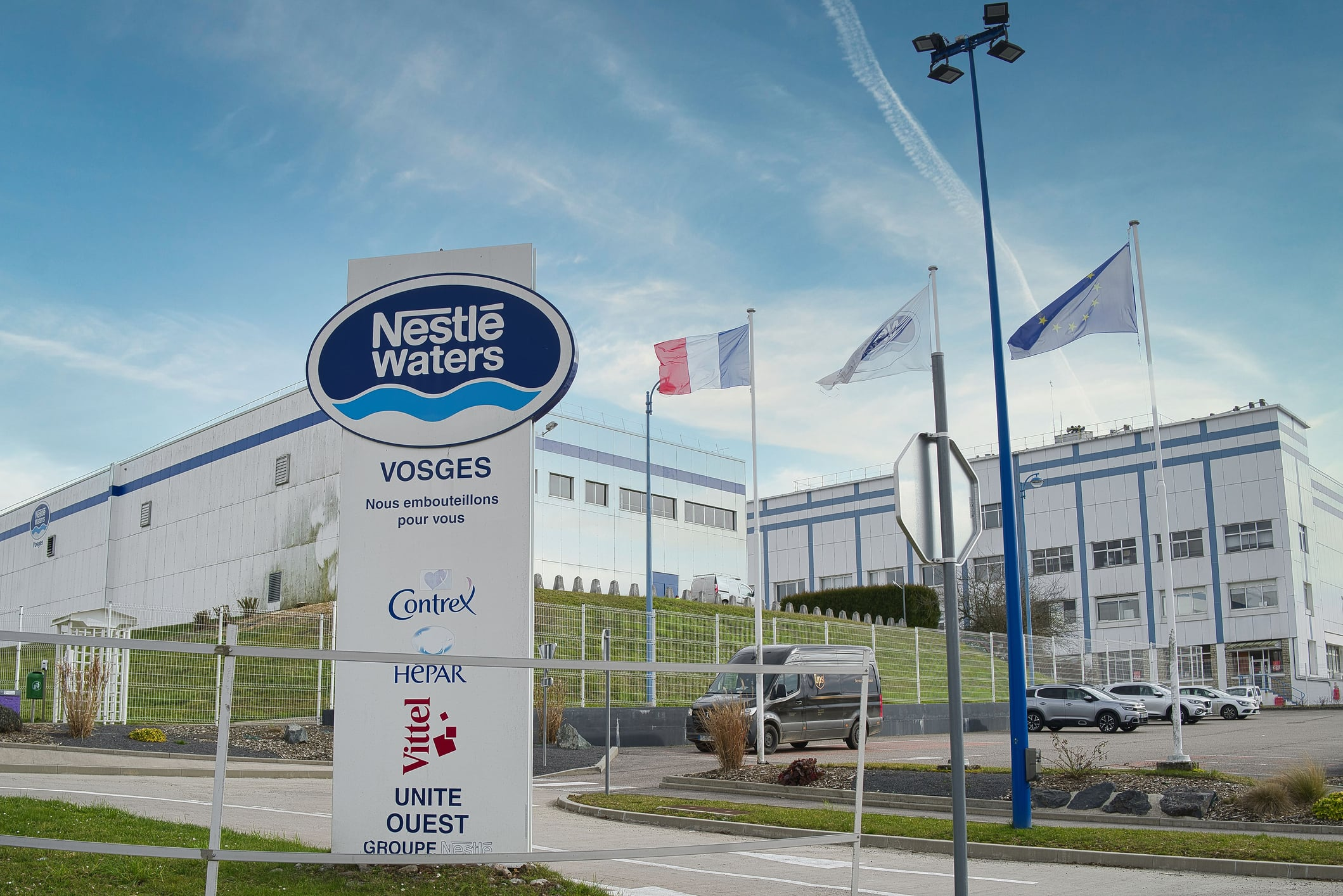
Water-source compliance will remain central to the value of the portfolio. Nestlé’s French operations have already faced regulatory scrutiny over treatment practices and the conditions attached to natural mineral water classification, including questions about which processes can be used without altering a product’s legal status.
Those controls extend from microbiology and mineral composition to extraction volumes, source protection, filtration, and permitted treatments. A divergence between authorised characteristics and plant practice can disrupt production, require relabelling, or weaken the commercial position of a brand whose identity depends on a particular source.
Packaging will absorb another substantial share of investment. European bottlers are increasing recycled content, reducing bottle weights, adapting closures, and preparing for more demanding recyclability, labelling, and technical-documentation requirements under the EU Packaging and Packaging Waste Regulation.
Changes made to a bottle rarely remain confined to the drawing board. Lower resin weight can alter top-load strength, bottle stability, blowing conditions, line speeds, conveyor handling, pallet performance, and damage rates during transport. New closures or labels can similarly require equipment adjustment and extended production trials.
Peranel will inherit the purchasing scale to negotiate resin, preforms, closures, labels, cartons, and logistics across a large international network. Its factories will nevertheless operate under different national regulations, source conditions, labour arrangements, pack-return systems, and energy markets, limiting the extent to which specifications can be standardised globally.
Premiumisation and functional hydration are also expanding the number of recipes and pack formats moving through beverage plants. Electrolytes, flavours, vitamins, carbonation levels, and sweeteners create additional ingredient controls, cleaning requirements, product-change sequences, and country-specific labelling obligations.
Standard bottled water remains intensely competitive and exposed to retailer pressure, whereas premium mineral waters and enhanced products can support stronger margins. The commercial attraction of a wider portfolio therefore comes with additional complexity in formulation, line scheduling, inventory, and shelf-life management.
A standalone company may approve investment and portfolio changes more quickly, although it will also carry operating setbacks directly. Source interruptions, quality failures, packaging shortages, or regulatory restrictions will no longer be absorbed within Nestlé’s broader food portfolio.
Peranel’s opening balance sheet, debt structure, and detailed asset perimeter have not yet been published. Those elements will influence how much capital is available for line upgrades, acquisitions, source protection, and packaging compliance after completion.
The venture begins with strong brands, substantial purchasing power, and an established international manufacturing base. Turning that scale into faster investment will depend on whether the separation preserves technical knowledge, secures regulatory continuity, and gives individual factories enough flexibility to respond to local operating conditions.