IN Brief:
- Prism eLogistics has delivered a fully recyclable shrink sleeve for Bio&Me’s functional kefir drinks.
- The EcoFloat sleeve supports sink-float separation and can be recycled through established PP streams.
- The format gives Bio&Me full-bottle decoration while avoiding traditional white plastic dairy packaging.
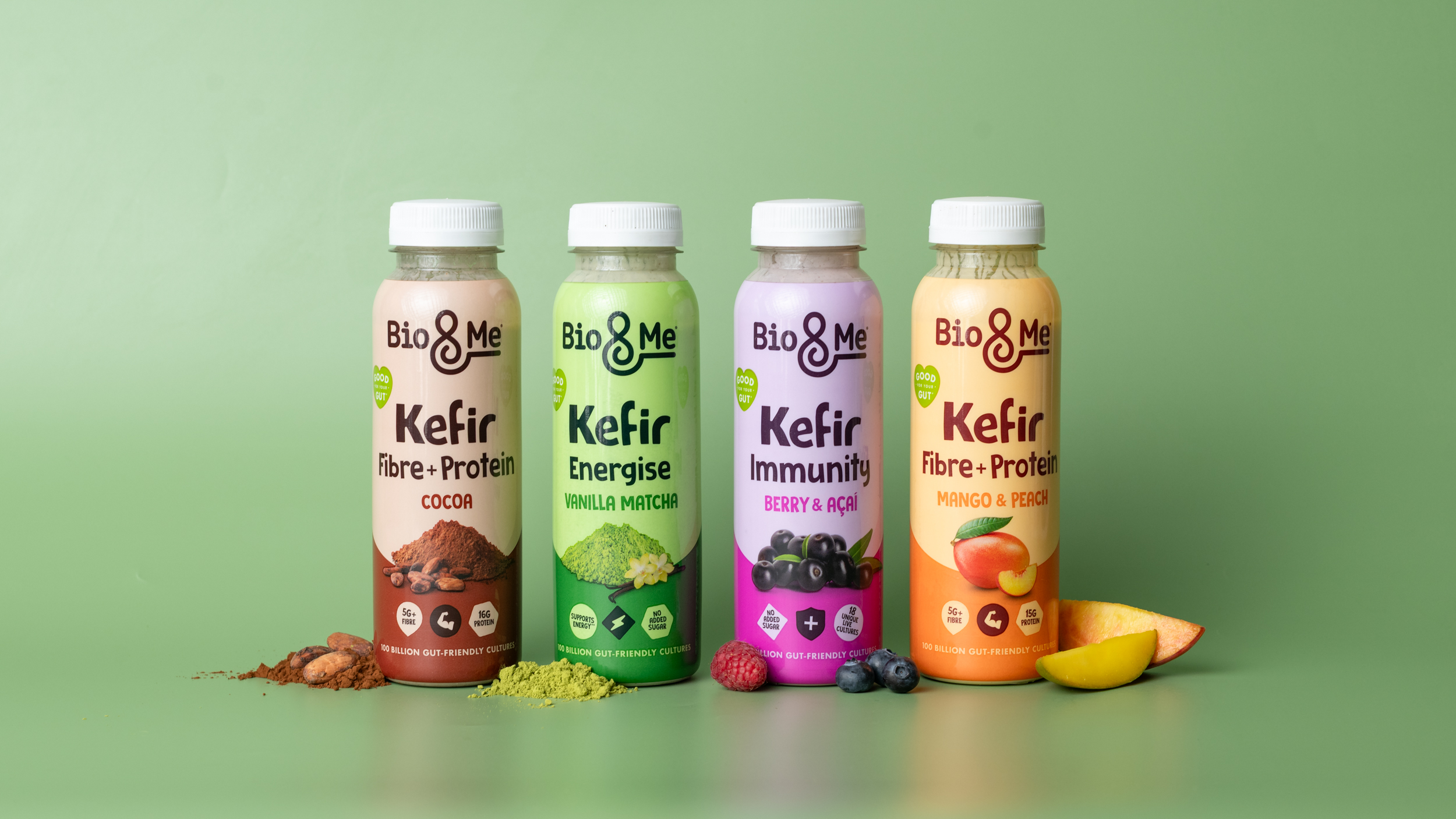
Prism eLogistics has delivered a fully recyclable shrink sleeving solution for Bio&Me’s functional kefir drinks, combining full-bottle decoration with a recycling route designed for established PP streams.
The Bio&Me range uses a clear bottle covered with EcoFloat shrink sleeving. The sleeve is engineered to improve sink-float separation during recycling, allowing the bottle and decoration to be recycled rather than creating a sleeve format that disrupts material recovery.
For dairy drinks, the packaging decision solves more than one technical problem. Products in the category often require opacity to protect quality and meet safety expectations, which has traditionally pushed many brands toward white plastic formats. Those materials can be harder to recycle and may attract higher Extended Producer Responsibility fees. Bio&Me’s format provides opacity through the sleeve while retaining a clear bottle underneath.
The functional kefir range includes products positioned around immunity defence, natural energy, protein, and fibre. With that level of functional information to communicate, the full shrink sleeve gives more brandable and informational space than a standard label. Claims, flavour cues, nutrition information, storage guidance, and usage messaging can all be carried across the full bottle surface.
“Our new functional kefir range is shaking up dairy, and we wanted the pioneering nature of the products to be reflected by the packaging,” said Mark Isaacson, chief operating officer at Bio&Me. “As a proud UK manufacturer, we were delighted to partner with a home-grown British packaging specialist in Prism, and their consultancy and guidance was critical to developing our 100% recyclable shrink sleeve solution.”
Shrink sleeves have often faced scrutiny because they can interfere with automated sorting and separation if the sleeve material prevents correct identification of the container beneath. EcoFloat is designed to address that challenge by improving separation in the recycling process, reducing the risk that otherwise recoverable bottle material is downgraded or lost.
The development sits within a wider packaging shift driven by EPR, retailer recyclability expectations, and stronger scrutiny of coloured plastics. Food and drink manufacturers are having to judge packaging against a broader set of criteria: line performance, pack protection, shelf impact, consumer communication, material recovery, and cost exposure under producer responsibility rules.
Smart and active packaging concepts continue to expand what packaging can do, but materials innovation remains just as important where it removes friction from recycling systems. A pack that performs on shelf but creates problems at sorting or reprocessing is becoming harder to justify, particularly in categories where dairy opacity and chilled handling already complicate material selection.
“By developing a solution which is both compliant with dairy regulations and fully recyclable, we’re proving that sustainability and EPR adherence are absolutely compatible with eye-catching, true-to-brand packaging,” said Ian Wright, managing director at Prism eLogistics.
The commercial value of the format will depend on how well it performs in real collection, sorting, and reprocessing conditions. Brands also need sleeve application to run cleanly at production speeds, with consistent shrink, legibility, and pack finish. For dairy and fermented drinks, where chilled distribution and short production windows can leave little room for packaging disruption, operational reliability is as important as the recyclability specification.
Prism’s work with Bio&Me gives dairy brands a practical example of how packaging can move away from white plastic without sacrificing opacity or shelf presence. As EPR costs become more visible, recyclable sleeving could become a stronger option for manufacturers looking to balance product protection, brand communication, and material recovery.