IN Brief:
- Newcastle disease outbreaks in continental Europe are increasing concern across the poultry sector.
- Cases linked to Poland, Czechia, Germany, and Spain underline the importance of biosecurity around farms, vehicles, people, and equipment.
- The disease-risk environment is adding further complexity to poultry processing, supply planning, and cross-border protein flows.
Newcastle disease pressure across continental Europe is renewing concern across the poultry sector, with outbreaks in Poland followed by cases in Czechia, Germany, and Spain.
The disease is highly contagious and affects poultry and other birds. It can spread through direct contact with infected birds, contaminated bodily fluids, faeces, feed, water, vehicles, equipment, clothing, and materials moving between sites. Wild birds can also play a role in disease spread, widening the range of routes that producers must control.
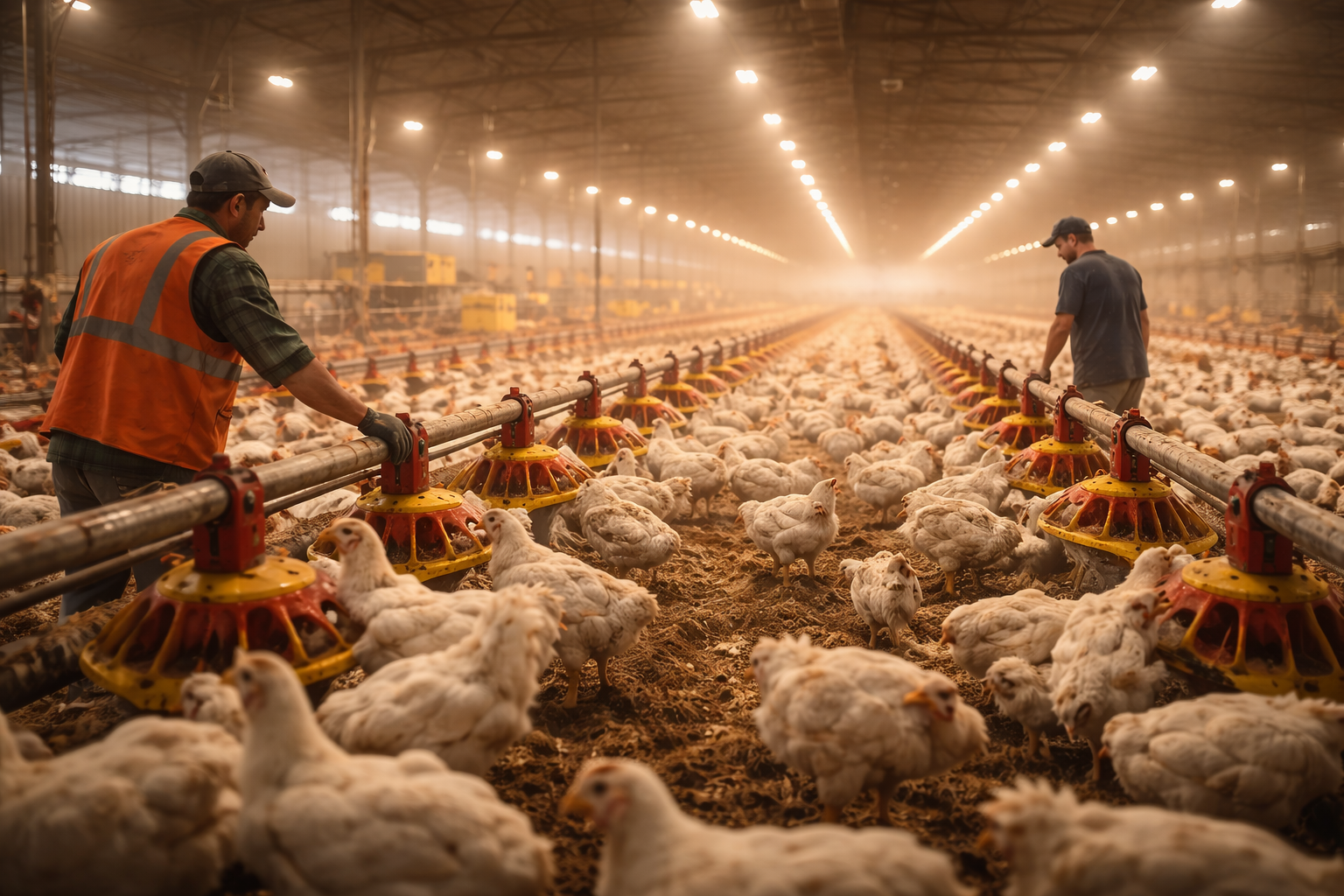
For commercial poultry operations, the immediate priority is preventing the virus from entering bird-specific areas. That depends on strict controls around visitors, staff movement, feed deliveries, litter handling, vehicles, crates, egg trays, trolleys, tools, and contractors. Biosecurity is only effective when the routine details hold, especially where farms are connected to catching teams, hatcheries, transport providers, and processing plants.
Poultry processing is tightly linked to upstream flock health. Disease controls can affect slaughter scheduling, live-bird movements, veterinary certification, labour deployment, plant utilisation, and export eligibility. Even when a processor is not directly affected by an outbreak, regional restrictions and customer responses can alter availability, product mix, and cost.
European poultry businesses have already absorbed repeated avian influenza disruption, higher input costs, welfare scrutiny, and changing retailer requirements. Newcastle disease adds a further operational variable, particularly in supply chains that rely on predictable flock placement, processing dates, and chilled product availability.
Modern poultry plants are built around finely balanced flow. Live-bird arrival, lairage, stunning, slaughter, chilling, cutting, packing, dispatch, and by-product handling have to move in sequence. A disease event upstream can quickly distort that rhythm, lowering throughput, changing cut balance, and forcing short-notice adjustments to labour and customer service.
Cross-border supply creates another layer of difficulty. If control zones affect regions with significant poultry output, customers may need alternative sourcing at short notice. Suitable alternatives are not always available with the same welfare credentials, processing specification, certification, price, or chilled shelf-life profile. Frozen and cooked routes can absorb some pressure, but fresh poultry has less flexibility.
The meat sector is already dealing with a sharper regulatory and operational environment. The High Court ruling on FSA meat inspection charges placed official controls and cost recovery under closer scrutiny, showing how meat production remains closely tied to veterinary oversight and public authority decision-making.
Market access has also become a strategic concern for protein processors. Dawn Meats’ move to strengthen its German customer route reflected the value of closer commercial control in continental Europe. Disease risk reinforces that logic because supply assurance depends on regional knowledge, logistics discipline, and the ability to respond before disruption reaches the processing line.
Biosecurity has moved from a farm-management issue to a manufacturing continuity issue. Poultry processors depend on healthy, predictable supply, and animal-health risk now needs to sit inside sourcing, scheduling, contingency planning, and customer communication. The factories may be downstream, but the operational risk begins long before birds arrive at the plant.