IN Brief:
- Touton cocoa director Antoine Delsart has been named chair of the Federation of Cocoa Commerce.
- The appointment comes during a period of severe cocoa price volatility, producer pressure, and climate-related crop disruption.
- Confectionery manufacturers remain exposed to cocoa sourcing, pricing, traceability, and semi-finished ingredient availability.
Touton cocoa director Antoine Delsart has been appointed chair of the Federation of Cocoa Commerce, taking the role during a difficult period for the global cocoa and chocolate supply chain.
The Federation of Cocoa Commerce supports trading rules, training, and transparency across international cocoa markets. Delsart’s appointment places a senior executive from a major French cocoa, coffee, and ingredients trading group into a leadership position as the market continues to work through volatility, producer-country pressure, and uncertainty over future supply.
Touton has also made wider changes to its cocoa department, including the promotion of Kevin Blanchard to director of cocoa products trading, the retirement of long-serving cocoa products specialist Filipa Secretin, the appointment of Emily Traub as trader for cocoa products in North America, and the return of Lewis Yoboue after a period with Volcafe. The changes follow Hartree Partners’ acquisition of Touton earlier this year, with the business continuing under its existing brand and leadership.
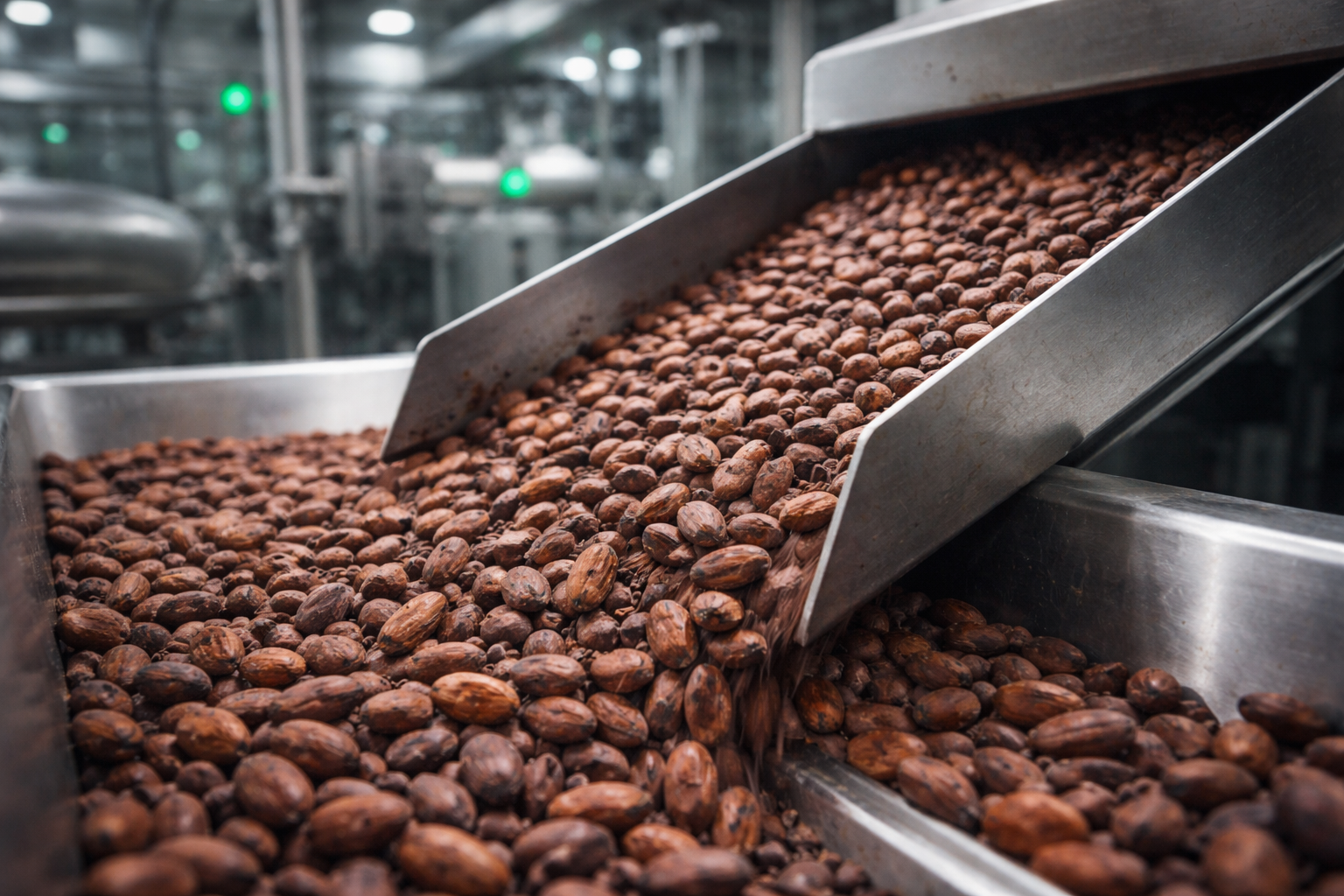
Cocoa remains one of the most strategically exposed ingredients in the food industry. Its pricing, origin structure, sustainability requirements, crop health, and trading mechanisms influence the cost and availability of chocolate, cocoa powder, cocoa butter, fillings, coatings, bakery inclusions, beverages, and compound products.
The past 18 months have shown how quickly cocoa can move from procurement line item to board-level risk. Supply pressure in West Africa, disease, climate variability, lower yields, and market speculation have contributed to severe price movements. Ghana and Ivory Coast remain central to global supply, and disruption in those origins affects manufacturers across Europe, the UK, and beyond.
Cocoa volatility is difficult to absorb because it affects several product layers at once. Cocoa butter and cocoa powder have different value streams, chocolate recipes are tightly specified, and switching origin or formulation can alter flavour, viscosity, tempering behaviour, colour, and shelf-life performance. Procurement teams may be able to hedge or contract, but production teams still need ingredients that behave consistently on industrial lines.
Trading governance becomes more important when prices move sharply. Clear contracts, quality standards, dispute mechanisms, logistics coordination, and reliable market rules cannot remove volatility, but they can reduce uncertainty in how cocoa moves between producing countries, traders, processors, and manufacturers. Structures that look administrative in stable periods become operationally important when supply tightens.
Major confectionery groups are already treating cocoa as a strategic supply and innovation issue, including R&D work linking cocoa, packaging, and resilience at Mondelēz. Touton’s appointment at the FCC fits a wider shift in which cocoa governance, sourcing, and technical performance are moving closer together.
Traceability requirements are also intensifying. European deforestation rules, customer due diligence demands, and sustainability commitments are pushing cocoa buyers to understand origin, farm practices, and supply-chain documentation in more detail. Traders and processors are being asked to provide data alongside material, with documentation becoming part of the commercial offer.
Price risk and compliance pressure are now connected. If traceable, compliant cocoa becomes more expensive or harder to secure, manufacturers may face tougher decisions around product architecture, pack size, pricing, and recipe design. Premium chocolate ranges may be able to carry higher costs more easily than mass-market confectionery, but even premium categories face consumer sensitivity in a cost-of-living environment.
Delsart’s appointment gives the FCC a chair with experience across cocoa trading and supply-chain operations. The sector’s performance will depend on how well transparency, contract discipline, and market confidence are maintained during a period when cocoa is testing the resilience of confectionery manufacturing.
The manufacturing task remains practical: secure reliable cocoa inputs, manage cost exposure, preserve product quality, and prepare for tighter compliance expectations. Cocoa is unlikely to return quickly to the lower-risk assumptions of previous years, and trading governance is now part of the production equation.