IN Brief:
- Holmach, Lagarde Autoclaves, and Jorgensen Engineering have delivered a £4.5m upgrade to Premier Foods’ Mr Kipling steam pudding line.
- The project replaces a water-intensive retort process with static retorts, custom trays, robotic handling, and inspection technology.
- The investment shows how legacy food lines are being rebuilt around utilities reduction, automation, traceability, and data-led maintenance.
Holmach, Lagarde Autoclaves, and Jorgensen Engineering have completed a £4.5m upgrade to Premier Foods’ Mr Kipling steam pudding line at the Carlton bakery.
The investment replaces an inherited raining-water retort system with a modern thermal processing line built around three static Lagarde four-basket retorts, custom-designed trays, and a robotic handling system engineered by Jorgensen for the site. Premier Foods is targeting lower energy and water use, reduced reliance on gas-fired steam generation, and a shift towards a more efficient electrically powered process.
Mr Kipling steam puddings bring a demanding set of processing conditions. The product is dense, viscous, and sensitive to handling, while thermal treatment must deliver validated sterilisation without damaging sponge structure, moisture, or finished-product quality. Temperature control, tray design, loading pattern, heat transfer, and unloading behaviour all affect whether the line can combine food safety with consistency.
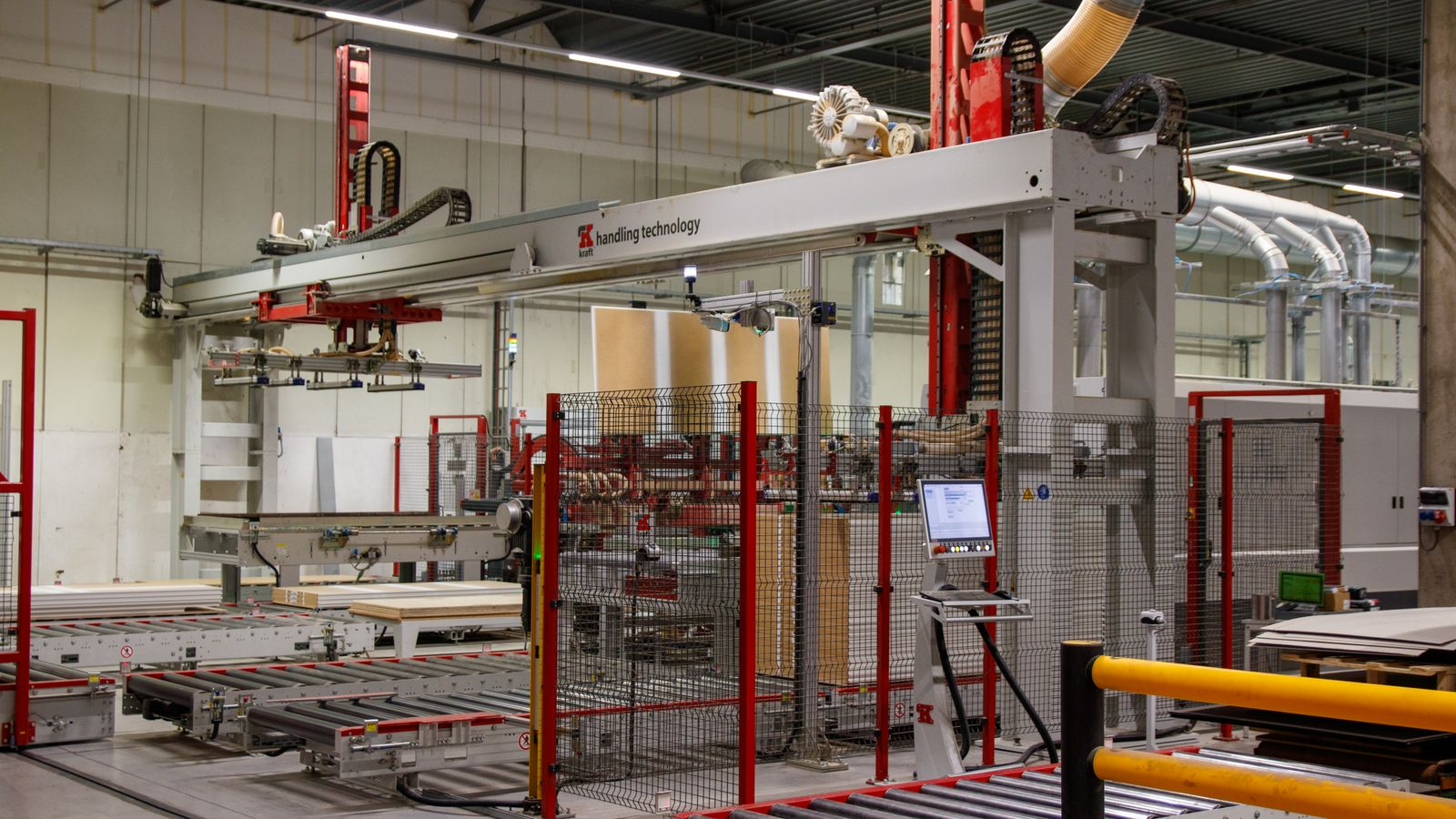
The upgraded system uses Lagarde steam/air retort technology, with automatic F0 calculation and process control supporting validated thermal treatment. Jorgensen’s robotic handling system reduces manual intervention and maintains flow through the batch process. Pudding pots are loaded into custom trays, stacked, moved by shuttle into the retorts, automatically dewatered after processing, unloaded by robot, and fed into a controlled single-file stream towards packing.
Inspection and data capture sit close to the core process rather than appearing as downstream add-ons. The line integrates Premier Foods’ existing dryer and adds an AI-powered vision system to check seal integrity, followed by checkweighing and X-ray inspection. Jorgensen’s Linefact diagnostics platform captures sensor data, provides video playback, and supports remote engineering assistance.
Legacy production lines are increasingly being rebuilt around utilities reduction as well as capacity and labour efficiency. Water-intensive and steam-heavy systems carry higher operational exposure as energy costs fluctuate and carbon reporting becomes more demanding. Replacing a retort process can therefore affect water, steam, energy, maintenance, uptime, and product quality at the same time.
Brownfield sites add complexity because equipment has to fit around existing buildings, lines, services, and workforce knowledge. Full factory replacement is rarely the preferred route in branded bakery and ambient dessert production, where established lines and product familiarity still carry value. The more common engineering challenge is to rebuild a critical process stage without unsettling output or changing the product experience.
Automation is moving into those constrained food manufacturing spaces. OAL’s fenceless robotics work reflects the same pressure from another direction, as robotic systems are adapted for production environments where traditional guarding, floor space, and manual workflows limit deployment. The Mr Kipling project applies that shift to a heavier thermal process, where robotic loading and unloading reduce variability while supporting line flow.
The inspection layer strengthens the control chain around a product that must leave the line safe, stable, sealed, and correctly packed. Thermal processing protects microbiological safety and shelf stability. Robotic handling protects pack presentation and reduces handling variation. Vision systems, checkweighing, and X-ray inspection catch defects before distribution. Diagnostics data gives engineering teams a clearer view of recurring faults and stoppage causes.
That data dimension is becoming central to food processing investment. A line upgrade now extends beyond mechanical commissioning into sensors, remote access, video diagnostics, predictive maintenance, and digital support. Factory engineering teams are expected to work across mechanical systems, controls, robotics, inspection, hygiene requirements, and data tools. Suppliers that can integrate those layers carry an advantage over those offering isolated equipment packages.
The Carlton project also shows why sustainability-led investment has to be shaped around the product rather than bolted onto the line. Steam puddings are not simple liquids or uniform dry goods. Their physical behaviour dictates the retort process, tray format, handling method, and tolerance limits after heat treatment. A generic automation package would struggle without close alignment between product, pack, machinery, and process validation.
Food manufacturers are being asked to cut resource use without creating visible disruption in product quality or availability. Projects such as this one demonstrate how that work happens inside the less glamorous sections of production: retort rooms, transfer systems, inspection points, and data platforms. The finished pudding may look unchanged, but the manufacturing route behind it is being rebuilt around lower utilities demand, automation, and tighter process control.