IN Brief:
- OAL has secured a £5m Innovate UK Innovation Loan.
- The funding supports a five-year programme to deploy more than 1,000 robotic systems by 2030.
- The company is targeting compact, fenceless robotics for food manufacturing lines with limited space.
OAL has secured a £5m Innovate UK Innovation Loan to accelerate the commercial rollout of fenceless robotics across UK food manufacturing.
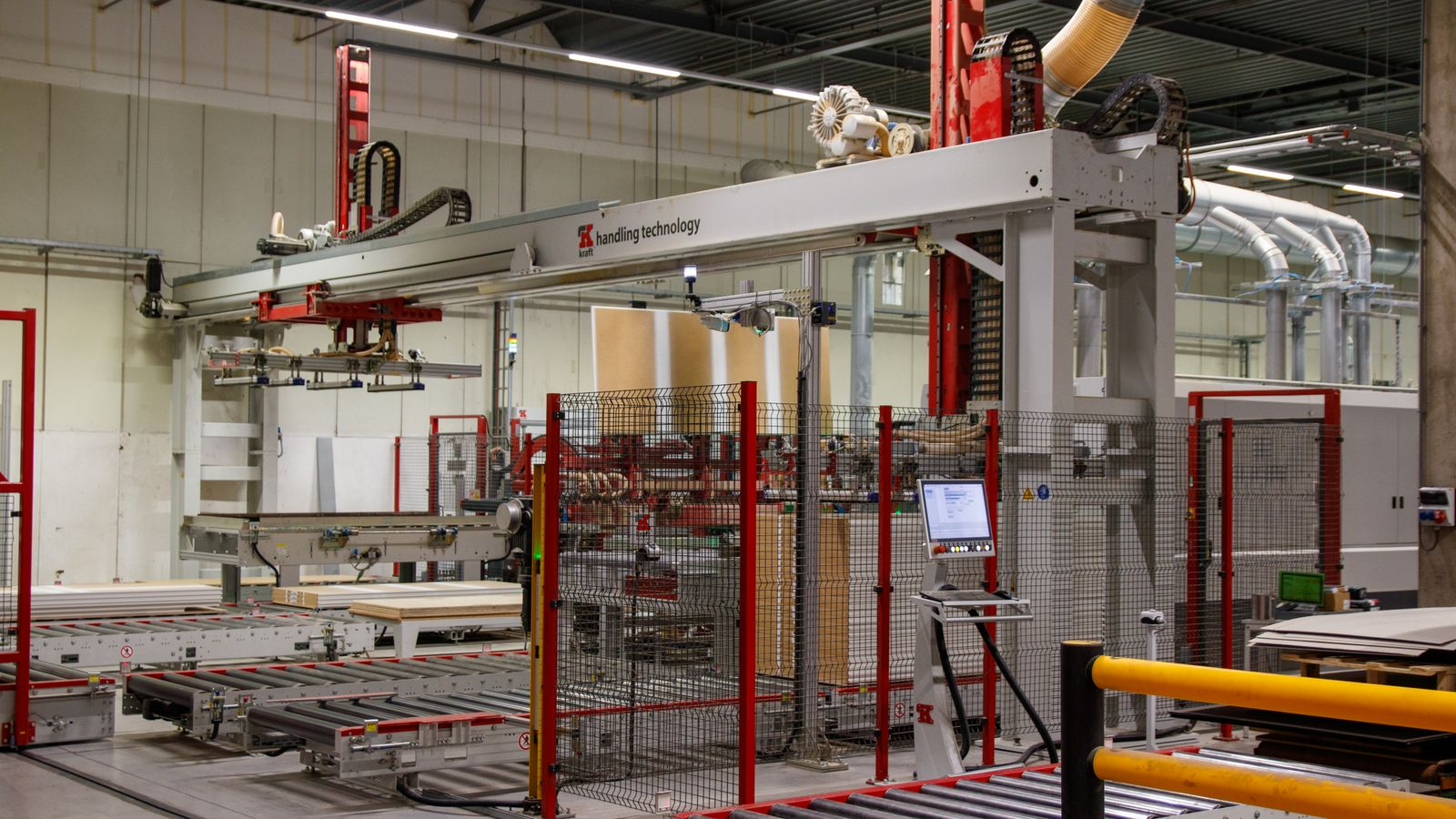
The Peterborough-based automation specialist will use the funding to support a five-year programme aimed at deploying more than 1,000 robotic systems by 2030. The systems are designed to operate safely alongside people without traditional guarding cages, allowing robots to be retrofitted into production areas where space is limited and full line redesign would be difficult.
The programme targets repetitive production and handling tasks, including pick-and-place operations and palletising. OAL is positioning the technology around one of the most persistent constraints in UK food manufacturing: the combination of labour shortages, manual handling pressure, and legacy factory layouts that were not designed around automation from the outset.
Food manufacturing employs hundreds of thousands of people in the UK, but many sites continue to rely heavily on manual labour in packing, handling, inspection, and end-of-line movement. OAL has pointed to industry estimates suggesting that more than 100,000 roles are difficult for manufacturers to fill consistently. Repetitive jobs remain hard to recruit for and harder to retain, particularly where shifts, cold environments, physical movement, and seasonal peaks are involved.
Traditional industrial robots have not always translated smoothly into food plants. They can require guarded cells, significant floor space, integration expertise, and predictable product flows. That can be difficult in factories dealing with multiple SKUs, short production runs, chilled conditions, frequent changeovers, and tight margins. Fenceless robotics aims to reduce some of those barriers by creating compact systems that can be integrated around existing lines rather than forcing a complete rebuild.
The loan will also support job creation at OAL, including roles in engineering, software development, systems integration, and technical sales. The company plans to launch a structured apprenticeship programme at its Cambridgeshire headquarters, adding a workforce development element to the automation project.
“Labour remains one of the biggest structural challenges in food manufacturing, yet traditional automation is often too large or inflexible to adapt to changing demands – be they consumer- or retailer-led,” said Jake Norman, managing director of OAL. “Fenceless robotics addresses this head on. We can rapidly deploy robots into space-constrained environments to automate pick and place and palletising tasks. This transformational technology gives manufacturers a real competitive advantage and reduces their exposure to labour shortages. We’re thrilled to secure the support of Innovate UK to accelerate this vital project.”
Food factories are also being pushed to combine automation with stronger data control and quality assurance. Integrated inspection and control systems are already being used to reduce manufacturing waste, with upstream metal detection, checkweighing, automated testing, and connected data helping to cut false rejects and downtime. Robotics belongs in the same operating environment, where repeatability, reduced error, and line visibility have to move together.
End-of-line automation is likely to be an early focus because palletising and repetitive case handling can be physically demanding, predictable, and measurable. Pick-and-place applications may offer wider productivity gains, but they require stronger product handling, vision, gripping, and changeover control. Food products are rarely as uniform as components in automotive or electronics plants, which means robot deployment depends heavily on application engineering.
Labour risk, retailer pressure, product variety, and rising wage costs are making manual dependence harder to defend. Fenceless robotics will not remove the need for skilled operators, engineers, and line leaders, but it can change where human effort is spent. The stronger opportunity is using automation to stabilise production where recruitment has become a structural constraint.