IN Brief:
- Nestlé has launched new Nescafé frothy coffee products linked to investment at Dalston in Cumbria.
- The £28m site upgrade includes a new mixing plant and two high-speed packing lines.
- The project shows how NPD, efficiency, and packaging automation are converging in beverage manufacturing.
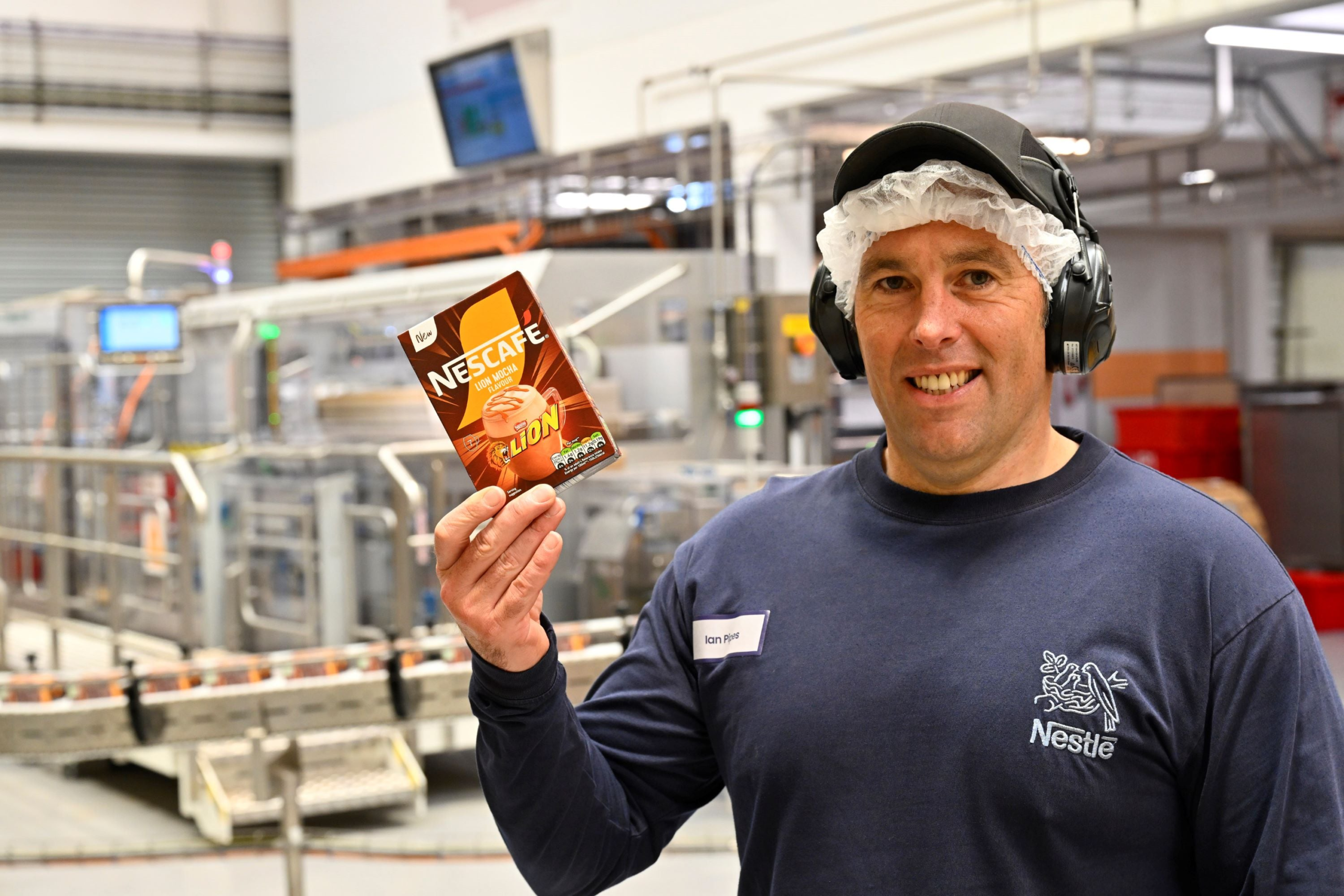
Nestlé has launched two new Nescafé frothy coffee products supported by a £28m investment at its Dalston factory in Cumbria.
The launches include KitKat White Flavour Latte and Nescafé Lion Flavour Mocha, extending the Nescafé frothy coffee range with products tied to established confectionery brands. The Dalston investment was designed to increase capacity, improve efficiency, and support further innovation in instant coffee sachets.
The factory upgrade includes a new mixing plant and two advanced packing lines capable of producing up to 60,000 frothy coffee sachets per hour. By linking new product development to new processing and packing capacity, the project gives Nestlé greater flexibility in a category shaped by flavour variation, promotional formats, and convenience-led consumption.
Instant coffee sachets are technically demanding despite their everyday format. Powder handling, mixing consistency, moisture control, filling accuracy, seal integrity, line speed, coding, and case packing all affect quality and output. Confectionery-inspired flavour profiles can add further complexity through dairy components, aromas, sweeteners, texture systems, and ingredient interactions.
The Dalston upgrade follows the same capital-investment logic seen across established food plants, where legacy assets are being modernised rather than simply expanded. Recent work on modernising Mr Kipling processing operations showed how robotics, inspection, utilities reduction, and equipment upgrades are being used to improve efficiency and consistency in mature product categories.
For Nestlé, the new products also strengthen the bridge between confectionery and beverage portfolios. KitKat and Lion give Nescafé familiar flavour cues that can support trial in the at-home café segment, while the sachet format offers portion control, convenience, and stable product quality.
Manufacturing capability is what turns that brand architecture into a repeatable product. Sachet lines must maintain accuracy at speed while protecting powders from moisture and handling damage. Mixing systems must ensure consistent distribution of ingredients that may vary in particle size, flow behaviour, and sensitivity. Packing equipment must maintain seal quality at high throughput without creating waste through rejects or rework.
Single-serve formats also sit under growing packaging scrutiny. Sachets remain popular because they are convenient and portion-controlled, but they create material-use and recyclability challenges. Beverage manufacturers will need to balance pack performance against retailer and regulatory pressure on packaging impact, particularly as flexible packaging rules tighten across Europe.
The operational case for Dalston is therefore broader than capacity alone. More automated systems can reduce manual handling, improve ingredient control, support higher line reliability, and lower waste from filling variation, off-spec blends, packaging faults, or downtime. In powder beverage manufacturing, small improvements in accuracy and uptime can become significant across high-volume runs.
UK food and drink manufacturers are also making capital decisions against a difficult cost backdrop. Energy, labour, retailer price pressure, export uncertainty, and raw material volatility have forced companies to justify investment through multiple returns. Projects that support innovation, productivity, waste reduction, and efficiency are more likely to proceed than those adding capacity without operational improvement.
Coffee brings additional raw material exposure. Climate volatility and price movement continue to affect supply, while manufacturers are investing in sustainability programmes and higher-value formats. Flexible factories are becoming more important because they allow brands to respond to flavour trends and promotional cycles without sacrificing throughput.
The Dalston investment shows how beverage innovation increasingly depends on production architecture. The consumer-facing change is flavour, but the operational advantage lies in mixing, filling, packing, and the ability to bring new formats through established manufacturing systems at scale.