IN Brief:
- Oat Cult has closed a £220k funding round led by Anotherway Ventures.
- The brand will scale online growth, subscriptions, Amazon sales, new flavours, and packaging improvements.
- The raise reflects continued interest in functional breakfast formats built around fibre, cultures, and convenience.
Oat Cult has raised £220k to scale its live-culture overnight oats business, with investment directed toward online growth, subscriptions, Amazon sales, new flavours, and packaging development.
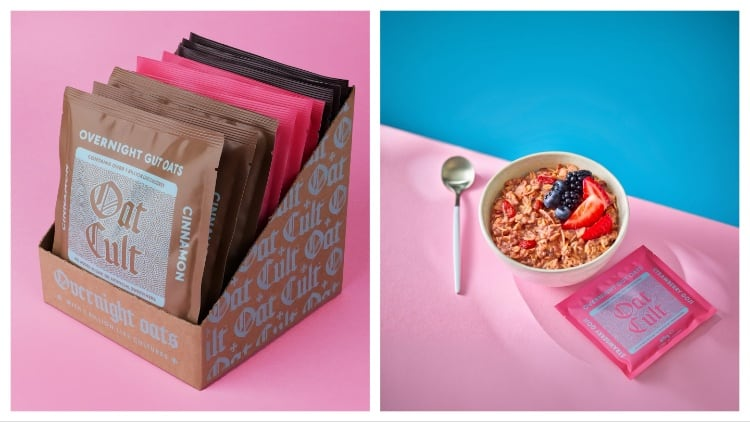
The funding round was led by Anotherway Ventures and follows the brand’s launch last year. Oat Cult sells overnight oats built around live cultures, chia and flax seeds, gluten-free recipes, and no added sugar or sweeteners, with consumers preparing the product by adding milk or yoghurt and leaving the mix overnight.
The business remains small compared with established breakfast manufacturers, but the raise reflects continuing interest in convenient formats that combine fibre, cultures, natural ingredients, and controlled sugar positioning. Overnight oats sit between cereal, snacking, functional food, and meal preparation, giving brands room to adapt recipes through inclusions, flavour systems, seeds, and nutritional claims.
The format also carries manufacturing advantages. Dry or semi-dry mixes can avoid some of the chilled logistics burden associated with ready-to-eat breakfast pots, while e-commerce channels allow brands to build subscription models before moving into broader retail distribution. That route can reduce initial listing dependence, although it places more pressure on fulfilment, packaging, and repeat-purchase economics.
Oat Cult will use part of the funding for packaging redesign, with fulfilment resilience a central consideration. Direct-to-consumer food packaging must survive parcel networks rather than only palletised retail movement. Compression, vibration, moisture exposure, courier handling, and letterbox or doorstep delivery can all damage products that would otherwise be stable in conventional trade distribution.
Packaging performance has a direct margin effect. Damaged packs, crushed units, poor presentation, leakage, and weak unboxing experience can generate replacements, refunds, waste, and customer service costs. In subscription food models, operational reliability is tied closely to retention because consumers expect the same product condition on each delivery.
The functional breakfast category is becoming more technically demanding. Fibre enrichment, live cultures, protein claims, gluten-free formulation, low-sugar positioning, and natural flavour systems all affect recipe design. Manufacturers need to manage water activity, shelf life, ingredient stability, sensory quality, and label clarity while keeping preparation simple.
Oats offer a useful base because they are familiar, relatively economical, and associated with fibre and satiety. Chia and flax add nutritional value and texture, but they also influence hydration once liquid is added. Product quality depends on how the mix behaves after preparation, not only how it performs in dry pack form.
Growth through Amazon and subscriptions changes production planning. Demand can fluctuate around promotions, health-focused buying periods, social content, and subscription cycles. Brands need production runs, stockholding, and fulfilment systems that can absorb peaks without overproducing flavour-specific inventory or carrying excessive working capital.
Larger manufacturers continue to reassess breakfast as consumer routines change. Traditional cereal has faced pressure from sugar scrutiny and shifting morning habits, while snacks and drinks have captured more convenience-led occasions. Overnight oats give the category a route back into structured breakfast through preparation simplicity, nutritional positioning, and flexible flavour development.
SKU discipline will become important as Oat Cult expands. New flavours can widen appeal, but each addition brings complexity in ingredient sourcing, production planning, stock management, packaging, and fulfilment. Smaller brands often create avoidable operational pressure by adding variety before manufacturing and demand patterns are stable.
The £220k raise gives Oat Cult room to strengthen its platform before pursuing wider scale. If packaging, production, and online operations hold together, the brand could build a functional breakfast business without relying immediately on heavy chilled infrastructure or national retail distribution.