IN Brief:
- CJ Biomaterials produces PHA by bacterial fermentation of sugar before converting the recovered polymer into processable material.
- Its application portfolio includes flexible food packaging, rigid containers, cold cups, paper coatings, and other foodservice products.
- Processing performance, material cost, collection, and composting infrastructure remain central to whether PHA can move beyond specialist applications.
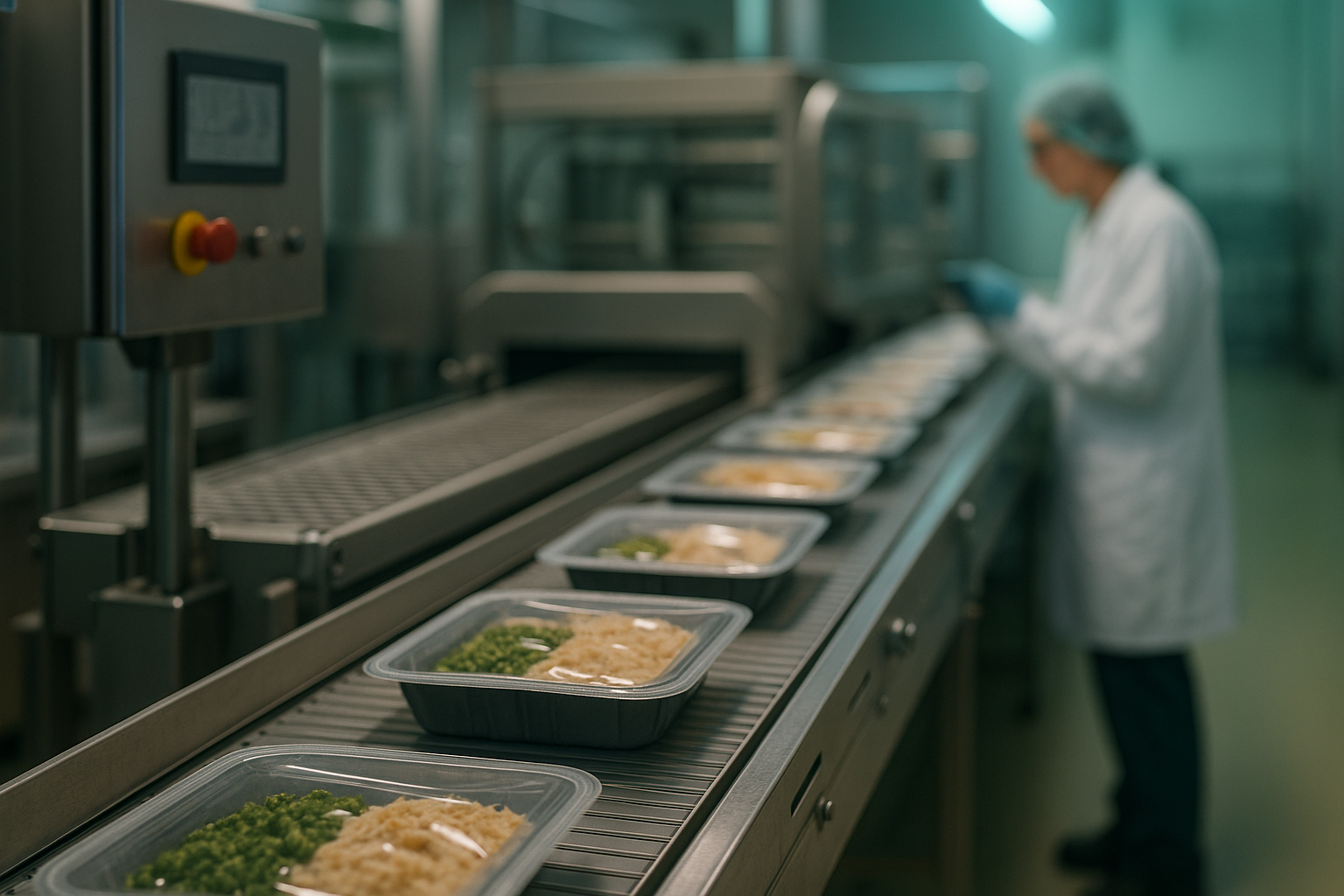
CJ Biomaterials is moving fermentation-derived polyhydroxyalkanoate further into food packaging, using microbial production to create polymers that can be converted into films, containers, cups, and paper coatings.
The manufacturing route starts with sugar rather than petroleum feedstock. Microorganisms produce PHA during fermentation, after which the polymer is recovered, purified, and converted into material that can be processed using established plastics-conversion techniques.
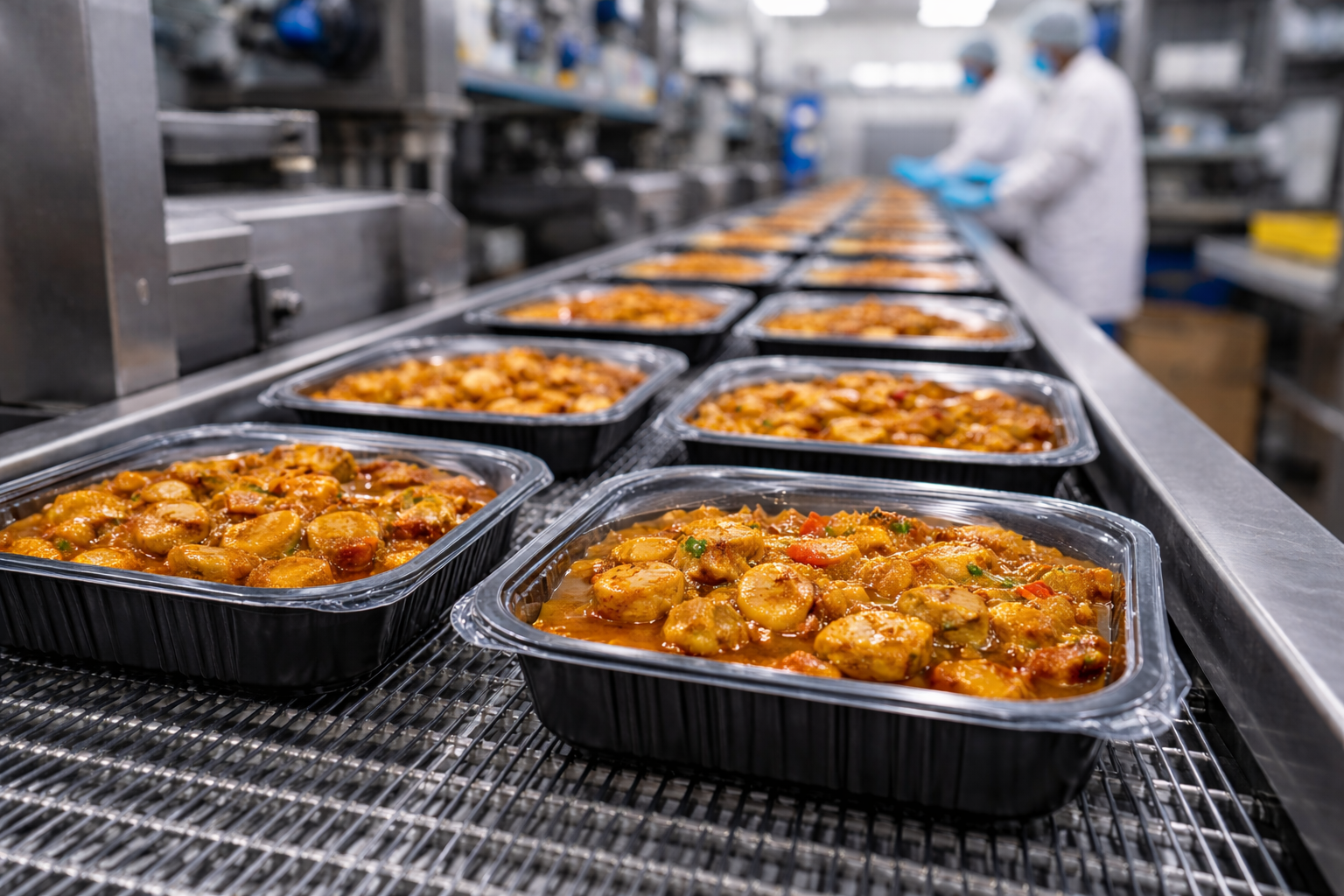
CJ’s current application portfolio includes flexible food packaging, rigid food containers, cold cups, and coatings for paper and board. Its technical platform covers injection moulding, film and sheet extrusion, blown film, and paper coating.
Recent work at the company’s Woburn research site in Massachusetts has included moulded foodservice products and flexible film intended for food packaging. CJ has been producing PHA commercially at Pasuruan in Indonesia since 2022, meaning the development challenge is increasingly about finished-product performance rather than proving that the polymer can be made at industrial scale.
PHA is a family of materials rather than one resin with fixed properties. CJ produces grades ranging from more crystalline polymers to amorphous versions with greater flexibility, using microbial engineering to alter the polymer composition.
That matters because food-packaging applications make conflicting demands on materials. A frozen-food pouch needs very different mechanical behaviour from a cold cup, while a paper coating has different requirements again.
Flexible packs need sufficient strength during filling and distribution while maintaining reliable seals. Rigid containers have to retain shape and tolerate stacking and handling. Coatings must provide useful barrier properties while adhering consistently to paper or board during high-speed converting.
A polymer’s biological origin provides little value if those manufacturing requirements cannot be met. Converters ultimately buy material that has to run through extrusion, moulding, or coating equipment at commercially acceptable speed and reject rates.
CJ says its PHA technology can be processed through conventional plastics-conversion methods. That lowers one barrier to adoption because manufacturers can investigate the resin without necessarily replacing complete production lines.
Existing equipment compatibility does not make the material a drop-in substitute in every application. Resin drying, melt behaviour, temperature profile, cooling, film thickness, sealing, tooling, line speed, and downstream handling may all need optimisation when moving from established petrochemical polymers to PHA.
Food contact adds another layer. Packaging has to maintain mechanical performance while meeting migration, hygiene, storage, odour, appearance, and shelf-life requirements for the product being packed.
The end-of-life proposition is one of PHA’s main points of differentiation. CJ describes the polymer family as bio-based and biodegradable, with grades capable of degradation under marine, soil, home-composting, and industrial-composting conditions.
Those characteristics still need to be stated carefully at product level. The behaviour of a finished pack depends on polymer grade, thickness, formulation, temperature, microorganisms, and disposal conditions rather than the PHA name alone.
That distinction becomes particularly important in food packaging, where contamination can limit conventional recycling. A pack heavily contaminated with food may not be an attractive mechanical-recycling feedstock, creating interest in materials capable of moving with food waste into an appropriate composting system.
Appropriate infrastructure remains the limiting phrase. Compostable packaging only gains that end-of-life route where collection and treatment facilities accept it, and availability varies considerably between locations.
Material identification presents another problem. Compostable and conventional plastic packs can look similar, leaving users to sort them correctly before the technical properties of the polymer become relevant.
Cost is a further constraint. Conventional PET, polyethylene, and polypropylene benefit from vast production scale, mature global supply chains, and decades of optimisation in packaging factories. PHA has to compete against that established economics while still building demand.
Current industry estimates place bio-based plastics at only a small fraction of global plastics output, although production is expected to expand as more material reaches commercial scale and packaging applications become more technically mature.
CJ’s Woburn development work is therefore an important part of the industrial process. Fermentation produces the polymer, but commercial adoption depends on what happens afterwards: compounding it into workable grades, running those grades through existing machinery, validating the finished pack, and providing a realistic disposal route.
Food packaging is likely to remain one of the strongest testing grounds because the sector uses enormous quantities of short-life material and contains applications where contamination makes conventional recycling difficult.
PHA does not remove the wider problem of single-use packaging, nor does biodegradability excuse unnecessary material use. Its industrial case is narrower: some food packs will continue to be needed, some will remain difficult to recycle, and fermentation-derived polymers may provide a different end-of-life option where processing performance and waste infrastructure align.
The decisive work is therefore moving away from proving that bacteria can make plastic. CJ Biomaterials is now dealing with the more prosaic manufacturing questions — whether the resulting material extrudes cleanly, moulds consistently, seals reliably, survives the food supply chain, and reaches a disposal system capable of using the property that makes it different.