IN Brief:
- Ferrero has agreed to acquire Boulder-based Purely Elizabeth for an undisclosed sum.
- The granola, oatmeal, cereal, and protein business has more than doubled sales during the past two years.
- Purely Elizabeth will remain standalone, with Ferrero supporting product development, operating capabilities, and wider distribution after closing.
Ferrero Group has agreed to acquire Purely Elizabeth, adding a fast-growing US granola, oatmeal, cereal, and protein business to a North American portfolio that has expanded well beyond the group’s traditional confectionery base.
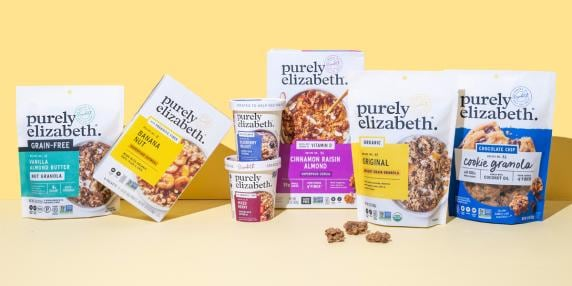
Purely Elizabeth was founded in 2009 and is based in Boulder, Colorado. Ferrero says its sales have more than doubled during the past two years, with growth built around breakfast products containing ingredients including oats, whole grains, nuts, and seeds, alongside a more recent move into protein-focused formats.
Financial terms have not been disclosed. The transaction is expected to close in the coming months, subject to customary closing conditions and regulatory approvals.
After completion, Purely Elizabeth will continue operating as a standalone brand within Ferrero. Founder and chief executive Elizabeth Stein will remain in her role alongside the existing leadership team, while Ferrero intends to support product development, operating capabilities, and wider distribution.
The arrangement gives the acquisition more operational interest than a straightforward brand transfer. Purely Elizabeth has grown around a relatively focused premium and wellness proposition, while Ferrero brings purchasing scale, distribution infrastructure, technical resources, and experience running a much larger portfolio of packaged foods.
The manufacturing consequences have not yet been specified. Ferrero has not identified production sites that will change hands, disclosed a factory consolidation plan, or said that Purely Elizabeth production will be transferred into Ferrero-owned plants, so there is no basis for assuming an immediate manufacturing move after closing.
Growth nevertheless changes the operating requirements around a breakfast portfolio. Granola, oatmeal, and cereals depend on repeatable sourcing and processing of grains, nuts, seeds, oils, sweeteners, flavours, and inclusions, with finished quality influenced by roasting, blending, moisture management, allergen control, and packaging.
A business can accommodate considerable flexibility while volumes are relatively small. Once distribution expands, ingredient orders become larger, packaging forecasts extend further ahead, production campaigns become longer, and a poor demand forecast creates more expensive inventory than it did at an earlier stage of growth.
Premium and better-for-you formulations can also carry unusually detailed ingredient specifications. Gluten-free positioning, protein claims, ancient grains, organic ingredients, or other nutritional propositions bring additional supplier documentation and segregation requirements, while label content has to remain aligned with every formulation change.
That makes operational resilience a material part of the acquisition case. Ferrero can provide procurement reach, technical support, quality systems, planning capability, and relationships with major retailers, all of which become more valuable as a brand moves from rapid growth towards a larger and more complicated supply network.
The group has already been building a broader US breakfast position. Its 2025 acquisition of WK Kellogg Co added a substantial cereal platform, while Purely Elizabeth gives Ferrero exposure to a more premium and wellness-oriented part of the category.
Ferrero’s wider better-for-you portfolio includes Power Crunch in North America, Eat Natural and FULFIL in Europe, and Bold Snacks in Brazil. Those businesses expose the group to eating occasions and production systems outside chocolate and confectionery, from cereal processing and bar manufacture to protein-rich snacks.
Diversification changes the manufacturing mix as well as the brand portfolio. Breakfast cereals and granolas operate with different ingredients, ovens, blending systems, quality controls, packaging machinery, and shelf-life requirements from chocolate products, making growth in the category dependent on specialist operations rather than merely wider sales coverage.
Purely Elizabeth’s decision to remain standalone should reduce the immediate risk of disrupting that operating knowledge. Product development, sourcing relationships, and brand management stay with the existing leadership while Ferrero decides which functions benefit from greater group support.
The harder integration decisions will come later. Procurement, demand planning, manufacturing support, warehousing, distribution, quality systems, and capital expenditure can all create economies when shared across a large organisation, but excessive centralisation can also slow a smaller brand built around rapid product development.
Maintaining product consistency through growth will be particularly important. Grain, nut, and seed ingredients vary naturally between harvests and suppliers, while roasting conditions and moisture influence texture, flavour, and shelf life. A product that appears mechanically simple on a supermarket shelf can require tight control once production is scaled across larger batches.
Packaging carries the same pressure. Granola and cereal need suitable moisture and oxygen barriers, reliable sealing, and sufficient mechanical strength for a wider distribution network, while larger production volumes place more emphasis on reel availability, format changeovers, case configurations, and pallet efficiency.
Ferrero’s announcement emphasises supporting Purely Elizabeth’s existing product-development pipeline rather than replacing it. That suggests the first operating objective will be to remove constraints around growth while preserving the formulations and positioning that made the company an attractive acquisition target.
The proposed transaction fits a wider pattern in large food groups: buying established businesses to gain manufacturing knowledge, retailer access, consumer positions, and product pipelines that would take years to develop organically. Purely Elizabeth gives Ferrero another route into breakfast without asking its existing confectionery operations to create the category from scratch.
No post-acquisition capital programme has been announced, and the transaction remains subject to approval. The most useful industrial indicators will come after closing, when Ferrero begins deciding whether additional production, sourcing capacity, warehousing, or distribution infrastructure is needed to support the next stage of growth.
Purely Elizabeth has already demonstrated demand by more than doubling sales in two years. Ferrero’s task is to add scale without turning a fast-growing food brand into an operation whose manufacturing and supply chain become more complicated faster than its systems can support.