IN Brief:
- PepsiCo says more than ₹600 crore has been invested in its Pune snacks facility during 25 years of operation.
- Annual production capacity has increased approximately six-fold to around 62,100 tonnes.
- Automation, digital potato grading, and water recovery have been added as the mature factory has expanded throughput and resource efficiency.
PepsiCo India has marked 25 years of production at its Pune snacks plant, where more than ₹600 crore of accumulated investment has increased annual capacity to approximately 62,100 tonnes and progressively introduced new automation, grading, and water-management technology.
The facility began operating in 2001 and now has around six times its original production capacity. Its development reflects the less visible form of food-industry investment in which an established factory is repeatedly expanded and re-engineered rather than replaced by a single new-build project.
PepsiCo has used Pune for a number of manufacturing developments within its Indian foods business, including automated palletisation, digital potato grading, and systems designed to recover water from production.
Each technology addresses a different constraint in high-volume snack manufacture. Digital grading improves visibility over the agricultural raw material entering the process, palletisation automates the handling of finished cases, and water recovery reduces demand on a utility that is essential to raw-material preparation and cleaning.
Potatoes destined for crisp production vary considerably even when they are grown to processing specifications. Size, dry matter, sugar content, internal defects, and physical damage can affect slicing behaviour, frying colour, oil uptake, finished texture, and product losses.
Improving the consistency of grading before potatoes enter the main process gives operators better control over that variability. Automated systems can assess incoming crop more consistently than relying entirely on manual judgement, while the resulting data can also support decisions on raw-material allocation and supplier performance.
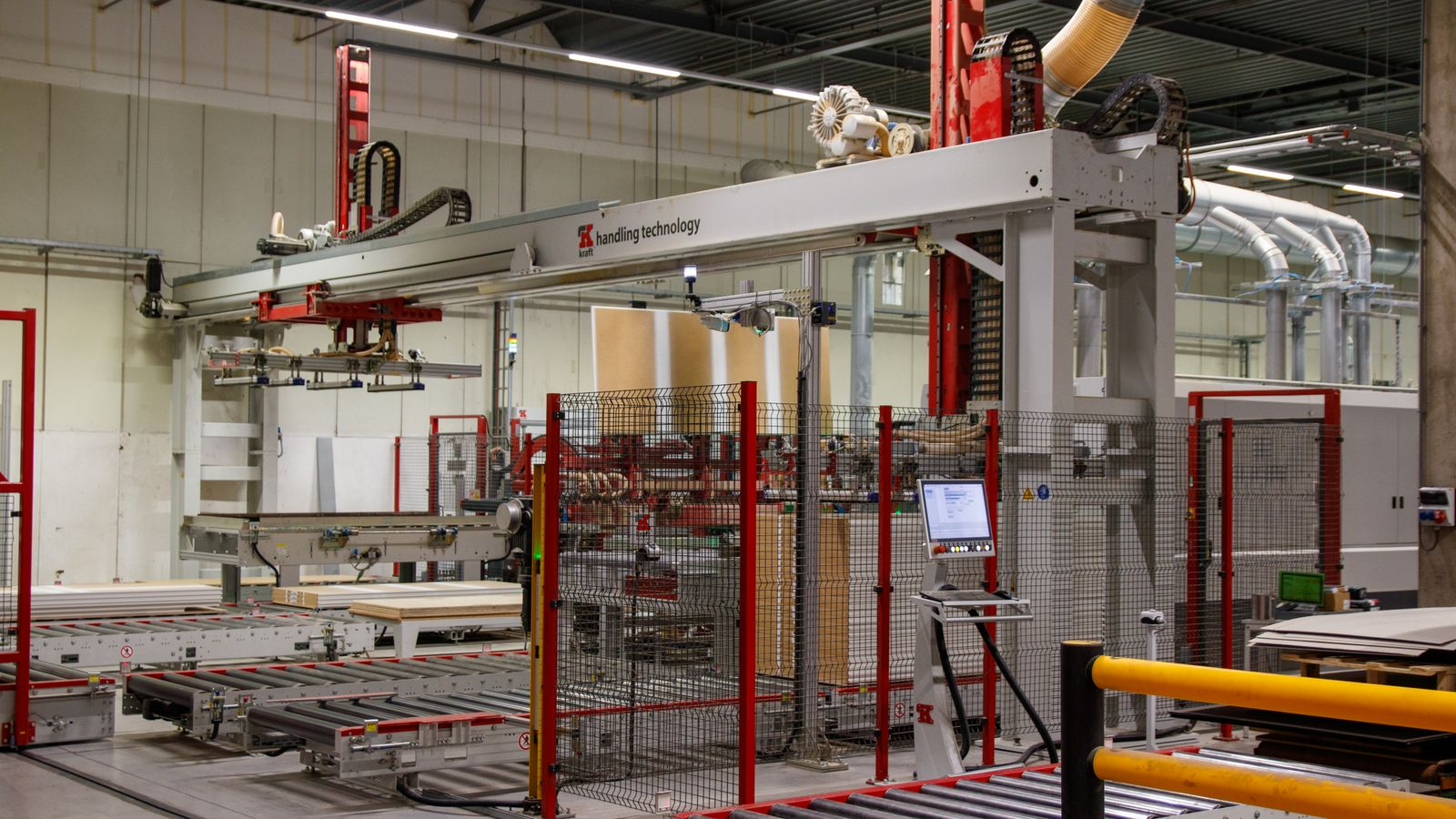
The plant’s automation extends through to finished goods. Palletising is a repetitive operation that has to match the output of packaging lines without becoming a restriction on upstream production, particularly where a plant handles high volumes across multiple pack sizes.
Automated pallet movement can improve repeatability and reduce manual handling, but it also makes the reliability of conveyors, controls, sensors, and warehouse interfaces more important. As throughput grows, disruption at the end of a line can rapidly propagate backwards into packing and processing.
Water efficiency has become another defining part of the Pune operation. PepsiCo has developed a Fryer Vapor to Water system that captures vapour released during potato frying, condenses it, removes fats, oils, and grease, and makes recovered water available for uses including washing, peeling, and slicing incoming potatoes.
The approach draws water from a part of the process where it would otherwise leave as vapour. Potatoes contain a high proportion of water, much of which is driven off during frying, so recovering that moisture provides another source of process water rather than relying entirely on freshwater intake.
During 2025, PepsiCo paired the recovery system with an air-cooled heat exchanger rather than a conventional water-cooled arrangement. The company says that combination more than halved freshwater demand at the site during 2025 compared with 2024.
The engineering has particular relevance because Pune operates in a water-stressed region. Reducing water demand at a high-volume plant therefore has a practical resilience value as well as contributing to corporate resource-efficiency targets.
Water recovered inside a food plant still has to be handled according to its intended use. Treatment, hygiene controls, monitoring, and segregation determine where recovered streams can safely return to production, so the volume saved is inseparable from the quality-management system supporting the technology.
The Pune site also sits in the middle of an agricultural network developed around processing potatoes. Crisp manufacturers require varieties and crop characteristics suited to industrial frying, which connects factory performance to seed selection, agronomy, harvesting, storage, and transport before the raw material reaches the receiving area.
That connection becomes more important as plant capacity increases. A factory capable of processing six times its original volume needs a correspondingly resilient flow of suitable potatoes, packaging materials, frying oil, seasonings, utilities, labour, maintenance resources, and warehouse capacity.
Higher throughput also changes the economics of small process improvements. A reduction in water consumption, reject rate, giveaway, downtime, or packaging loss has a larger annual effect when applied across tens of thousands of tonnes of production.
PepsiCo is meanwhile preparing a broader expansion of its Indian manufacturing network, with plans announced earlier in 2026 for investment of approximately ₹5,700 crore by 2030. That programme is expected to support additional capacity in states including Madhya Pradesh, Assam, and Tamil Nadu.
Pune therefore provides a useful contrast with newer investment. A recently commissioned factory can incorporate current automation and utility technology from the outset; a 25-year-old plant has to introduce those systems around established lines, buildings, and operating routines.
Maintaining production while modifying a mature site places a premium on engineering planning. Equipment installations have to fit existing layouts, utilities must support higher loads, and individual projects have to be commissioned without creating unacceptable disruption to customer supply.
The 62,100-tonne capacity figure marks how far the plant has moved from its original scale, but the continuing engineering work is arguably more important than the anniversary. Mature food factories remain competitive only when investment continues after the ribbon-cutting photographs have been forgotten.
Pune now faces that familiar industrial challenge: keeping an established plant productive while newer PepsiCo facilities enter the network with more recent technology. Its first 25 years were built around six-fold capacity growth; the next phase will depend increasingly on how efficiently that capacity can be operated.