IN Brief:
- The proposed Pełczyce processing complex covers almost 6.8 hectares and is expected to create around 300 jobs.
- Plans combine salmon filleting, salting, smoking, freezing, and packing with photovoltaic generation and up to 2 MW of energy storage.
- Environmental procedures remain in progress, with operations currently targeted for the fourth quarter of 2027.
Suempol is planning a new salmon processing complex at Pełczyce in Poland’s West Pomeranian region, bringing filleting, salting, smoking, freezing, and packing operations together on a site covering almost 6.8 hectares. The development is expected to create around 300 jobs, with operations currently targeted for the fourth quarter of 2027.
Planning documentation covers four plots and describes a complete fish processing centre supported by photovoltaic generation and an energy storage system rated at up to 2 MW. The company has not disclosed a capital value or expected annual processing capacity, leaving the eventual production scale to be defined as the project moves through approval and detailed engineering.
The administrative process is still under way. Environmental procedures began before Suempol formally announced the investment, and the final construction timetable will depend on approvals as well as subsequent building, equipment installation, commissioning, and validation.
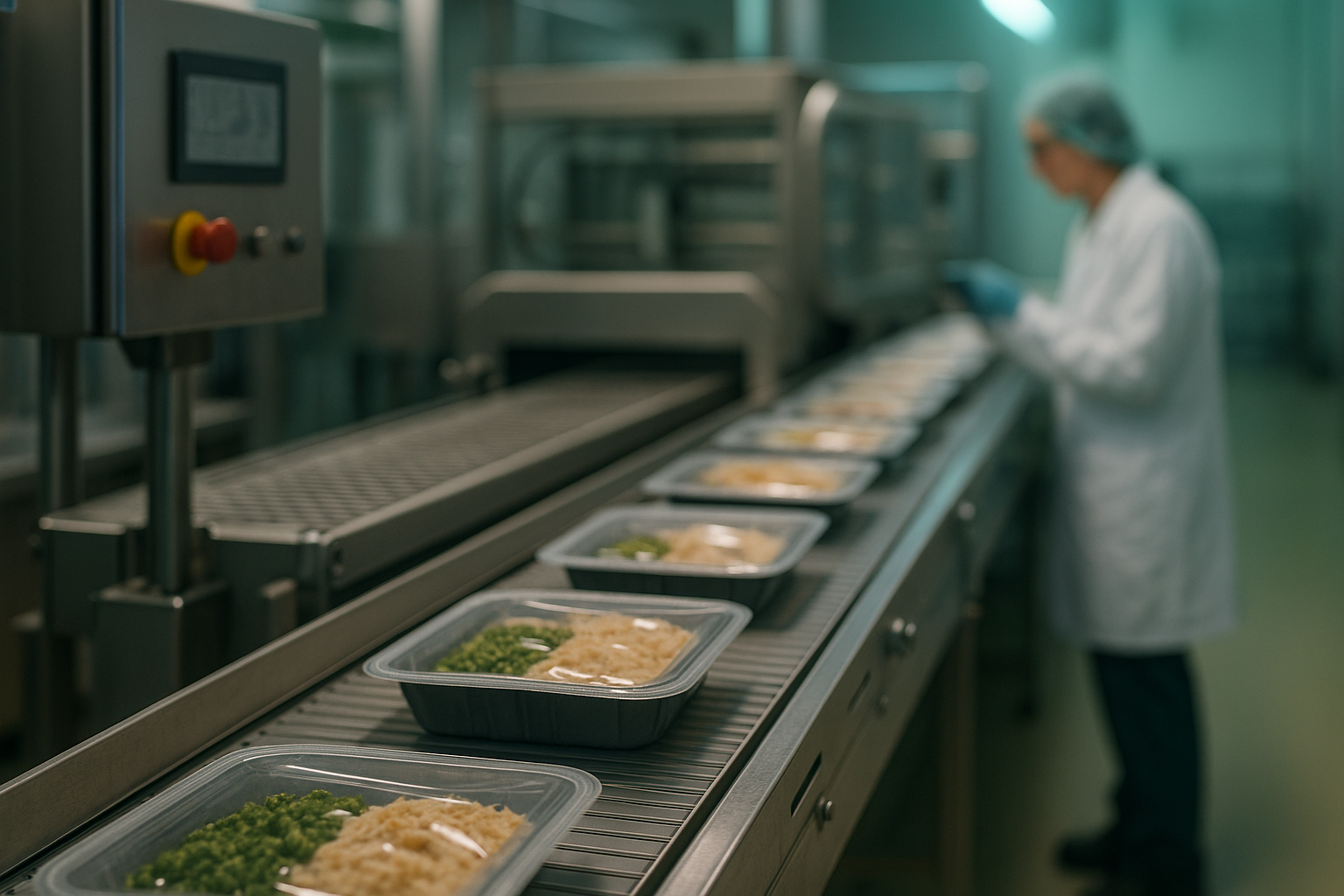
The production scope gives a clearer indication of the plant’s intended role. Filleting, curing, smoking, freezing, and finished-product packing require distinct process environments, with different temperature, hygiene, handling, and product-flow requirements. Integrating those stages on one site can reduce transfers between facilities, but it also puts more emphasis on factory layout and segregation between raw, intermediate, and ready-to-eat operations.
Salmon processing presents particularly demanding hygiene controls because raw fish, cured products, smoked products, and packed finished goods can occupy different microbiological risk profiles. Production areas therefore have to be arranged around controlled movement of people, product, packaging, waste, and cleaning equipment, rather than simply placing machinery in the most convenient available space.
Cold-chain capacity will be another major element. Incoming fish, intermediate material, frozen products, and finished chilled packs all impose refrigeration loads, while smoking and other thermal processes create a different energy profile. Ventilation, sanitation, compressed air, pumps, packing machinery, and automated handling add further electrical demand across the site.
The planned photovoltaic installation and battery storage system therefore sit alongside an energy-intensive production process rather than operating as a separate sustainability project. A system rated at up to 2 MW could help the site manage locally generated electricity and peak loads, although the final contribution will depend on installed photovoltaic capacity, operating schedules, refrigeration demand, and the way energy storage is integrated with the wider plant.
Pełczyce also gives Suempol a western Polish production location with access towards Germany and other European markets. The group already operates internationally across fish processing, private-label manufacturing, and branded products, and its own corporate material describes a business spanning several European production and commercial operations.
Location has practical consequences for seafood production because transport time affects both incoming raw material and finished chilled products. Frozen output offers more logistics flexibility, while fresh and chilled products place tighter constraints on dispatch planning and cold storage. A plant covering several processing formats needs sufficient capacity across both production and logistics rather than relying on line throughput alone.
Packaging will be another substantial operation within the proposed complex. Retail salmon products can require vacuum packing, modified-atmosphere formats, trays, films, labels, case packing, and palletisation, depending on the customer and product. Private-label work adds further complexity because different retailers can specify individual pack dimensions, artwork, weights, and coding requirements while expecting consistent process control behind them.
The employment figure of around 300 also points to a sizeable operation, although headcount cannot be translated directly into production capacity. Automation levels, shift patterns, product mix, degree of manual trimming, packing formats, sanitation staffing, warehouse operations, and maintenance strategy will all influence the relationship between workforce and tonnes processed.
Suempol’s existing operations give the company an established base in smoked and fresh salmon, but Pełczyce will have to establish its own process controls and customer approvals before commercial production can begin. Major food factories rarely move directly from mechanical completion to full output: utilities have to be commissioned, equipment tested, hygiene systems validated, recipes and pack formats trialled, staff trained, and customer specifications qualified.
The environmental process is therefore only the first of several milestones. Construction, equipment procurement, refrigeration installation, energy infrastructure, packaging systems, and commissioning all have to fit within the timetable if Suempol is to begin operating in the fourth quarter of 2027.
The project adds a substantial new site to Poland’s seafood processing base, but its eventual industrial weight will depend on details that have not yet been published — particularly production capacity, investment value, and the final balance between fresh, smoked, frozen, and packed output. Those figures will show whether Pełczyce is primarily an expansion of existing volume or a more significant redistribution of Suempol’s European processing network.