IN Brief:
- CablePro uses a cable-and-disc tubular drag system for dry foods including grains, nuts, snacks, powders, pet foods, and frozen products.
- Food-grade coated cable, UHMW discs, enclosed stainless-steel tubing, and automatic tensioning target controlled handling and lower maintenance intervention.
- Cleaning configurations include wipers, scrapers, brushes, air knives, sponge discs, and wet CIP arrangements with drainage.
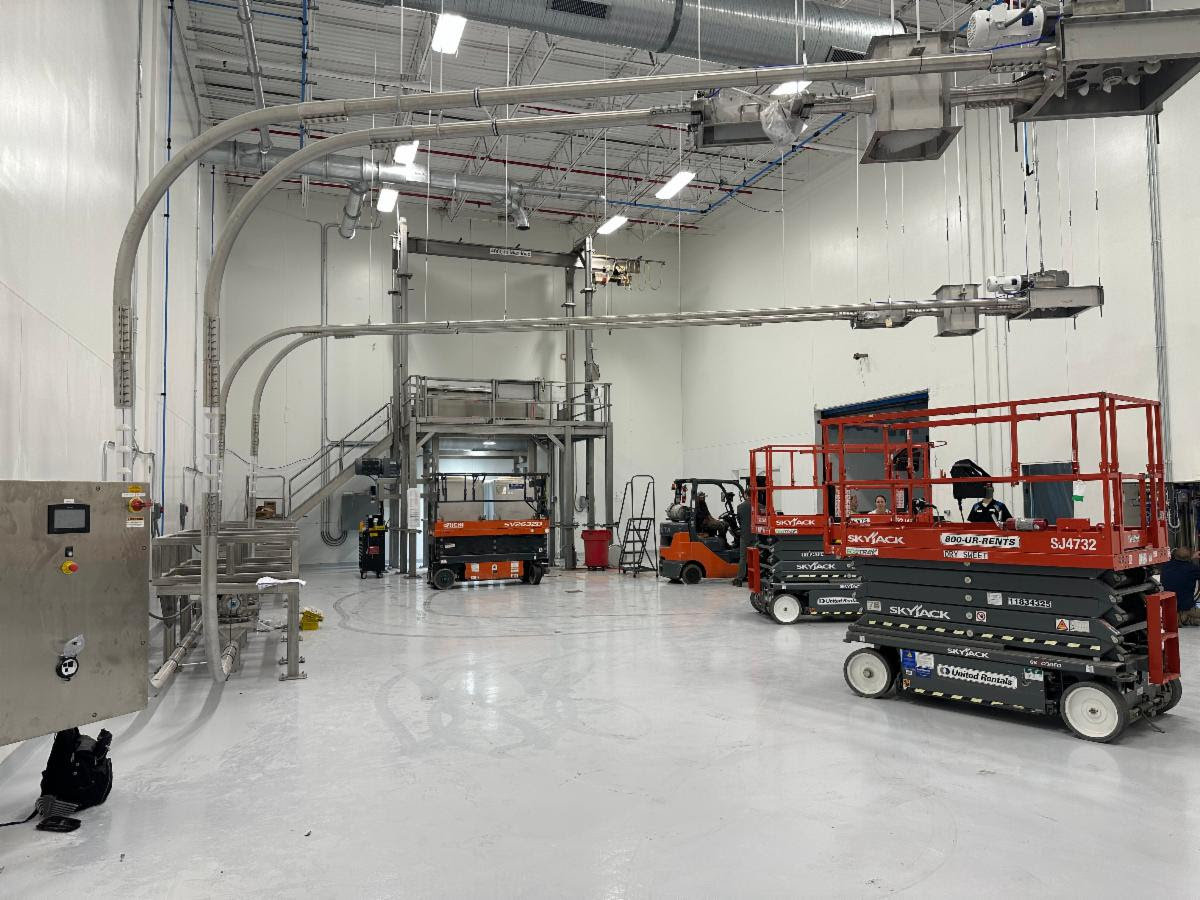
Hapman is developing its CablePro tubular drag conveyor around a persistent food-processing problem: moving fragile dry products through a factory without adding unnecessary breakage, fines, dust, or sanitation work. The system combines an enclosed tube with a moving cable-and-disc assembly and can be routed horizontally, vertically, and around obstacles within established production layouts.
CablePro itself is not a new 2026 product launch. Hapman introduced the platform at Pack Expo in 2024, while current technical work and application material focus on how its mechanical construction, cable design, cleaning arrangements, and automatic tension control can support food-manufacturing installations.
That distinction matters because tubular drag conveying is an established principle. Product sits between discs attached to a moving cable and is carried through an enclosed circuit at a controlled speed, avoiding some of the high-velocity movement and repeated drops associated with other forms of dry-material transfer.
Applications listed by Hapman include nuts, coffee, snack foods, pet foods, powders, frozen foods, cereals, grains, and other materials where maintaining physical condition can be important. Fragility varies considerably between those products, so the conveyor still has to be sized and tested around the actual material rather than treated as universally gentle.
Breakage is only one concern. Repeated impacts can increase the amount of fines in cereals or snacks, change bulk density, create dust, and affect the consistency of downstream weighing or packing. Nuts and irregular pieces can chip, while mixed products can segregate if different components respond differently to acceleration and transfer.
CablePro uses proprietary self-lubricating ultra-high-molecular-weight polyethylene discs attached to a pre-stretched, food-grade coated stainless-steel cable. Hapman says the disc material is intended to reduce friction against the tube wall while retaining sufficient engagement with the product to move it through bends and elevation changes.
Friction affects both product and equipment. Resistance through a long conveying route increases mechanical load on the cable and drive system, while repeated contact can accelerate wear at discs, bends, sprockets, and other components. Reducing that resistance can therefore influence maintenance demand as well as the condition of the food being transported.
The conveyor incorporates automatic cable tensioning to maintain the required pressure as components settle and wear in service. Incorrect tension can increase cable and sprocket wear or affect tracking, so automating the adjustment reduces one routine intervention on a system that may be expected to operate for long production periods.
Enclosure provides another advantage by keeping the conveyed product within a defined path. Open belts and bucket elevators can introduce more transfer and exposure points, while escaped fines and product add to housekeeping requirements around the equipment.
A sealed tube is not automatically hygienic, however. Residue can still remain on internal surfaces, discs, cable, bends, and connections, so cleaning design determines whether enclosure simplifies sanitation or merely hides difficult-to-reach contamination.
Hapman provides several cleaning options to match different food applications. Dry-cleaning configurations can use sponge, wiper, or scraper discs, alongside brushes and air knives, while systems intended for wet sanitation can be configured for water, foam, or chemical Clean-in-Place cycles.
Integral drain points support wet cleaning by giving rinse water a defined path out of the system. Sanitary flanged connections are available to reduce internal gaps between tube sections, while inspection sections can give maintenance and hygiene teams access to parts of the conveying route.
The variety of cleaning methods reflects the range of products that can pass through a tubular conveyor. A dry grain installation may have little reason to introduce water into the system, while another process handling allergenic or microbiologically sensitive material may need a more aggressive validated cleaning regime.
Wet cleaning also creates its own requirements. A system has to drain completely enough to avoid retained moisture, while drying time can become part of the changeover schedule. Adding CIP capability without designing for drainage and subsequent drying can simply exchange one sanitation problem for another.
Routing flexibility is particularly useful in brownfield food factories where existing process equipment, structural steelwork, services, and access routes leave little chance of designing a straight conveyor path. Tubular drag systems can move material around those constraints while reducing the number of separate conveyors and transfer points required.
Fewer transfers can reduce breakage and dust, but a longer continuous route raises the importance of correct system design. Bend radius, circuit length, product loading, cable speed, inlet configuration, and discharge position all affect mechanical loading and material behaviour.
Hapman engineers the tubing to the application length and can integrate CablePro with equipment including bulk-bag unloaders, bag-dump stations, feeders, and fillers. That allows the conveyor to become part of a complete raw-material or production system rather than being installed as an isolated transport device.
For processors planning those integrations, throughput is only one design criterion. Product condition at discharge, cleaning time, allergen control, maintenance access, cable life, power demand, and the ability to reach components after installation can determine whether the conveyor remains useful after several years of operation.
Automatic tensioning and low-friction discs address part of the maintenance requirement, while modular cleaning accessories allow different sanitation strategies. Neither removes the need for routine inspection, particularly where a single conveyor connects several process stages and its failure would stop more than one piece of downstream equipment.
CablePro therefore represents an incremental engineering development rather than a new conveying principle. Hapman has combined established tubular drag mechanics with food-grade materials, sealed construction, cleaning options, and automated cable management to make the technology easier to integrate into hygienic food-production environments.
The relevant performance test remains the product itself. A processor handling cereal, nuts, frozen ingredients, or fragile snacks needs evidence that the selected speed, route, and cleaning configuration protect product quality while maintaining required throughput. If those conditions can be met, gentle conveying stops being a marketing description and becomes a measurable line-design parameter.