IN Brief:
- K-Peel VPMe is a 55-micron high-barrier polyolefin lidding film designed to seal PET, PP, and PE trays.
- The film targets prepared foods, microwave meals, snack trays, and fresh protein while addressing Australian packaging-recovery requirements.
- One multi-seal specification could reduce lidding-film variants where processors run several rigid tray polymers.
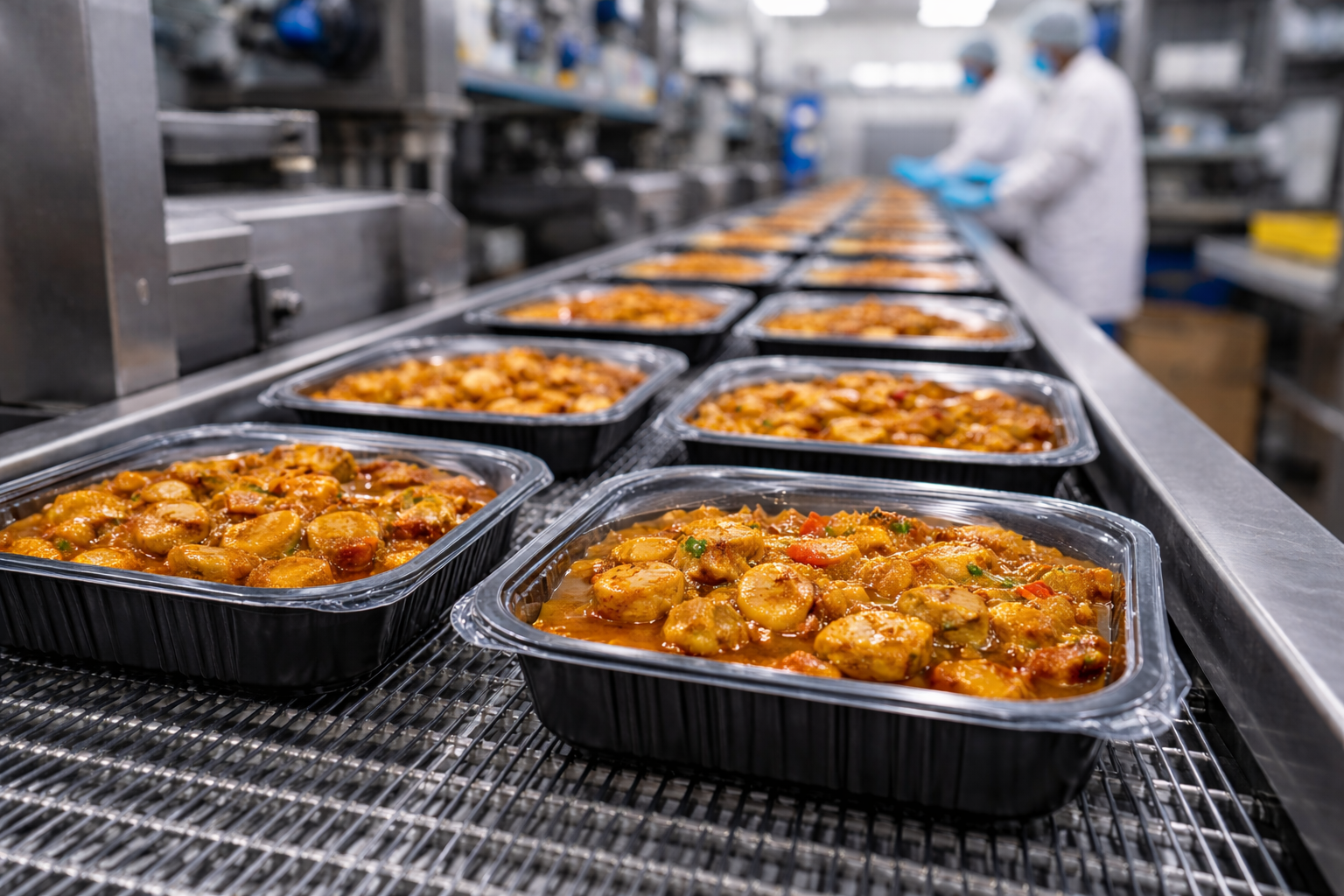
KM Packaging has launched K-Peel VPMe, a 55-micron high-barrier polyolefin lidding film designed to seal PET, polypropylene, and polyethylene trays. The product is initially aimed at the Australian market and is intended for microwave meals, prepared foods, snack trays, and fresh-protein packs.
The film is designed to replace PET lidding in combinations where a rigid PET tray can enter a recycling stream but the flexible PET lid creates a different recovery problem under Australian guidance. KM Packaging says the polyolefin structure is recyclable under Australian Packaging Covenant Organisation guidance and can carry a “Check Locally” instruction where suitable collection is available.
Its ability to seal three widely used tray polymers is the more immediate factory characteristic. Food plants often operate PET, PP, and PE formats across different products because heating requirements, product chemistry, shelf life, retailer specifications, and supplier arrangements vary. Each tray material can otherwise require its own compatible lidding structure.
A multi-seal film can reduce the number of reels that have to be purchased, stored, identified, and loaded during a mixed production schedule. That does not remove the need for tray-specific machine settings, but it can lower the risk of selecting an incompatible film and reduce residual stock when a product range changes.
The benefit depends on the width of the sealing window. Tray sealing is affected by temperature, pressure, dwell time, film tension, contamination on the flange, and the dimensional stability of the tray. A material that technically seals three polymers still has limited value if each combination requires such narrow settings that line speed or seal integrity suffers during changeovers.
K-Peel VPMe adds barrier performance to that multi-seal specification. KM Packaging says the 55µm film provides protection against gas and water transfer, making it suitable for products where atmosphere and moisture affect usable life. Fresh proteins and prepared meals place greater demands on barrier properties than many dry foods because oxidation, colour stability, microbial growth, and moisture migration can all influence shelf life.
Packaging redesign therefore has to balance end-of-life objectives against product protection. Reducing the recyclability problem while shortening shelf life would merely shift waste from the package into the food, which is why barrier and seal integrity remain central to any material trial.
The Australian recovery route also requires careful wording. The film may be designed to fit relevant recycling guidance, but actual collection depends on local infrastructure. A technically recyclable polymer does not automatically enter a recycler if municipal collection, sorting, or downstream markets do not support the format in a particular location.
That distinction becomes important in multi-component trays. The rigid base and flexible lid can be made from different polymers and may need to be separated after use. Changing the lidding structure can improve the recovery options for the individual components, but consumer behaviour and collection systems remain part of the final outcome.
KM Packaging has developed lidding around similar compatibility problems for several years. Its portfolio includes peelable and weld-seal structures, mono-material options, recycled-content grades, and films designed for chilled, frozen, ovenable, and microwave applications. The company has also developed PET films with lower seal-initiation temperatures and products designed to seal through contamination.
Recent developments elsewhere show the range of competing requirements. Cosmo Films has introduced anti-fog peelable PET lidding for chilled applications, illustrating how visibility, sealing, and line behaviour remain important even as recyclability moves higher up the specification.
K-Peel VPMe’s potential production advantage lies in rationalisation. A processor running prepared meals in several tray polymers can accumulate multiple technically similar film grades because each has a different sealant layer. Reducing that reel count can simplify stockholding and production planning, provided the new film performs consistently through the actual equipment.
The launch itself does not establish that a single grade will replace several films across large food factories. Commercial trials will need to assess seal strength, peel behaviour, barrier performance, contaminated flanges, microwave heating, chilled storage, line speed, and distribution before processors commit to a wider conversion.
Those tests will determine whether the 55-micron structure genuinely simplifies lidding or simply becomes another specialist material in the packaging store. Its specification combines three useful characteristics — high barrier, compatibility with PET, PP, and PE, and a structure aligned with Australian recovery guidance — but the deciding figures will come from sealing windows, reject rates, shelf life, and machine uptime.