IN Brief:
- Two pyrolysis reactors have been installed at LyondellBasell's MoReTec-1 chemical recycling project in Wesseling, Germany.
- The 50,000-tonne-per-year facility is designed to convert difficult mixed plastic waste into feedstock for new polymers.
- Current company guidance places start-up towards the end of 2027, with much of the planned capacity already committed.
LyondellBasell has installed the two pyrolysis reactors at the centre of its MoReTec-1 chemical recycling project in Wesseling, Germany, marking a major construction step towards commercial processing of difficult mixed plastic waste.
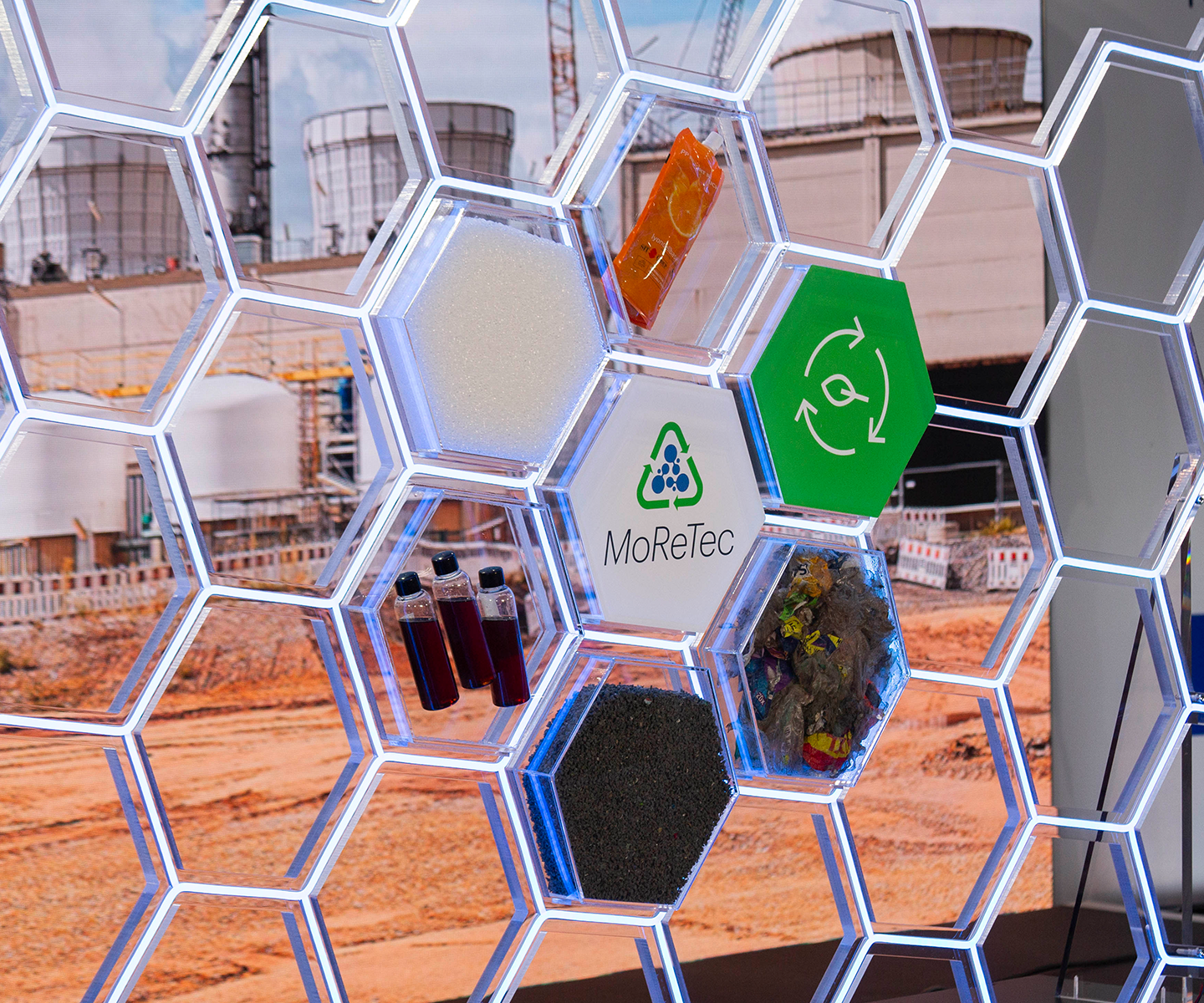
The plant is designed to process 50,000 tonnes of plastic waste annually using LyondellBasell’s catalytic recycling technology. Pre-sorted and pre-treated material will be converted into pyrolysis oil and gas that can substitute for fossil-derived feedstock in existing petrochemical production.
Those hydrocarbon streams can be processed through cracker infrastructure to produce monomers including ethylene and propylene before being converted into new polyethylene and polypropylene. LyondellBasell says polymers made through the route can be used for demanding applications, including medical products and food packaging.
The technology was developed through earlier work at the company’s Ferrara site in Italy before the decision was taken to scale it at Wesseling. Integrating the recycling unit with an existing petrochemical complex allows the resulting feedstock to enter established polymer production rather than requiring a separate downstream manufacturing chain.
MoReTec differs from conventional mechanical recycling because plastic is chemically broken down rather than washed, shredded, melted, and directly reprocessed. The route is aimed particularly at mixed and difficult waste streams where contamination, multilayer structures, additives, or degraded material properties make repeated mechanical recycling impractical.
The distinction matters when examining packaging applications. Clean, compatible mono-material streams can usually be recycled with less processing through mechanical systems, whereas flexible and composite structures can be considerably harder to retain at useful quality.
Chemical recycling brings its own engineering burden. Pyrolysis requires energy, feedstock preparation, process control, emissions management, and stable integration with downstream refining and polymer manufacture, so its environmental and commercial case depends heavily on which waste streams enter the plant and how efficiently they are processed.
LyondellBasell says its catalytic design is intended to operate at lower temperatures than conventional pyrolysis routes. The reactors can also use electrical heating, providing a route to renewable power where the local electricity supply permits it.
The Wesseling project has received €40 million through the EU Innovation Fund. Its planned throughput is equivalent, according to LyondellBasell, to the quantity of plastic packaging waste generated by more than 1.2 million people in Germany each year.
That scale is large enough to test whether MoReTec can operate commercially rather than as a pilot, although it remains modest beside the throughput of conventional petrochemical plants. Reliability, feedstock consistency, maintenance requirements, and product yield will therefore be closely watched once commissioning begins.
Food packaging is a demanding outlet because recycled material cannot compromise the performance expected from the finished polymer. Films and rigid packs may need to retain barrier properties, strength, transparency, sealing behaviour, machinability, and food-contact suitability while also meeting tighter circularity requirements.
Chemical recycling is attractive in that market because the waste is returned towards molecular feedstock rather than simply remelted. New polymers can then be manufactured through existing production routes, offering the prospect of material properties comparable with virgin resin where the process and certification system support the intended application.
That approach sits alongside other circular packaging technologies rather than replacing them. Mechanical recycling remains the more direct route for suitable waste streams, while food-grade recycled PET is already used commercially in applications where collection and processing systems can deliver the required purity.
Recent IN Food coverage of recycled PET developments illustrates the parallel pressure on packaging suppliers to provide secondary material that can enter existing converting equipment without compromising line performance. Chemical recycling seeks to address a different portion of the waste stream, particularly material that cannot readily meet that standard through mechanical treatment.
The regulatory backdrop has also tightened. The EU Packaging and Packaging Waste Regulation began applying generally in August, setting a framework around recyclability, waste prevention, and future recycled-content requirements for specified packaging applications.
Those rules increase demand for reliable secondary raw materials, but they do not determine which recycling technology should supply them. Projects such as MoReTec still have to demonstrate that their material, energy, cost, and yield performance justify the additional processing involved.
LyondellBasell’s earlier project material anticipated an earlier start, but the company’s latest guidance places start-up towards the end of 2027. Management has also indicated that the large majority of planned capacity is already committed through agreements with brand owners.
Installing the reactors therefore marks the point at which MoReTec-1 becomes a substantial industrial asset rather than a process-development programme, but it does not settle the economics. Commissioning will have to show that variable waste streams can be converted reliably into feedstock that returns to demanding polymer markets at commercial scale.