IN Brief:
- The three-part dairy webinar series runs on 22 October, 29 October, and 12 November.
- Sessions cover in-line checkweighing, connected production-data management, and calibration of automatic catchweighing instruments.
- EURAMET lists Calibration Guide No. 26 as Version 2.0, dated December 2024, rather than a newly issued 2026 guideline.
Mettler Toledo is putting dairy product giveaway at the centre of a three-part webinar programme covering in-line checkweighing, connected production data, and calibration of automatic weighing equipment.
The Maximise Dairy Yield series will run on 22 October, 29 October, and 12 November. Its three sessions move from pack-weight control on individual production lines into centralised data management and, finally, calibration practice for automatic catchweighing instruments.
Product giveaway is a persistent manufacturing cost where producers intentionally fill above a declared pack weight to reduce the risk of underweight product. If that operating margin becomes excessive because of filler variation, process drift, or conservative set points, saleable food leaves the factory without generating additional revenue.
The effect can accumulate quickly on high-volume dairy lines producing cups, tubs, bottles, and pouches. A small average excess multiplied across continuous production can represent a substantial volume of yoghurt, milk, cream, dessert, or other product over a shift or production campaign.
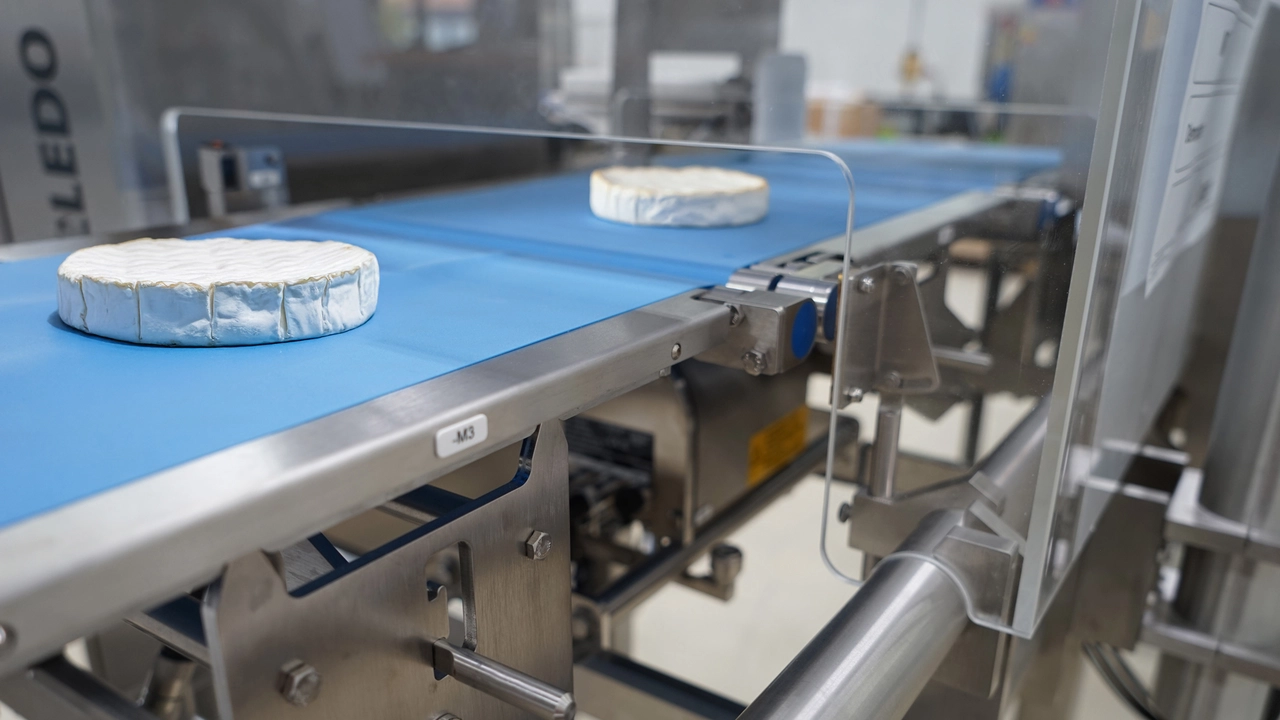
The first webinar, scheduled for 22 October, concentrates on intelligent checkweighing. Mettler Toledo’s programme covers 100% in-line weight inspection, automatic rejection, fill-level adjustment, maintenance, verification, calibration, and analysis of production trends.
A checkweigher measures individual packs after filling and can identify units outside defined weight limits. The greater process value comes from examining the stream of measurements rather than treating each pack as an isolated pass or reject.
Repeated measurements can expose changes in filler behaviour and show whether the weight distribution is moving away from its intended target. That information can allow production teams to intervene before an excessive fill level persists long enough to create significant giveaway.
Mettler Toledo is also promoting links between weighing data and filler adjustment. Where the relevant systems are integrated, weight measurements can provide information for correcting fill levels while production remains under way rather than relying solely on periodic manual intervention.
The objective is not simply to drive average pack weight down. Manufacturers still have to comply with applicable quantity requirements and maintain sufficient process control to avoid underweight product, making reduced variability more useful than an indiscriminate reduction in target weight.
Dairy plants place additional demands on weighing equipment because machines may operate at high speed in wet or frequently washed production areas. Performance has to be maintained despite hygiene routines, cleaning chemicals, temperature changes, product residues, and the mechanical demands of continuous line operation.
The second session, on 29 October, moves into automated data collection. Mettler Toledo’s webinar material describes centralised oversight of connected checkweighers, analysis of giveaway and process capability, secure digital records, dashboards, and alerts.
Bringing results together can allow manufacturers to compare performance between products, lines, shifts, or sites. A pack can remain within an acceptable weight range while the underlying process becomes progressively less stable, forcing operators to increase average fill to maintain confidence that minimum requirements will continue to be met.
Trend data can make that deterioration easier to see. It can also provide a record of configuration changes, rejects, corrective action, and operating performance for quality and compliance work without requiring information to be assembled manually from separate machines.
The final webinar, scheduled for 12 November, addresses EURAMET Calibration Guide No. 26 and its application to dairy production. Mettler Toledo’s announcement describes the guide as new, but EURAMET’s current register lists No. 26, Guidelines on the Calibration of Automatic Catchweighing Instruments, as Version 2.0 dated December 2024.
The session should therefore be read as guidance on applying the current document rather than the launch of a newly issued 2026 calibration standard. EURAMET says the guide provides a harmonised approach for calibrating automatic catchweighing instruments and covers both dynamic and static operation.
The guidance includes determination of test-load reference values, repeatability, eccentricity effects, measurement error, uncertainty evaluation, and the contents of calibration certificates. These are metrology requirements rather than yield measures in themselves, but they determine the confidence that can be placed in the weight data used to control giveaway.
That connection is the strongest industrial thread across the three sessions. Fill adjustment depends on measurement, optimisation depends on collecting and interpreting those measurements, and both depend on knowing that the weighing system is performing within an understood calibration framework.
A connected dashboard cannot compensate for poor measurement, just as accurate weighing produces limited benefit if the resulting data is never used to identify process drift. Treating the equipment, data layer, and calibration system together creates a more coherent approach to controlling pack-weight variation.
Although the programme is focused on dairy, the same principle applies to other high-volume food categories sold by weight. The economic effect varies according to product value, line speed, fill variability, and pack format, meaning the potential saving cannot be stated as a universal percentage.
The webinar series itself does not establish a measured saving at a specific dairy factory. Its value lies in bringing three established production disciplines into the same yield-control discussion — reducing uncontrolled overfill, making weighing data usable across operations, and maintaining confidence in the measurement system producing that data.