IN Brief:
- Langmead Herbs has acquired R&G Fresh for an undisclosed sum, adding its Farnborough fresh-herb packing operation.
- Langmead already has annual capacity for up to 128 million packs at Ham Farm following £1.3 million of packing investment.
- Mat Prestwich remains R&G Fresh managing director as the enlarged business integrates sourcing, packing capacity, and customer programmes.
Langmead Herbs has acquired specialist fresh-cut herb supplier R&G Fresh for an undisclosed sum, adding the Farnborough packing operation, an established retail supply relationship, and additional sourcing capacity to its existing growing and packing business.
R&G Fresh was established in 1958 and operates a packing facility in Farnborough, Hampshire. The business is the sole supplier of fresh-cut herbs to Waitrose and also has farming operations in Kenya, giving Langmead a second established packing base and a broader year-round supply network.
Mat Prestwich will remain managing director of R&G Fresh following the acquisition. Keeping the existing management in place provides continuity around retailer specifications, supplier relationships, technical systems, and short shelf-life production while the businesses begin operating under common ownership.
Langmead already runs a substantial herb operation in West Sussex. The company says it grows more than 500 tonnes of herbs each year, has capacity to produce up to 128 million packs annually, grows around four million potted herbs, and works with 29 partner growers to maintain year-round supply.
Its Ham Farm packhouse has received a further £1.3 million of investment in packing technology. Five horizontal lines and up to six vertical lines can operate simultaneously, with the horizontal equipment used for flow-wrapping softer or woody herbs and the vertical lines using multi-head weighing to control pack weights and reduce handling.
Before packing, Langmead uses moisture-removal and vacuum-cooling systems to reduce field heat and prepare harvested herbs for packing. The packhouse is located close to the company’s farms and glasshouse, shortening the time between harvest, cooling, packing, and dispatch.
That proximity is useful because fresh herbs combine agricultural variability with retail service requirements that leave little room for delay. Product quality can deteriorate quickly after harvest, so cooling, moisture control, weighing, film selection, labelling, and despatch have to be tightly coordinated around crop condition and customer orders.
R&G adds another established production and packing node to that system. The Farnborough site gives Langmead additional capacity for fresh-cut herbs and a customer programme with its own specifications, while R&G’s Kenyan operations and wider sourcing relationships increase the number of origins available when British growing conditions or seasonality constrain supply.
Langmead already uses overseas programmes to support its UK production during winter. The company says its 29 partner growers operate across six countries, including Spain, Italy, and Kenya, while 85% of its British herbs are grown in West Sussex.
Combining those networks could improve resilience, but it also adds complexity. Each crop programme has to meet pesticide, traceability, food-safety, ethical, quality, and retailer requirements, while imported herbs arrive with different transport times and temperature histories from products harvested close to the packhouse.
The packing operation has to absorb those differences without creating inconsistent finished packs. Multi-head weighing can improve weight control, but the line still has to cope with changes in leaf size, moisture, fragility, stem content, and seasonal product behaviour while keeping giveaway and damage within acceptable limits.
Two packhouses also create a capacity-allocation question. The enlarged business can route products and customer programmes between facilities, but any benefit depends on line capability, technical approval, labour availability, packaging stocks, maintenance, and transport distances rather than simply adding the nominal output of both sites together.
Retail service levels make that planning particularly unforgiving. Fresh-cut herbs are often replenished against short order cycles, and a change in packing location has to preserve pack weight, artwork, coding, case configuration, traceability, and despatch timing without eroding the shelf life that remains when the product reaches store.
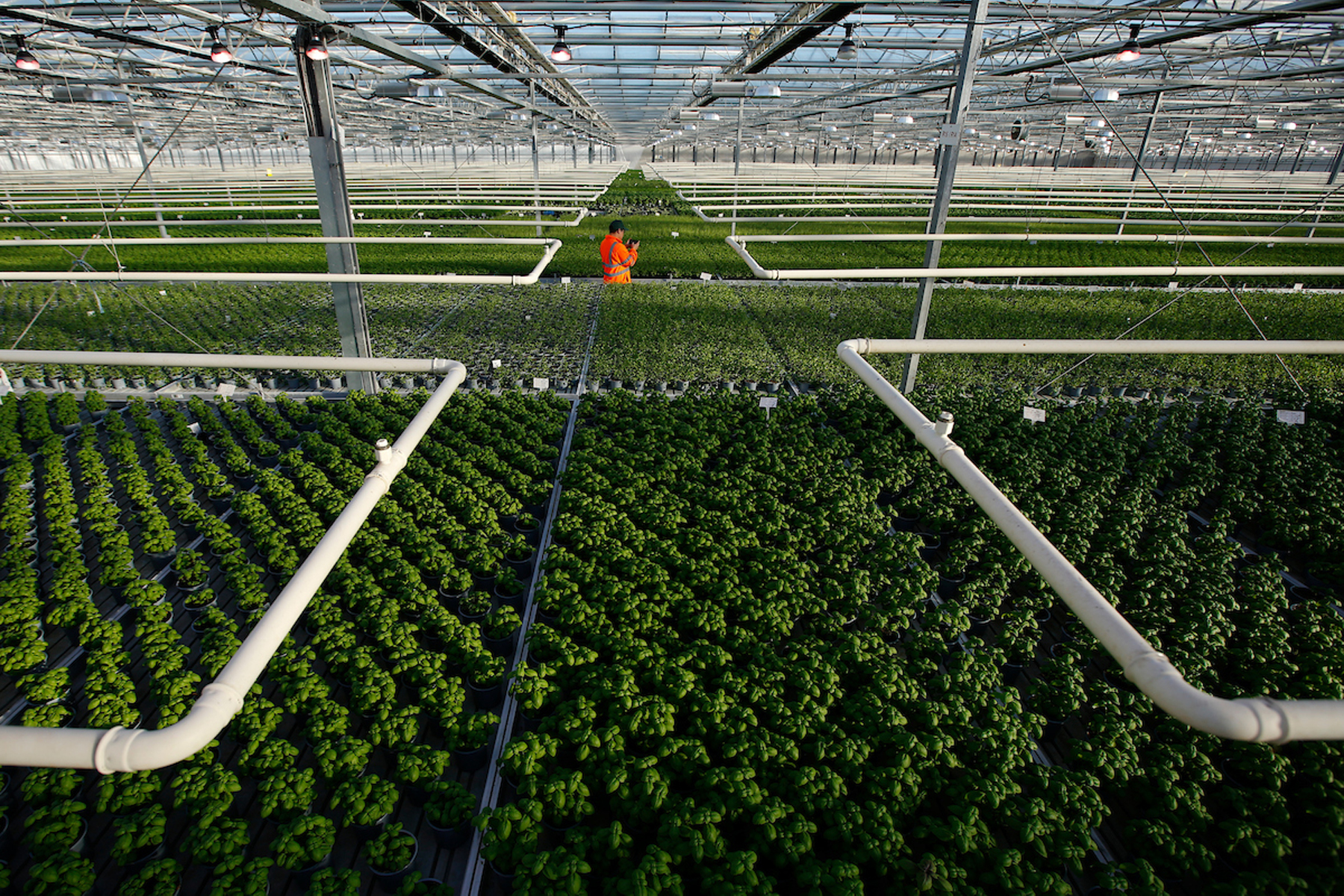
Langmead’s West Sussex infrastructure provides another source of capacity beyond cut-herb packing. Its 2.2-hectare Walton Farm glasshouse is fully automated following £2 million of investment and produces more than four million potted herbs a year, while 38 polytunnels support seasonal mint and tarragon production.
The acquisition therefore combines several parts of the herb supply chain rather than adding a single farm or brand. Growing, overseas sourcing, cooling, packing, glasshouse production, and retailer relationships now sit across a larger network with more options for balancing seasonal volume.
No purchase price or formal integration timetable has been disclosed. R&G Fresh will continue under Prestwich’s management, leaving the immediate operational priority on continuity rather than rapid restructuring.
The measure of the deal will be how effectively Langmead uses the additional Farnborough capacity. Fresh-produce packing rewards speed and utilisation, and a second facility only adds value if the combined network can improve service, spread seasonal peaks, and avoid carrying duplicated overhead where one line could have done the work.