IN Brief:
- AGRANA has agreed an enterprise value of around €150m for Austrian flavour producer esarom.
- The deal would connect esarom’s Oberrohrbach and Rückersdorf facilities with AGRANA’s Kröllendorf site.
- Completion is expected at the start of AGRANA’s 2027/28 financial year, subject to signing and antitrust approval.
AGRANA plans to acquire Austrian flavour producer esarom in a transaction with an agreed enterprise value of around €150 million, adding two production sites and specialist formulation capability to its Food & Beverage Solutions business.
The Vienna-based group intends to acquire 100% of esarom gmbh and esarom holding gmbh. AGRANA has completed its internal board approvals, although the share purchase agreement still has to be signed and the transaction remains subject to antitrust clearance. Closing is expected at the beginning of AGRANA’s 2027/28 financial year.
esarom develops and manufactures flavours, beverage bases, powders, emulsions, functional blends, and stabilisers for food and drink producers. The company operates plants at Oberrohrbach and Rückersdorf in Austria, employs around 400 people, and generated revenue of approximately €112 million in its 2025 financial year.
The deal values esarom at an EBITDA multiple of 9.0x. AGRANA plans to finance the acquisition through existing group liquidity and available credit lines, with conventional price-adjustment mechanisms and performance-related purchase-price components included in the transaction structure.
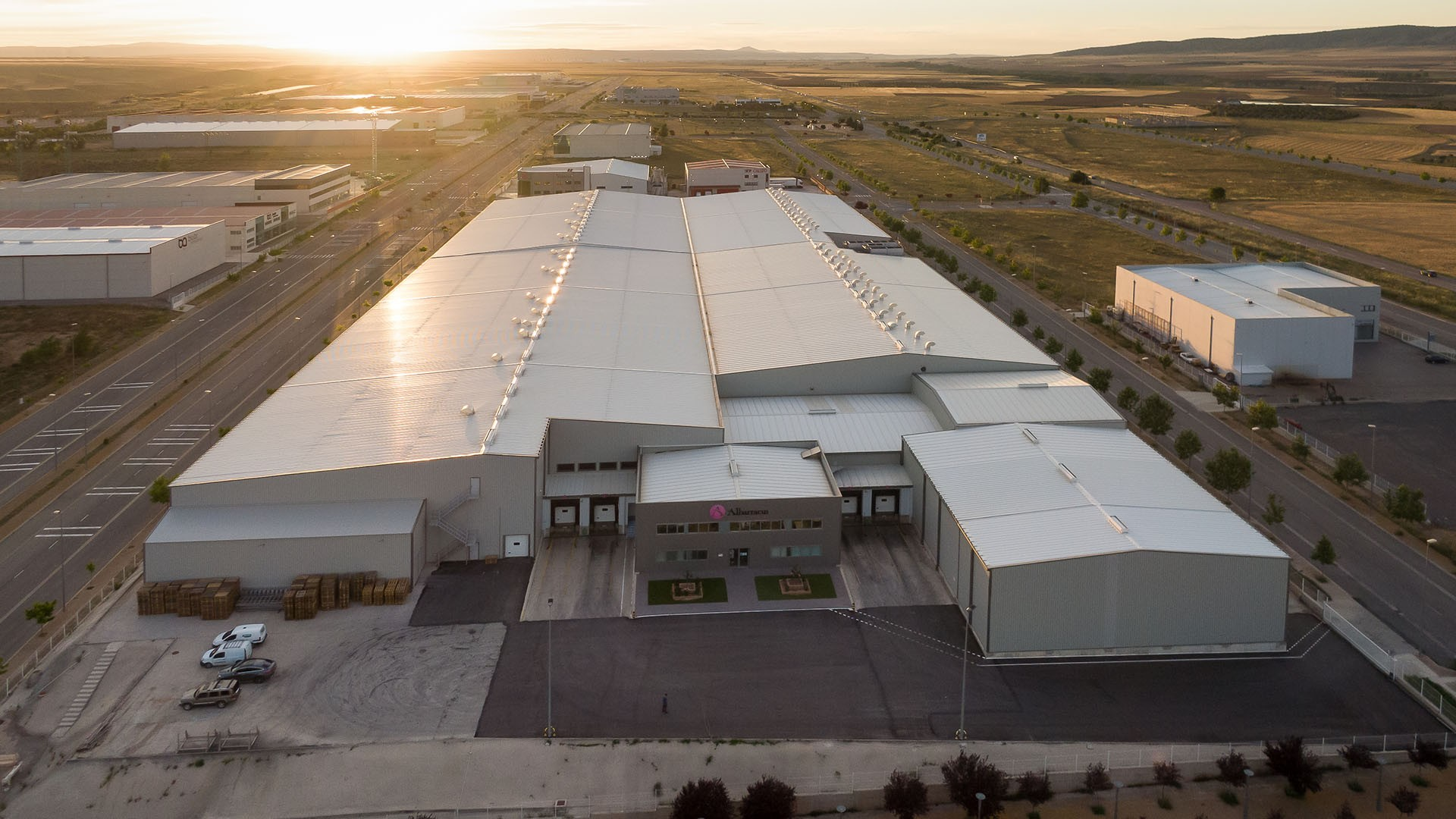
The manufacturing plan extends beyond adding esarom’s existing capacity to AGRANA’s portfolio. AGRANA intends to connect the Oberrohrbach and Rückersdorf operations with its Kröllendorf site, creating an integrated three-site Austrian production cluster covering manufacturing, product development, and application expertise.
Kröllendorf is already part of AGRANA’s beverage and fruit-processing network through Austria Juice. Bringing the three operations closer together is intended to align product development and customer management while combining esarom’s flavour expertise with AGRANA’s fruit preparations, juice concentrates, beverage bases, and customer-specific food and drink systems.
That structure gives the acquisition a practical production rationale. Many beverage and food formulation projects require several functions to be developed together, including flavour, sweetness, fruit content, colour, stability, mouthfeel, and processing behaviour. Splitting those tasks between several suppliers can extend development cycles, particularly when a formulation has to be adjusted repeatedly for industrial production.
Combining flavour development with beverage bases and fruit systems could allow more of that work to be carried out within one organisation. The value will depend on how well technical teams, pilot work, application laboratories, and manufacturing schedules are integrated across the three sites rather than on simply increasing the number of products available in a catalogue.
esarom’s geographic reach is also relevant. AGRANA says the company has a strong export focus, particularly across Central and Eastern Europe, the Middle East, and Central Asia. Those markets give the combined business established customer relationships beyond Austria while providing AGRANA with additional routes for its wider food and beverage portfolio.
AGRANA already operates at considerably greater scale, with around 8,400 employees, approximately €3.2 billion in annual group revenue, and 50 production facilities. Its Food & Beverage Solutions activities include fruit preparations, juice concentrates, beverage ingredients, and customised formulations, while its Agricultural Commodities & Specialities business covers sugar, starch, and related processing.
esarom therefore brings specialist depth rather than transformational scale. Its formulation knowledge, customer relationships, and two manufacturing locations fill gaps closer to the finished food and beverage development process, where ingredient suppliers increasingly compete on applications support as much as bulk production.
That distinction matters when manufacturers are reformulating around several constraints simultaneously. Reducing sugar, replacing ingredients, changing packaging formats, controlling costs, or developing products for different regional tastes can alter flavour balance and product stability at the same time. Suppliers capable of testing several elements together can reduce the number of development loops before a formulation reaches a commercial plant.
The integration programme will still have to preserve esarom’s specialist responsiveness. Bringing a smaller formulation business into a much larger ingredients group can create procurement and development efficiencies, but lengthy internal processes can quickly cancel the advantage if customer trials or technical decisions become harder to approve.
Production planning will require similar care. The three-site structure gives AGRANA more manufacturing and development options, yet individual plants will retain different equipment, processes, product families, and customer requirements. Aligning quality systems and development workflows does not necessarily mean moving every product between sites.
AGRANA’s immediate timetable remains transactional rather than operational. The contract is due to be signed in the near future, regulatory approval must follow, and integration cannot begin formally until completion. Until those steps are finished, esarom remains a separate business and the proposed production cluster remains a post-acquisition plan.
If the deal closes as expected at the beginning of 2027/28, AGRANA will gain a sizeable Austrian flavour and formulation operation alongside its existing beverage and fruit capabilities. The harder part will come afterwards: turning three factories and several complementary technical disciplines into one development network without adding the sort of organisational friction that customers use specialist suppliers to avoid.