IN Brief:
- Vanguard Renewables has agreed to acquire Generate Upcycle’s five North American facilities in New York and Ontario.
- The assets add approximately 565,000 tonnes of annual food waste processing and 1.1 billion cubic feet of renewable natural gas production.
- Closing is expected on 1 October, taking the combined platform to 19 facilities across North America.
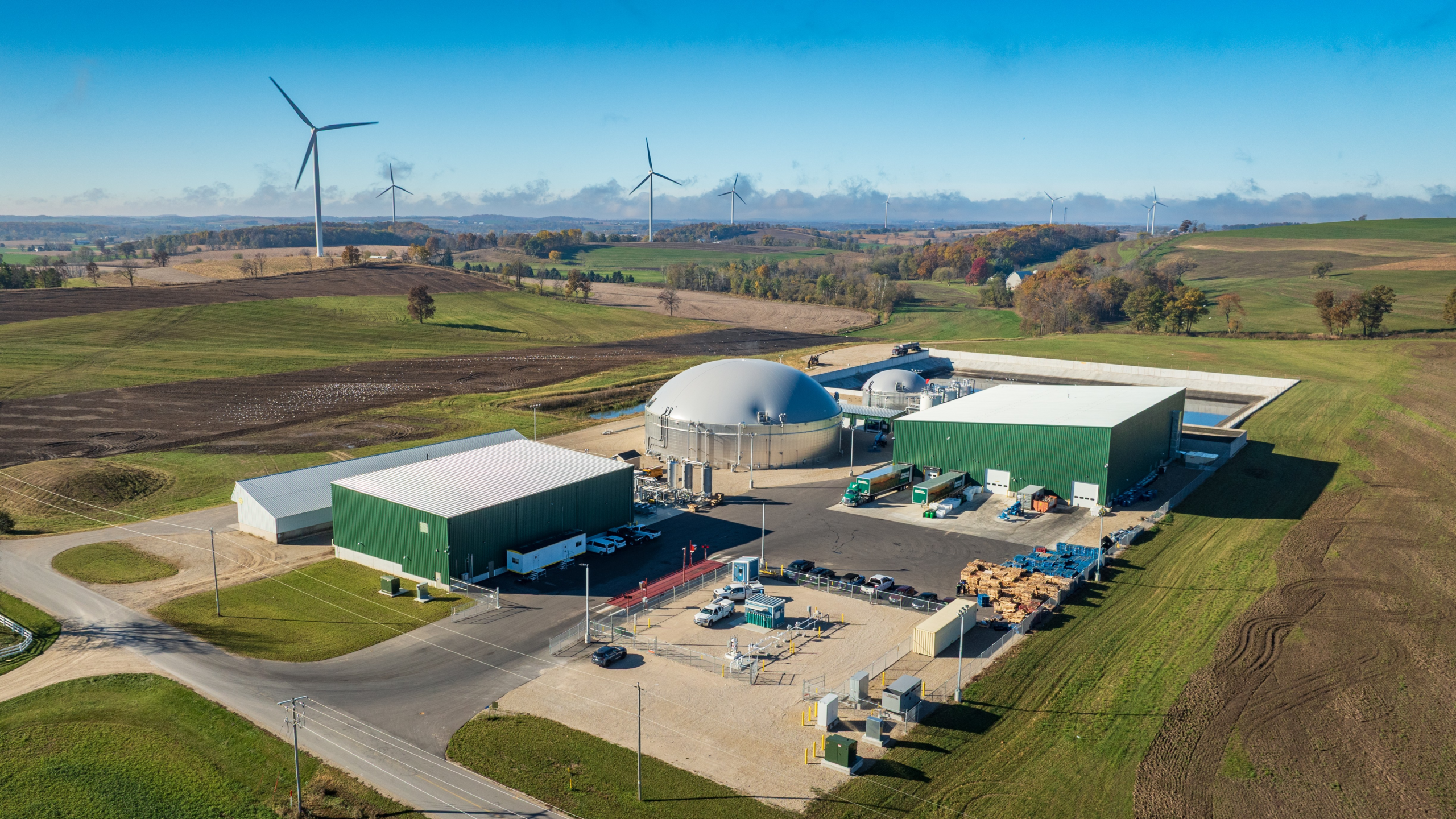
Vanguard Renewables has agreed to acquire Generate Upcycle’s North American operations, adding five food waste processing and anaerobic digestion sites in New York and Ontario to its existing renewable natural gas network.
The transaction is expected to close on 1 October, subject to customary conditions. Generate Upcycle’s North American assets include anaerobic digestion and advanced depackaging facilities, and Vanguard says the combined platform will operate 19 facilities across North America after completion.
The acquired operations will add approximately 565,000 tonnes of annual food waste processing capacity and about 1.1 billion cubic feet of renewable natural gas production. Vanguard says the transaction will nearly double its current operating capacity while establishing a presence in Canada’s Clean Fuel Regulations market.
The North American sale forms part of a wider disposal of Generate Upcycle by Generate Capital. Its seven UK anaerobic digestion sites are being acquired separately by Pinta Energy, while Vanguard is taking the five facilities in Canada and the United States. Generate built the platform across three countries before splitting it between regional buyers.
The industrial process begins before anaerobic digestion itself. Packaged food waste cannot simply be pumped into a digester. Material from food factories, retailers, distributors, and other commercial sources may arrive in films, trays, tubs, cartons, and other packaging that has to be separated from the organic fraction before biological treatment.
Advanced depackaging equipment provides that front end. Packaged material is opened and processed so food can be recovered for digestion while packaging residues are separated for disposal or further treatment. The process has to recover a high proportion of organics without allowing plastics, metals, or other contaminants to reach pumps and digesters.
That capability gives food businesses a route for off specification batches, damaged goods, returns, production residues, and other material that cannot enter the human food chain. Facilities able to receive packaged products can reduce the manual preparation required before material leaves the factory, although acceptance specifications still determine what can be processed safely.
After preparation, the organic fraction enters anaerobic digestion, where microorganisms break it down in controlled oxygen free conditions. The process produces biogas containing methane and carbon dioxide. Gas upgrading removes carbon dioxide and other impurities so the methane fraction can meet the specification required for pipeline quality renewable natural gas.
Vanguard’s existing model combines food and beverage waste with agricultural material at farm based digesters, then markets the resulting renewable gas. Generate Upcycle contributes additional food waste processing expertise and established assets, increasing the number of routes available for receiving material before it reaches the digestion stage.
Geography is important because food waste is bulky, wet, and expensive to transport long distances relative to its value. Processing capacity needs to sit reasonably close to the companies generating the material. Adding sites in the Northeast and Ontario widens the area in which Vanguard can offer industrial customers a route that does not depend on hauling material across several states or provinces.
Scale also affects feedstock management. Anaerobic digesters need predictable organic loading if gas production and biological stability are to remain consistent. One food factory may generate highly variable quantities depending on production schedules, product failures, seasonality, and line performance, so operators normally rely on a portfolio of feedstock sources rather than a single waste stream.
A larger network gives the operator more options for matching incoming material to available capacity, although individual loads still have to meet each site’s acceptance requirements. Composition matters because fats, proteins, carbohydrates, water content, packaging contamination, and cleaning chemicals can influence digestion performance and the amount of gas produced.
The acquisition also places Vanguard directly into the Canadian market. Generate Upcycle already operates in Ontario, giving the buyer an established facility base and regulatory position rather than requiring it to develop a greenfield project before serving customers there.
Food waste management has a direct operational effect on factories. Material that fails specification, remains after product changes, reaches the end of a production campaign, or cannot be sold still requires storage, handling, collection, hygiene controls, and reporting. Disposal routes can therefore affect plant space, labour, pest management, and collection schedules as well as waste cost.
Depackaging and digestion can recover value from some of that material, but they do not remove the incentive to prevent waste at source. Product loss that has already consumed ingredients, energy, labour, packaging, and factory capacity remains a manufacturing loss even where the residual material later produces renewable gas.
Vanguard is expanding downstream recovery infrastructure through operating assets rather than undeveloped projects, which should provide a faster increase in available processing capacity once ownership transfers. Integration will still involve feedstock contracts, logistics, systems, staff, customers, and regulatory arrangements across two countries.
If the deal closes on 1 October as expected, Vanguard will enter the final quarter with a considerably larger network and more capability to receive packaged organic material. The next measure will be utilisation: whether collection, depackaging, digestion, and gas production can attract enough suitable material to use the additional 565,000 tonnes of annual capacity while keeping individual sites biologically and commercially balanced.