IN Brief:
- Continuing cost pressure is pushing food manufacturers towards more selective capital investment.
- Issue 5 examines flexible processing, digital HACCP, equipment reliability, packaging efficiency, formulation, and ingredient scale up.
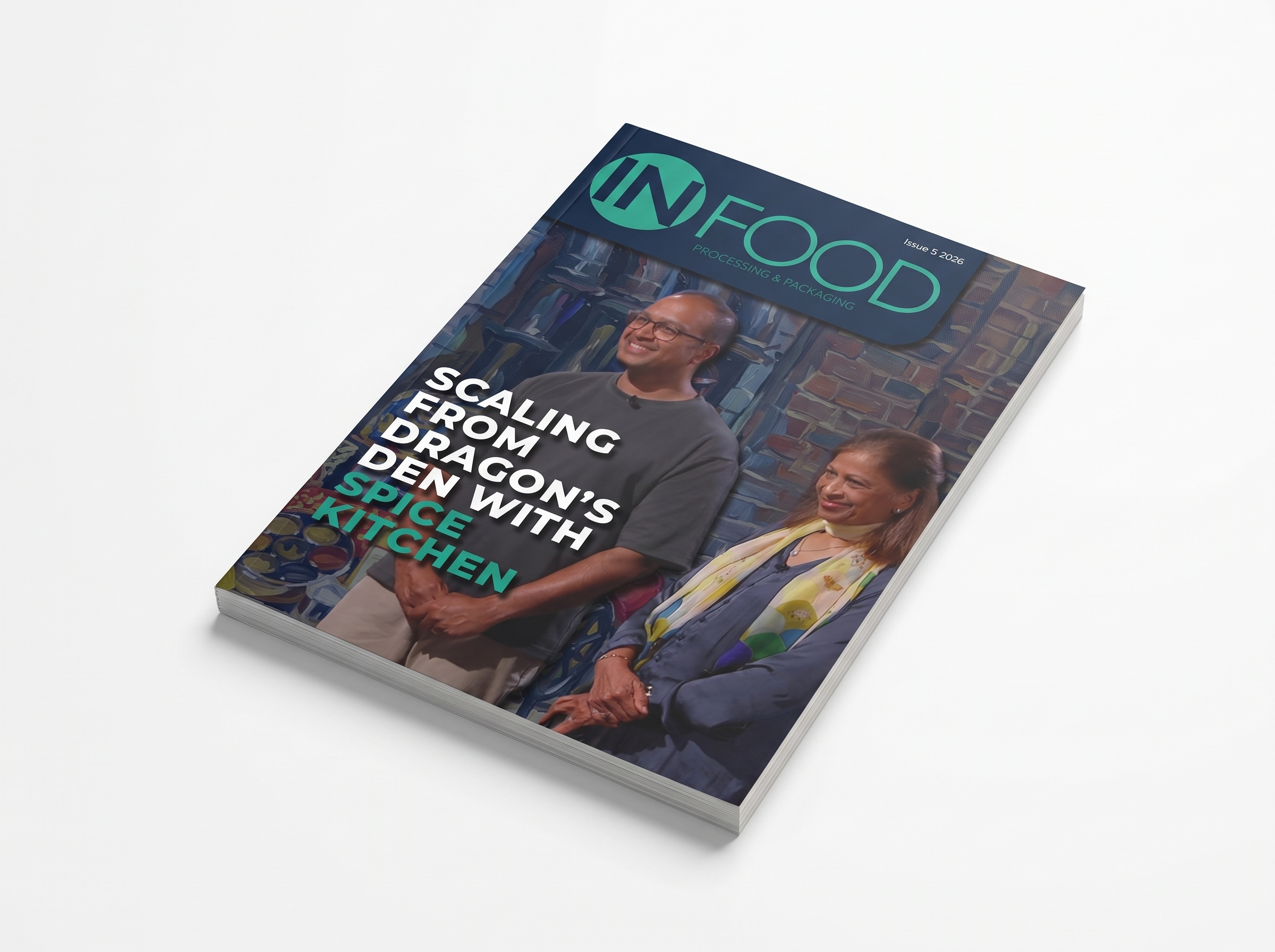
- Spice Kitchen founder Sanjay Aggarwal discusses how automation and systems can support growth while keeping investment tied to genuine operational needs.
Food manufacturers are entering the final months of 2026 with little expectation that cost pressure will disappear quickly, even as the immediate operating environment has become marginally less volatile. With sector confidence still weak, investment decisions are becoming more selective as businesses try to protect margin while preserving the productivity, innovation, and operational capability required for future growth.
That tension runs through Issue 5 of IN Food, where the focus is less on capital expenditure as an end in itself and more on the decisions that determine whether an investment genuinely improves the operation. Our features examine how cereal and bakery manufacturers are thinking about flexible capacity, how digital HACCP can strengthen process visibility, how drive specification affects reliability in demanding potato processing environments, and how secondary packaging can influence efficiency well beyond the packing line.
The same questions extend into formulation and ingredients, where protein enrichment and new cellulose based technologies bring their own technical demands, before coming together in our cover interview with Spice Kitchen founder Sanjay Aggarwal. As the business scales its production and packaging capability, his experience illustrates a wider challenge for manufacturers of every size: growth requires more systems, more capacity, and more automation, but those investments still have to solve a clearly defined operational problem.