IN Brief:
- ECOVA Barrier adds moisture, oxygen and grease protection to Rapids' heat-sealable paper packaging platform.
- Target applications include snacks, confectionery, dairy, frozen and chilled foods, bakery products and other sensitive products.
- Rapids says the material is designed for existing form fill and seal equipment and paper recycling streams where local systems accept it.
Rapids Paper + Packaging has expanded its ECOVA range with a barrier paper intended to extend paper-based flexible packaging into food applications where moisture, oxygen, grease and seal performance have traditionally favoured plastic films and laminates.
The ECOVA Barrier product combines heat sealability with functional barrier properties that can be matched to individual applications. Rapids is targeting snacks and confectionery, dairy and cheese wraps, frozen and chilled foods, bakery products, fried foods and powdered or other sensitive products where an untreated paper structure would provide insufficient protection.
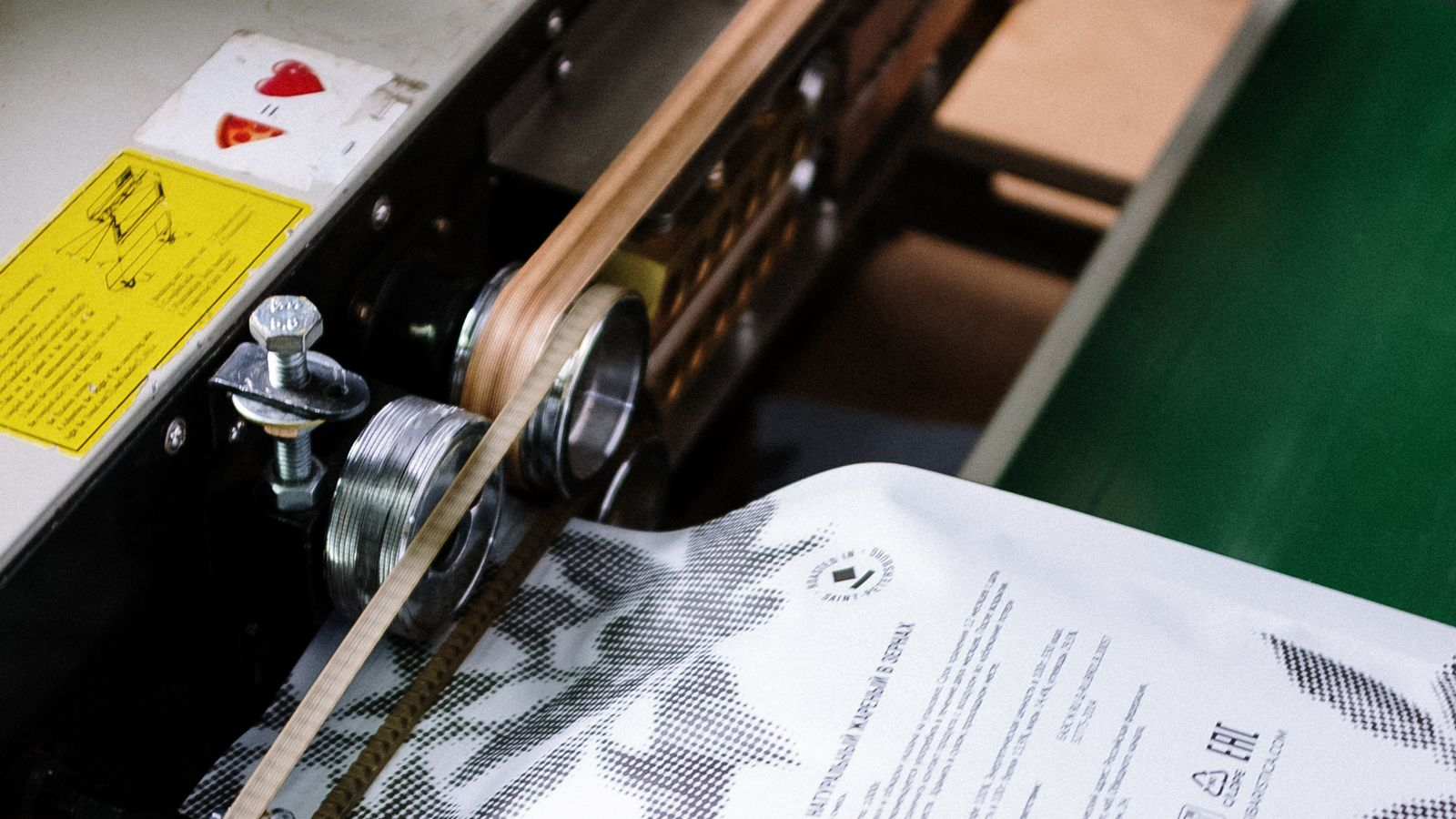
The commercial expansion builds on the wider ECOVA platform, which uses the company’s Paperlock technology to create a heat-sealable paper structure. Rapids says the material can operate on existing horizontal and vertical form fill and seal equipment, reducing the need to replace complete packing systems when manufacturers move away from conventional flexible plastic formats.
Compatibility with installed machinery is a central issue in material substitution. Flexible packing equipment depends on controlled web handling, stiffness, friction, heat transfer, sealing pressure, dwell time, registration, cutting and package formation. A substrate that performs adequately in storage can still prove unsuitable if it cannot maintain stable seals or consistent movement at production speed.
ECOVA Barrier has been developed around those operating demands, pairing heat sealing with coatings intended to protect against moisture, oxygen, grease and light. Rapids positions the product against applications currently using metallised films, plastic laminates, foil-backed structures and polyethylene or polypropylene based flexible formats.
Different foods place markedly different demands on barrier performance. A dry cereal or pasta product may be dominated by moisture control, while fatty foods create stronger grease resistance requirements. Frozen products introduce further demands around condensation, low-temperature handling, abrasion and package integrity during distribution.
Oxygen sensitivity adds another constraint where oxidation can affect flavour, colour, texture or shelf life. Moving those applications towards paper requires coatings and structures that preserve the necessary protection without making the finished pack impractical to recover through paper recycling systems.
Rapids describes ECOVA Barrier as plastic-free and designed for curbside recycling in paper streams, although actual acceptance depends on local collection and recycling infrastructure. The wider ECOVA platform is certified as plastic-free packaging by Control Union UK and uses paper structures developed around repulpability.
The company also states that the range complies with US FDA food contact requirements and is manufactured to relevant provisions covering paper and paperboard components used with food. Those claims apply within the US regulatory framework, leaving businesses selling into other markets responsible for completing the appropriate food contact and packaging compliance work for their own products and destinations.
Qualification remains necessary even where the material has been designed for existing machinery. Barrier performance needs to be tested against the actual food, expected shelf life, storage conditions, distribution environment, packing speed and sealing parameters rather than inferred from a generic substrate specification.
Rapids says customers can typically begin trials within four to six weeks, with a full conversion taking around 90 days to six months depending on line trials, qualification and scale. The timescale reflects the amount of work involved even when a substrate has been engineered to avoid major machinery changes.
A production trial may need to establish whether the paper maintains register at speed, whether sealing jaws require different temperatures or dwell times and whether folding or forming behaviour changes as the material passes through the machine. Pack strength and barrier properties then have to remain stable through filling, secondary packing, palletisation, transport and retail handling.
The commercial case is being shaped by regulation as well as brand targets. Extended producer responsibility schemes, retailer requirements, recyclability objectives and pressure to remove hard-to-recycle structures are increasing demand for materials that use less plastic while behaving predictably on industrial equipment.
Paperisation has consequently moved beyond simple wraps and cartons into applications previously considered difficult without plastic laminates. The engineering problem is preserving the functions supplied by those laminates: seal integrity, barrier protection, mechanical strength and stable machinability.
Material changes can also shift waste from one part of the operation to another. A pack using less plastic may produce little environmental or commercial benefit if line efficiency deteriorates, seal failures increase or more product is rejected during start-up and changeover. Production data therefore becomes part of the packaging assessment alongside material weight and recyclability.
That is particularly relevant on high output snack and bakery lines where small reductions in machine efficiency can translate into large volumes of lost production. A paper structure that runs within the operating window of existing equipment avoids some of the capital cost of conversion, but its true value is determined by sustained line performance rather than laboratory properties alone.
ECOVA Barrier extends Rapids’ paper platform into a wider range of food applications by addressing both protection and machinability. Commercial adoption will depend on product-specific trials, but the development tackles two of the practical constraints that have limited flexible paper packaging: maintaining the required barrier and keeping established packing lines running consistently.