IN Brief:
- The new e-motion 380 reaches injection speeds of up to 500mm per second.
- A six-cavity in-mould labelled yoghurt cup will run on a 3.5 second production cycle at Fakuma.
- ENGEL claims around 30% lower machine energy consumption than comparable hybrid or hydraulic equipment.
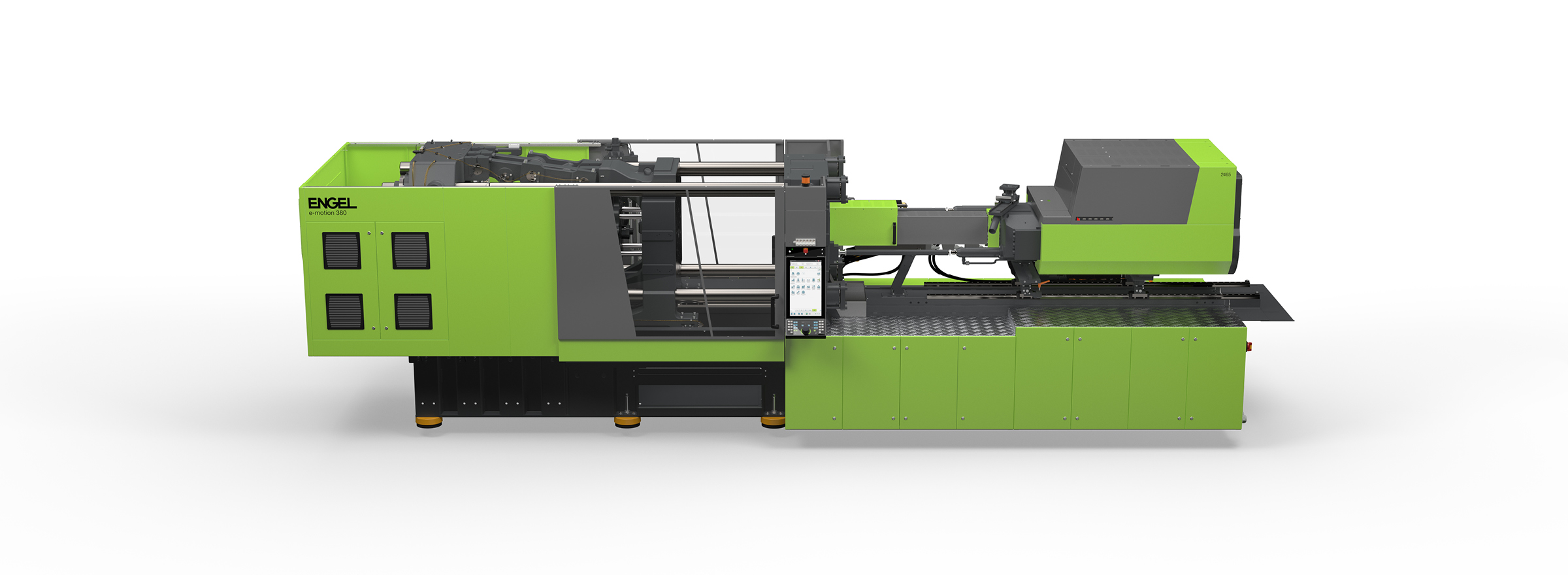
ENGEL has introduced a new generation of its e-motion injection moulding platform for high volume thin wall food packaging, using a six-cavity yoghurt cup application to demonstrate the speed and energy performance of the first e-motion 380.
The all electric machine reaches injection speeds of up to 500mm per second and has a quoted dry cycle time of as little as 1.2 seconds. ENGEL says comparable all electric production can use around 30% less machine energy than hybrid or hydraulic solutions, placing electricity consumption alongside cycle time as a central part of the machine’s commercial case.
At Fakuma 2026, the e-motion 380 will run a six-cavity in-mould labelled yoghurt cup with a wall thickness of 0.28mm, a flow length to wall thickness ratio of 370, and a finished weight of 6.33g. The complete production cell is specified for a 3.5 second cycle, distinguishing the actual moulding application from the machine’s minimum dry cycle figure.
The cell combines 3,800kN of clamping force with a 2465 injection unit. BAZIGOS supplies the mould, Campetella the automation, MCC Verstraete the labels, and Borouge International the polypropylene, giving the demonstration the main elements of a production packaging cell rather than presenting the press in isolation.
In-mould labelling adds useful production context because decoration is completed during moulding. The cup leaves the cell labelled and ready for subsequent filling operations, removing a separate labelling stage but demanding close coordination between mould movement, label placement, injection, cooling, part removal and robotic handling.
Christoph Lhota, vice president medical and packaging at ENGEL, said the new e-motion brings “all-electric technology to the performance level required for conventional thin-wall food packaging”. The claim is aimed directly at a part of the market where hydraulic and hybrid machinery has traditionally held an advantage because of the injection dynamics and short cycles required.
Thin wall packaging leaves little process margin. Polymer has to travel rapidly through long, narrow flow paths before freezing, while the machine must repeat injection, holding pressure, cooling, ejection and handling across millions of parts. Higher injection speed is useful only if the rest of the cell can preserve part weight, wall distribution, label position and dimensional stability over long runs.
The new platform also changes the energy calculation around high speed moulding. Servo electric drives can reduce losses associated with hydraulic power generation and give more direct control over individual axes, but total packaging cell consumption includes chillers, robots, compressed air, label handling, mould temperature control and other auxiliaries. The relevant production measure is ultimately energy per acceptable finished pack rather than a machine percentage viewed on its own.
Cycle time has the same dependence on the wider cell. A faster injection unit cannot raise output if cooling, mould opening, label insertion or part removal becomes the bottleneck. ENGEL’s 3.5 second yoghurt cup demonstration is therefore more informative than the dry cycle figure when assessing how the machine is intended to perform in an integrated packaging application.
Material reduction adds another variable. The 6.33g cup and 0.28mm wall are designed to show lightweighting alongside speed, reducing polymer use per pack while increasing the need for consistent mould filling and mechanical performance. A lighter cup still has to survive filling, sealing, stacking, transport and retail handling without creating excessive rejects or downstream line problems.
All electric architecture can also change maintenance requirements. Removing parts of the hydraulic system reduces oil management and some associated service tasks, while adding dependence on servo drives, electrical controls and precision motion systems. Packaging plants considering the change will weigh those differences against available engineering skills, spare parts strategy and the cost of downtime on continuously loaded production lines.
The e-motion 380 is the first machine in a broader new generation, with ENGEL planning to extend the clamping architecture across the e-motion range. That makes the Fakuma cell an early reference for a platform intended to cover more than one yoghurt cup format.
The practical benchmark will come after the exhibition, when converters run the machine against established hybrid and hydraulic equipment across real production schedules. Sustained output, reject rate, maintenance demand and measured energy per thousand packs will determine whether the faster all electric configuration changes purchasing decisions in thin wall food packaging.