IN Brief:
- Sierra Nevada Cheese has recalled four Graziers raw milk cheese varieties sold nationally through retail and foodservice channels.
- CDC and FDA are investigating 13 E. coli O26:H11 illnesses across nine states, including eight hospitalisations and three HUS cases.
- All nine patients interviewed about food exposure reported eating Sierra Nevada Graziers raw milk cheese.
Sierra Nevada Cheese Company has recalled its Graziers raw milk cheeses as US health authorities investigate a multistate outbreak of E. coli O26:H11 infections involving 13 confirmed illnesses.
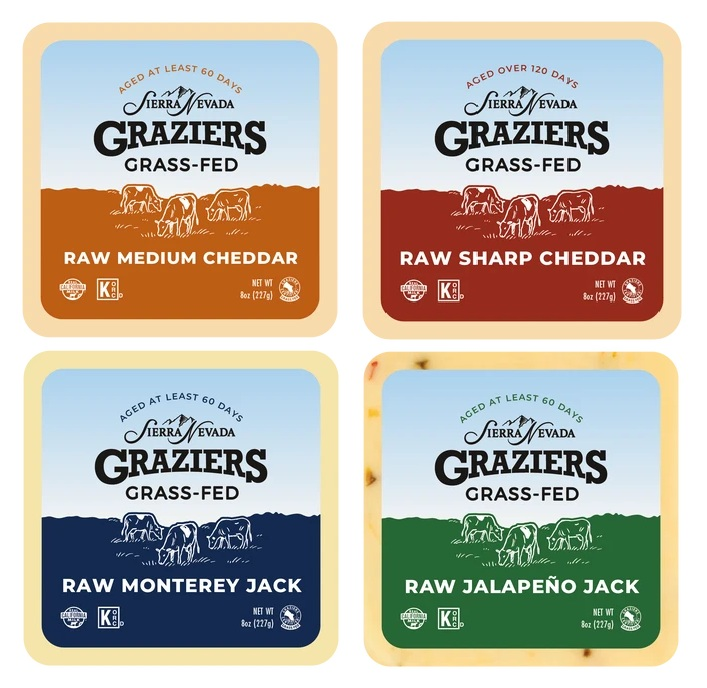
The affected products are Graziers grass-fed raw milk medium cheddar, sharp cheddar, jalapeño jack, and Monterey jack. They were sold nationally and online in 8oz and 16oz retail packs and supplied to foodservice customers and wholesalers in 5lb loaves.
Eight of the 13 confirmed cases have required hospital treatment and three patients have developed haemolytic uraemic syndrome, a serious complication that can cause kidney failure. No deaths had been reported as of the 25 September investigation update.
Cases have been identified in California, Colorado, Georgia, Kentucky, Michigan, Nevada, Oregon, Tennessee, and Utah. The age range runs from one to 58 years, with a median age of five, and more than half of the people affected are children aged five or younger.
Public health officials have interviewed nine patients or their caregivers about food consumed before illness, and all nine reported eating Sierra Nevada Graziers raw milk cheese. Whole genome sequencing found that bacteria from patients were closely related genetically, supporting the assessment that the illnesses are part of the same outbreak.
The FDA contacted Sierra Nevada Cheese on 24 September and recommended a recall. The company agreed and initiated the withdrawal the same day, while the federal outbreak investigation was made public on 25 September.
The investigation remains active. FDA says work is continuing to determine the source of contamination and whether any other products may be affected, so the current evidence does not establish the plant, ingredient, handling stage, or other route through which E. coli entered the affected cheese.
That distinction is significant for production control. Epidemiological evidence can become strong enough to remove a finished product from sale before investigators have reconstructed the exact contamination pathway inside the manufacturing and supply process.
Raw milk cheese presents a particular microbiological challenge because the incoming milk has not been subjected to pasteurisation before cheesemaking. Manufacturers therefore rely on controls across milk supply, culture and acidification, processing, sanitation, handling, maturation, storage, and packaging to prevent pathogenic organisms reaching consumers.
The current investigation should not be interpreted as evidence that one of those specific controls failed until authorities publish further findings. FDA has linked the illnesses to the recalled cheese but has explicitly left the source of contamination unresolved.
The broad product withdrawal creates an immediate traceability task regardless of where the investigation ultimately leads. Retail packs were sold nationwide and online, while larger 5lb loaves entered foodservice and wholesale channels where cheese may have been cut, repacked, or used in prepared foods.
Long shelf life adds another complication. Consumers and businesses may retain affected cheese well after its original purchase date, particularly where products have been refrigerated or frozen. FDA has therefore advised customers to check both refrigerators and freezers rather than assuming older purchases have already left the supply chain.
Businesses that received the cheese have been instructed not to sell or serve it. Where wholesale products have been repacked for individual sale, retailers must remove those packs from the market as well, increasing the importance of records linking smaller units back to the original product.
FDA also advises consumers, restaurants, retailers, and foodservice operators to clean and sanitise surfaces and containers that came into contact with the recalled cheeses. That recommendation addresses the possibility of cross-contamination after the product entered downstream premises rather than only the hazard posed by consuming the cheese itself.
Sierra Nevada Cheese has placed a recall notice prominently on its own website, warning customers not to consume any Graziers raw milk cheeses and advising them to dispose of the products or return them to the place of purchase.
CDC cautions that the known case count may not represent the full scale of the outbreak because many people recover without testing, while recent illnesses can take several weeks to be connected with an investigation. The published total is therefore a confirmed surveillance figure rather than an estimate of every infection that may have occurred.
The manufacturing investigation now has two separate objectives: removing potentially contaminated product from the market and determining how contamination occurred. The recall addresses the first immediately; preventing a recurrence depends on what laboratory, traceback, and facility work establishes about the second.