IN Brief:
- Avara Foods plans to invest around £10 million at its Telford plant during the current financial year.
- Latest-generation automated deboning equipment is intended to increase production volumes and improve site efficiency.
- The allocation forms part of a wider programme exceeding £100 million across Avara's UK poultry operations.
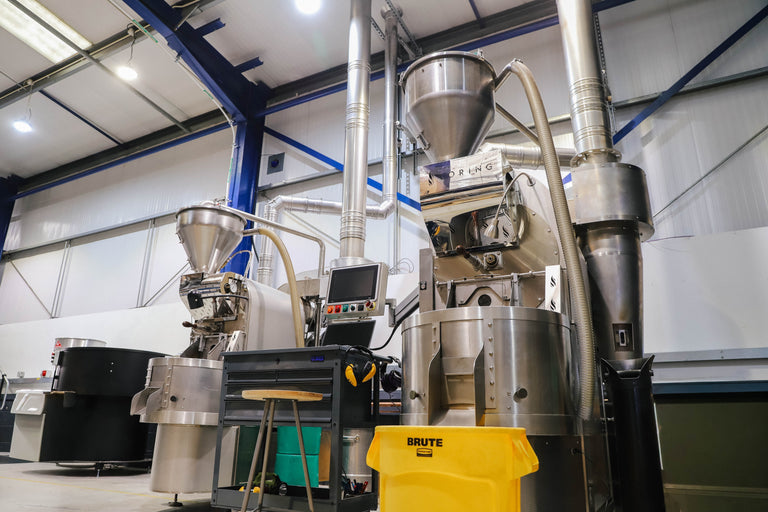
Avara Foods is planning to invest around £10 million in its Telford poultry processing site during the current financial year, including latest-generation automated deboning equipment intended to increase production volumes and operating efficiency.
The Telford allocation provides a more detailed factory-level view of the company’s wider three-year investment programme, announced earlier in September. Avara has committed more than £100 million to upgrades across its UK poultry operations, with more than £40 million planned for technology and facilities during 2026.
The Telford equipment will focus on deboning, an operation where manufacturers have to reconcile biological variation with tightly controlled customer specifications. Poultry carcasses are not dimensionally identical, yet processors still need repeatable cuts, predictable weights, high yield, and line speeds capable of supporting large retail and foodservice volumes.
Automating that stage is therefore as much a measurement and control problem as a mechanical one. Modern systems can adjust cutting positions as product size varies, reducing the amount of saleable meat left on bone while limiting damage that would send higher-value cuts into lower-value product streams.
Yield improvements become commercially significant at poultry-processing volumes. A small percentage change in recovery from each bird can accumulate across an entire shift, while inconsistent cutting can increase trim, rework, waste, and downstream handling even if the headline line speed remains high.
The new equipment is also intended to increase overall production volumes at Telford. That creates a wider integration requirement because deboning does not operate independently from the rest of the plant. Upstream chilling and handling, and downstream inspection, weighing, packing, refrigeration, warehousing, and dispatch all need sufficient capacity to absorb additional throughput.
Increasing the speed of one operation merely relocates the bottleneck if the next section of the line cannot keep pace. Commissioning therefore has to cover the complete production flow rather than treating the deboning machine as an isolated capital asset.
Hygienic performance is equally important. Poultry processing presents demanding sanitation requirements, and automated equipment introduces additional surfaces, moving parts, guards, drives, and contact points that have to be accessible to cleaning and inspection. Higher throughput only provides an advantage if cleaning windows, microbiological control, and maintenance can be sustained alongside it.
Avara has linked the investment to skilled employment as well as productivity. Greater automation changes the work required around a line rather than removing the need for people altogether. Operators still have to monitor performance, adjust settings, handle exceptions, and respond to changing product conditions, while engineering teams need sufficient capability to maintain increasingly complex mechanical, electrical, and control systems.
The Telford investment sits inside a broader plan covering sites including Brackley, Wednesbury, and Hereford. Avara says that programme will introduce next-generation technology across its operations while improving efficiency and the resilience of its UK poultry production network.
The original £100 million programme announced earlier this month identified cutting technology and automation as priorities but did not set out this level of capital allocation for individual factories. The Telford disclosure therefore adds a defined project to the wider investment commitment rather than repeating the same announcement.
The distinction matters because large corporate investment totals reveal relatively little about where operating performance will actually change. A factory allocation provides clearer questions: which process is being upgraded, what constraint is being removed, how much extra product can the plant handle, and whether the investment improves yield, reliability, or labour productivity once commissioning is complete.
Installation will have to be managed around an operating food factory. New deboning systems need mechanical and electrical integration, suitable floor and service connections, controls interfaces, hygiene validation, operator training, maintenance planning, and production trials before they can be treated as normal line equipment.
Those activities also have to be sequenced without unnecessarily disrupting customer supply. The capital project therefore extends beyond the purchase price of the machinery into commissioning resources and the temporary operating compromises required while old and new equipment are changed over.
Avara’s broader programme follows a three-year restructuring of the business and is intended to support further retail and foodservice demand for UK-produced poultry. Whether the £10 million Telford allocation achieves that objective will be visible in factory measures rather than the size of the announcement.
Yield, tonnes per hour, downtime, labour deployment, maintenance demand, cleaning performance, and specification compliance will determine whether the automated deboning investment genuinely increases useful capacity. Telford is consequently becoming an early plant-level test of how Avara intends to convert its £100 million programme into operating results.