IN Brief:
- Amcor will use CibusTec 2026 to present food and beverage packaging alongside practical PPWR design considerations.
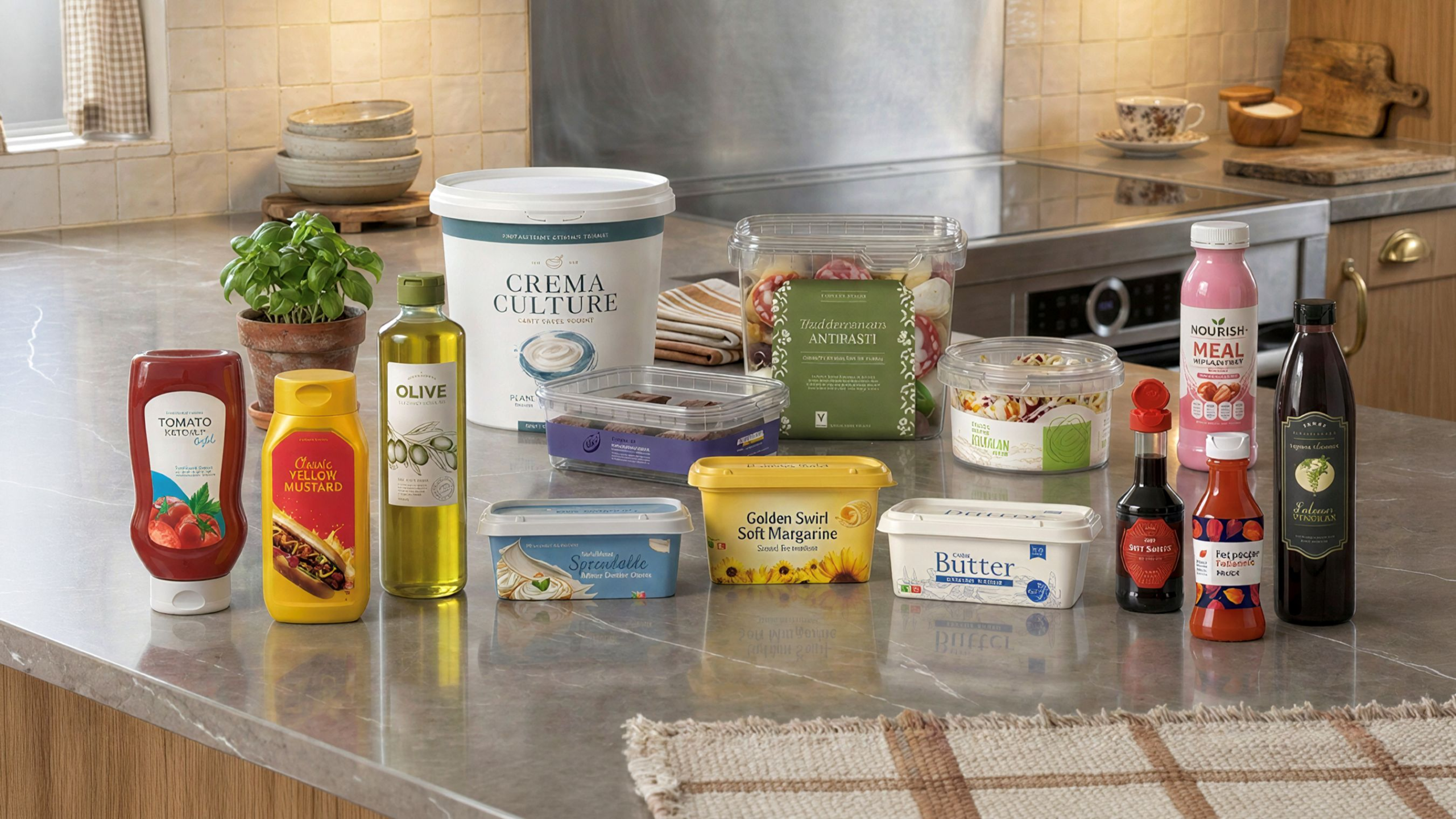
- The display covers PET bottles and jars, tubs, pots, canisters, thermoformed formats, closures, and specialist packaging.
- UniPak Luma will feature as a lightweight polypropylene platform for cold and ambient dairy, chilled foods, and dry applications.
Amcor will use CibusTec 2026 in Parma to focus on the relationship between European packaging regulation and practical food and beverage pack design, with recyclability, recycled-content integration, material performance, and lightweight rigid formats forming part of its exhibition programme.
The company will exhibit at Fiere di Parma from 27 to 30 October, presenting plastic bottles, jars, tubs, containers, closures, thermoformed packs, and other specialist food and beverage formats. Technical and commercial staff will also be available to discuss packaging choices in the context of the EU Packaging and Packaging Waste Regulation.
That PPWR focus pushes the exhibition beyond a conventional display of containers. Food manufacturers increasingly have to consider recyclability, material minimisation, recycled content, and supporting evidence alongside traditional requirements such as filling performance, shelf life, transport resistance, and consumer presentation.
Amcor will demonstrate its work around post-consumer recycled material integration, recyclability validation, and packaging design. Those areas overlap but are not interchangeable. Introducing recycled material affects processability and physical performance, while a structure designed for recycling still needs to meet the mechanical and barrier requirements imposed by the food product and production line.
Rigid food and drink packaging has little room to ignore those established functions. A bottle has to run through filling and capping equipment, survive conveying and distribution, and retain the required shape and seal performance. Tubs and thermoformed formats have corresponding requirements around denesting, filling, lidding, stacking, handling, and product protection.
The portfolio being taken to CibusTec reflects that range of production conditions. Lightweight PET bottles and jars cover applications including juices, dairy, water, carbonated drinks, and sauces. Tubs, pots, and canisters are aimed at dairy, spreads, and confectionery, while thermoformed trays and cups cover yoghurts, snacks, and ready meals.
Amcor will also present UniPak Luma, its recently introduced lightweight rigid packaging platform for cold and ambient-filled dairy products, chilled foods, and dry applications. The round container is manufactured entirely from polypropylene and follows the UniPak 1kg pot introduced earlier in the year.
Amcor describes UniPak Luma as recycle-ready where suitable collection and recycling infrastructure exists. The qualification is significant because the material composition of a package is only one part of its end-of-life performance; practical recycling also depends on how the pack is collected, sorted, and processed in the market where it is discarded.
Lightweighting creates a similar need for validation. Reducing polymer can improve material efficiency, but the container still has to retain sufficient stiffness and dimensional stability for the filling and packaging line. A lighter pack that collapses during denesting, sealing, palletisation, or transport simply transfers the environmental and operational cost elsewhere.
Amcor sales director Mirko Todeschi said: “Our aim is to help customers meet today’s demands while preparing for what’s next.” He added that the company’s approach is intended to adapt to the changing legislative landscape and consumer trends, with expertise around PCR integration, recyclability validation, and responsible packaging design available to visitors at the event.
That regulatory conversation is becoming part of routine packaging specification work as PPWR implementation progresses. The regulation is now applying across the European Union, but detailed requirements and secondary measures continue to shape how individual formats will be assessed as later compliance dates approach.
For food manufacturers, the timing creates an investment problem. Packaging machinery and filling equipment can remain in service for many years, while material specifications and regulation may change several times over the same asset life. A new container therefore has to work on current equipment without locking the manufacturer into a structure that becomes increasingly difficult to support as later PPWR requirements take effect.
The relationship between packaging and machinery is especially relevant at CibusTec because the exhibition spans processing and packaging technology rather than treating the container as an isolated product. Changes to bottle weight, tub geometry, closures, or thermoformed materials can affect conveyors, filling equipment, inspection, secondary packaging, storage, and logistics.
That makes the discussion around recyclability validation more practical than a simple material claim. A replacement structure has to demonstrate that it meets environmental and regulatory objectives without introducing slower line speeds, higher reject levels, poor seals, weaker product protection, or greater food waste.
Amcor’s CibusTec programme will therefore bring several approaches together rather than present one material as the answer to every application. PET, polypropylene, recycled content, lightweighting, and recyclability each address different parts of the packaging problem and have to be selected around the product and process involved.
The exhibition opens on 27 October. By placing PPWR discussions alongside the physical formats, Amcor is treating regulatory preparation as part of the packaging selection process rather than an exercise carried out after a container has already been specified. For European food and beverage plants making packaging decisions ahead of later PPWR deadlines, that sequencing is becoming increasingly difficult to separate from routine production engineering.